
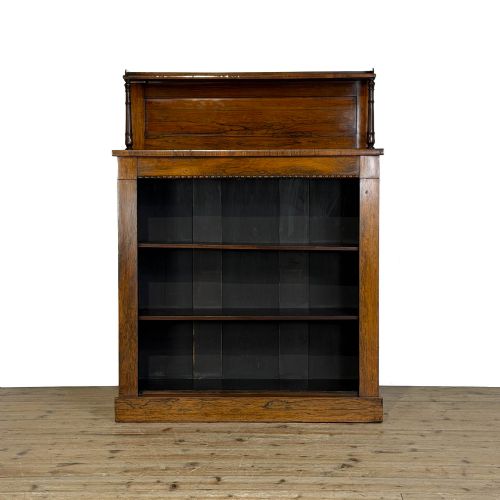
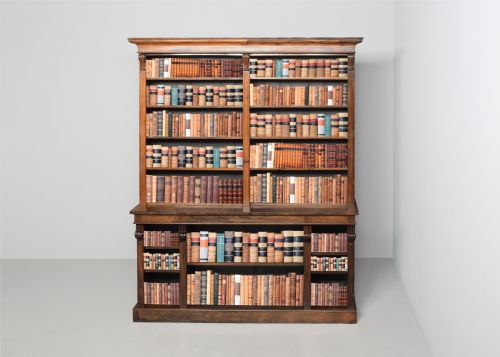
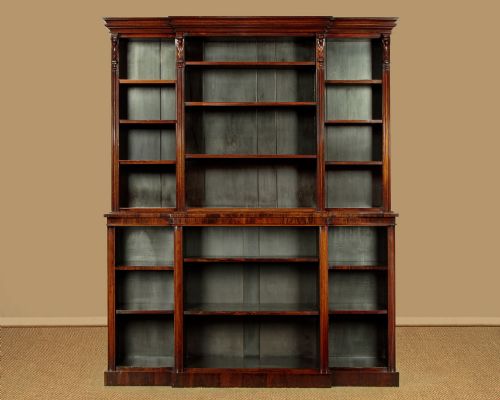
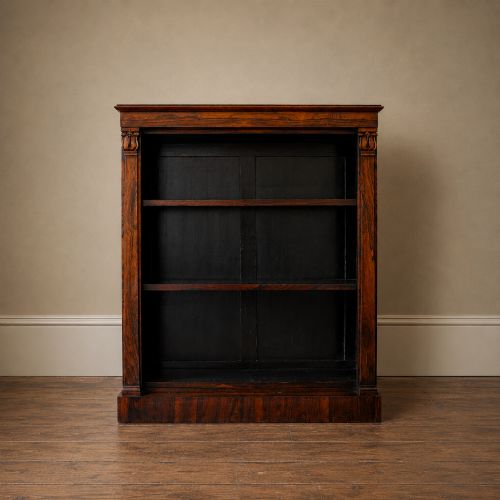
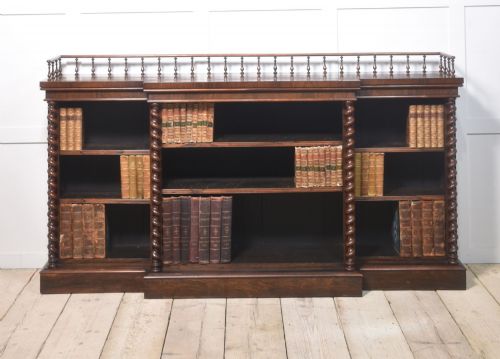


Rosewood Library Shelves
Rosewood library shelves bring rich grain and architectural presence into a room, offering open storage for serious collections.
Rosewood Library Shelves
Buyers seeking rosewood library shelves encounter open bookcases, whatnots, and low library tables designed for accessible book storage. The pieces span the Regency, William IV, and Victorian periods, often appearing in breakfront or inverted breakfront configurations.
Open bookcases form the core of the selection, frequently featuring adjustable shelves to accommodate varying volumes. Makers produced these in forms ranging from modest single units to large breakfront examples and matched pairs.
How they were made
Cabinet makers utilised dense rosewood timber, sometimes applied as veneer over secondary woods like pine or oak, to achieve deep grain patterns. Brass and ormolu mounts, along with carved corbels, add structural detail to the facades.
Interior construction incorporated pine and oak for carcasses and shelving, whilst specific pieces integrated glass, marble, or leather accents. Simulated rosewood surfaces also appear on alternative woods from the period.
The listings span the Regency, William IV, and Victorian periods, alongside nineteenth-century revival styles.
What varies in quality
Integration of secondary materials, such as brass details or marble tops, reflects the tier of the original commission. Scholarly attribution to specific workshops also separates standard library furniture from exhibition-grade pieces.
Gillows
The Rosewood Library Shelves Glossary
- Breakfront
- A cabinet design where the central section projects forward from the flanking wings. This format creates depth and visual rhythm in large bookcases.
- Whatnot
- A piece of freestanding open shelving with multiple tiers supported by slender columns. It served to display books and decorative objects in principal rooms.
- Corbel
- A structural bracket projecting from a wall or upright to support a shelf or cornice. Carved versions provide ornamental weight to nineteenth-century library furniture.
- Simulated rosewood
- A painted or stained finish applied to a less costly wood to mimic the distinctive dark grain of true rosewood. Makers utilised this technique during the Regency and William IV periods.
- Open bookcase
- A shelving unit without doors, designed for immediate access to working libraries. These pieces often incorporate adjustable shelves resting on brass ratchets or wooden supports.
Rosewood Library Shelves: Frequently Asked Questions
How do I date a rosewood bookcase?
Dating relies on stylistic markers such as Regency proportions, William IV feet, or Victorian carved corbels. Construction methods and secondary woods also offer chronological clues.
Cabinetmakers shifted stylistic vocabulary across the nineteenth century, moving from classical Regency restraint to heavier Victorian ornamentation.
Were these shelves made for homes?
Library shelves served gentlemen's studies, libraries, and principal reception rooms in large houses. They held working collections of calf-bound volumes and reference books.
Open formats allowed scholars and readers immediate access to texts without the barrier of glazed doors.
How do I care for rosewood?
Protect rosewood furniture from direct sunlight and steady heat sources to prevent the timber and veneer from drying out. Maintain stable ambient humidity in the room.
Dust regularly with a dry cloth and apply occasional specialist wax polish sparingly to nourish the polished surface.
What is an Anglo-Indian revolving bookcase?
Anglo-Indian revolving bookcases combine British furniture forms with colonial craftsmanship, often featuring distinctive regional carving. The revolving mechanism allowed readers to access multiple compartments from a seated position.
These pieces reflect global trade networks and the movement of furniture styles during the nineteenth century.