
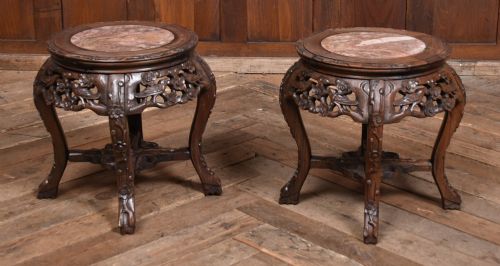
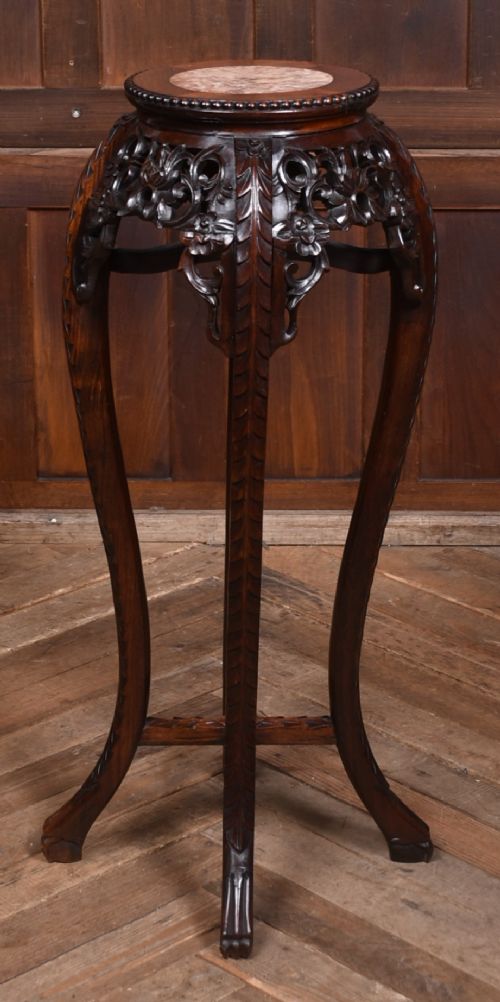


Rosewood Jardiniere Stand
A rosewood jardiniere stand elevates heavy plants and urns while bringing rich timber grain into a room.
Rosewood Jardiniere Stand
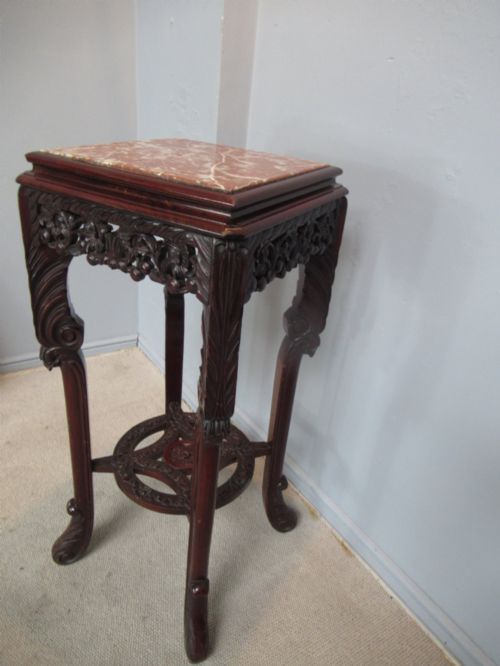
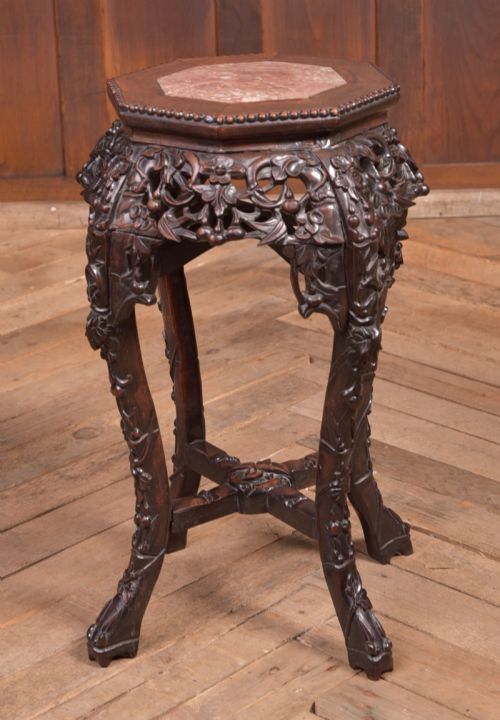
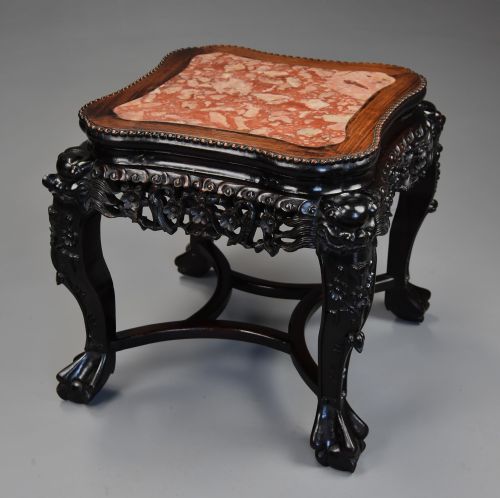
A rosewood jardiniere stand serves primarily as a dedicated platform for displaying plants, porcelain bowls, and heavy urns indoors. The pieces on this page span the nineteenth century and the Edwardian era, taking the form of low tables, pedestals, and tall occasional stands.
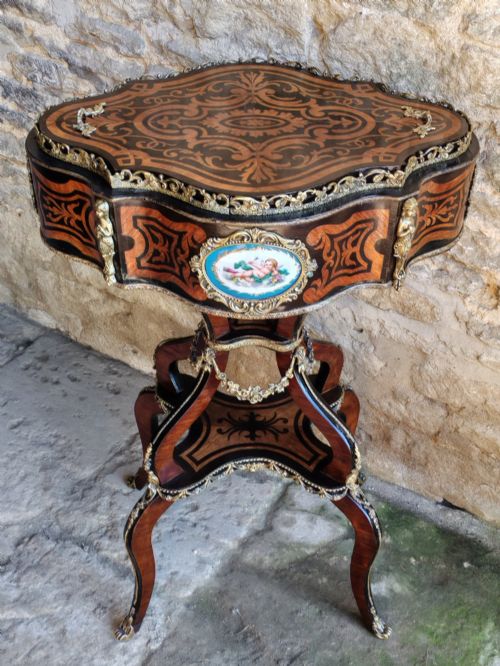
Chinese export examples dominate the selection, frequently featuring carved hardwood frames inset with smooth marble tops. Alongside these Oriental forms appear European designs from the Regency, William IV, and Victorian periods, including French kingwood and Dutch marquetry planters.
Materials and Construction
Cabinet-makers relied heavily on dense exotic timbers such as rosewood, padouk, and hongmu to support the weight of wet earth and stone. Many tables incorporate inset marble panels or rouge marble tops to provide a cool, water-resistant surface for holding plants.
Carving, marquetry inlay, and gilt-metal or ormolu mounts define the decorative vocabulary across both Chinese and European workshops. Mother-of-pearl inlay and intricate pierced aprons frequently accent the denser hardwood structures.
Listings feature items spanning the 1840s through to the Edwardian period, incorporating marble, brass, and porcelain.
Assessing the Craftsmanship
The refinement of the carving and the tightness of the joinery set finer stands apart from simpler utility pieces. Deeply undercut relief carving on hardwood frames indicates a higher degree of artisan skill during the Victorian and Qing periods.
The choice and thickness of the inset marble top, alongside the selection of finely figured rosewood or kingwood veneers, signal the original ambition of the piece. Uniform patination and robust structural integrity complete the measure of quality.
The Rosewood Jardiniere Stand Glossary
- Jardiniere
- An ornamental pot or stand for holding plants or flowers. These vessels sit upon or integrate directly with the supporting table.
- Marble top
- A smooth stone slab inset into the frame of a table. This surface resists water damage from potted plants.
- Padouk
- A heavy, durable tropical hardwood with reddish tones. Makers utilised this material extensively for carved Oriental plant stands.
- Marquetry
- Decorative patterns formed by fitting together thin slices of coloured wood veneer. Dutch and French makers applied this technique to planters.
- Hongmu
- A traditional Chinese term for dense red hardwoods. These durable timbers form the structure of many nineteenth-century export stands.
Rosewood Jardiniere Stand: Frequently Asked Questions
What is a rosewood jardiniere stand used for?
A rosewood jardiniere stand provides a sturdy raised platform for displaying heavy potted plants, vases, and ceramic bowls inside the home.
Historically, these pieces also functioned as lamp tables, wine coolers, or occasional display surfaces for decorative objects.
How do I care for a marble top stand?
Clean the marble surface regularly with a soft, damp cloth and dry it completely to prevent water spotting. Avoid acidic cleaners that can etch the polished stone.
Condition the surrounding rosewood timber periodically with appropriate wax to maintain the grain.
How do I distinguish Chinese export from European pieces?
Chinese export stands typically feature carved hardwood frames, pierced aprons, and inset marble panels reflecting Qing Dynasty styles. European pieces from the Regency and Victorian eras more often employ mahogany or rosewood veneers, gilt-metal mounts, and marquetry inlay.