
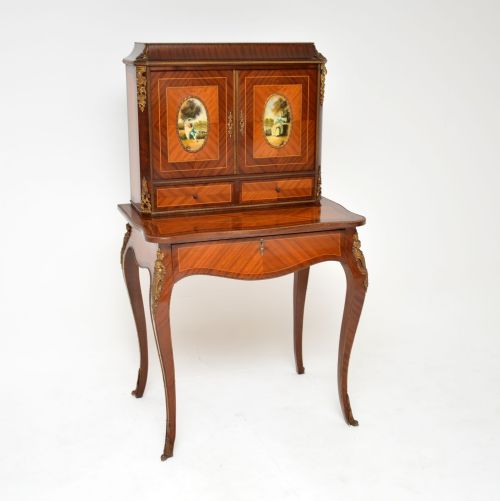


Rosewood Escritoire Desk
A rosewood escritoire desk offers a fitted drop-front writing surface in richly figured timber, bringing elegance and practical workspace to a study.
Rosewood Escritoire Desk
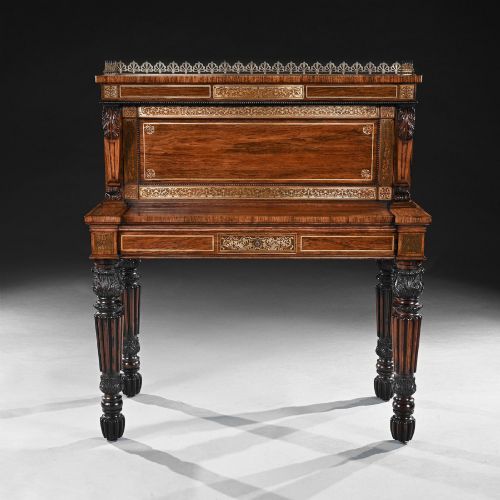
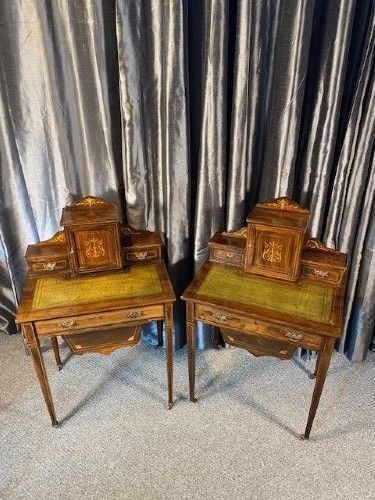
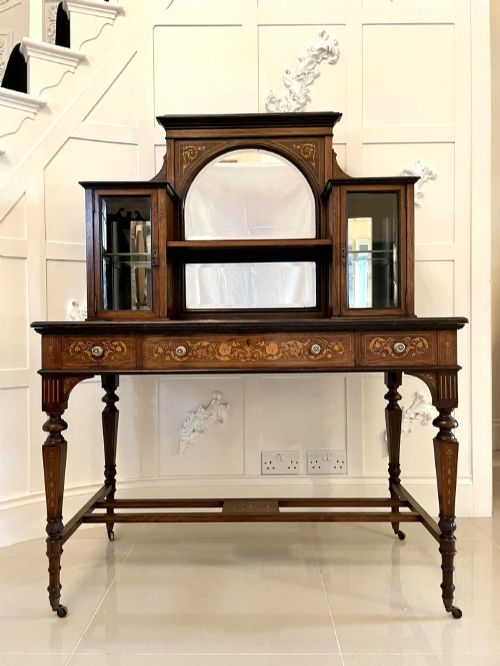
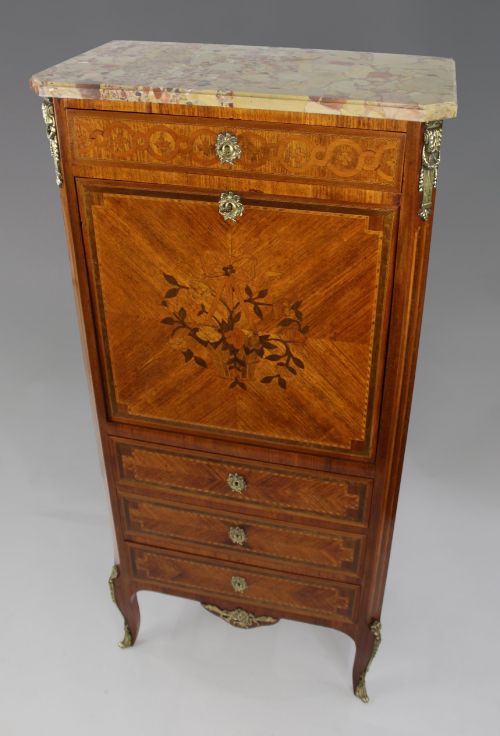
A rosewood escritoire desk combines a writing surface with concealed compartments, appearing across nineteenth-century and later periods. These pieces include French marquetry secretaires, Regency brass-inlaid tables, and Victorian writing cabinets.
The selection ranges from compact bonheur du jour desks to tall abattant cabinets fitted with original marble tops. Many examples draw on Louis XV Revival and French Rococo styles alongside classic Regency design.
What varies in quality
The depth of timber figure and the precision of the marquetry define the upper tier of writing furniture. Finely chased ormolu mounts and crisp brass stringing indicate superior workshop execution compared to plainer counterparts.
Integration of secondary woods and the smooth mechanical action of drop-front hinges separate standard production pieces from master-attributed pieces.
Secret drawers often require a hidden sequence of pushes and lifts to reveal themselves.
Gillows Oxford Street Workshop·John MaClean
The Rosewood Escritoire Desk Glossary
- Escritoire
- A writing cabinet featuring a hinged drop-front flap that conceals a fitted interior of small drawers and pigeonholes. This form provides a concealed workspace when closed.
- Abattant
- A vertical cabinet with a fall-front writing surface that drops down to form a desk. It typically conceals numerous interior compartments.
- Bonheur du jour
- A light lady's writing desk featuring a small cabinet or set of shelves superstructure upon the main writing surface. The form emerged during the eighteenth century and remained popular through the nineteenth.
- Marquetry
- Decorative veneer patterns formed by fitting together thin pieces of wood, metal, or shell to create pictorial designs. Artisans used contrasting timbers to render floral and geometric motifs.
- Ormolu
- Gilded bronze mounts applied to furniture for decorative enrichment. The technique involves coating cast bronze with a mercury and gold amalgam.
Rosewood Escritoire Desk: Frequently Asked Questions
What is an escritoire desk?
An escritoire desk is a dedicated writing cabinet featuring a fall-front flap that opens to reveal internal compartments and a writing surface. It functions as both a storage cabinet and a compact desk.
Historically used for correspondence, these pieces hide private papers behind decorative veneered surfaces when closed.
How do I identify Regency pieces?
Regency pieces often display clean classical lines combined with precise brass inlay or brass stringing. The proportions tend to reflect classical architectural principles.
Timber selection in this period favours rich rosewood contrasted with bright metal detailing rather than heavy floral marquetry.
Are marble tops original?
Many nineteenth-century French escritoires and secretaires feature fitted marble tops designed as an integral part of the piece. These slabs provide a durable upper surface and balanced weight.
White and grey marble slabs are typical on Louis XV and Rococo Revival cabinets.
Where should I place an escritoire?
An escritoire suits studies, drawing rooms, or bedrooms where a compact writing surface is required. The enclosed design keeps stationery out of sight when not in use.
Position the desk away from direct sunlight and heat sources to protect the rosewood veneer and leather writing inserts.