


Ormolu Mounted Escritoire
An ormolu mounted escritoire is a sophisticated writing cabinet defined by gilded bronze mounts, prized for its combination of hidden storage and decorative presence.
Ormolu Mounted Escritoire
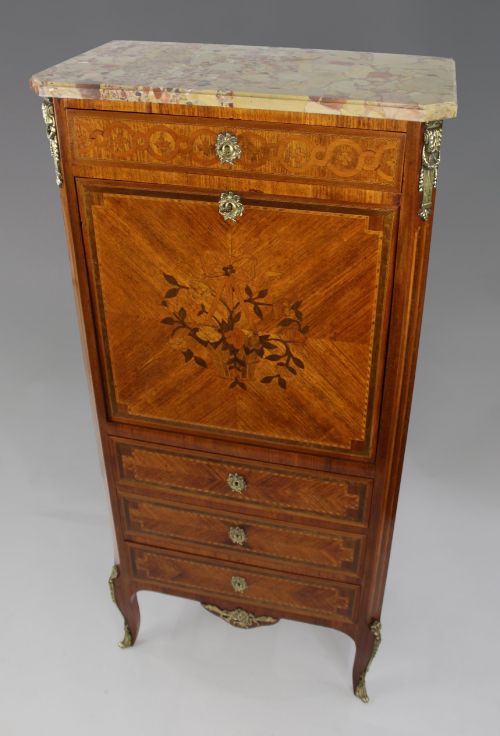
An ormolu mounted escritoire is fundamentally a writing cabinet featuring a drop-down writing surface or fitted interior compartments designed for correspondence and desk work. The pieces appearing here span the nineteenth century, with strong representation from Victorian revivals and earlier French influences.
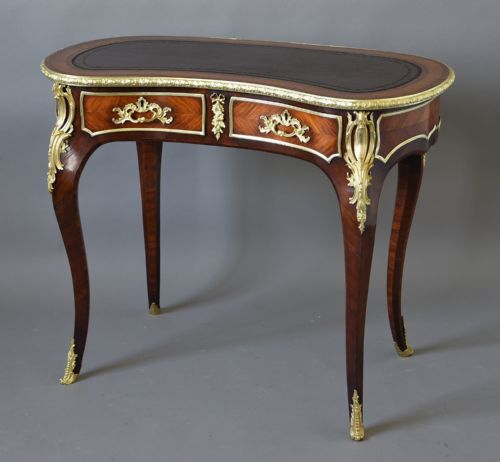
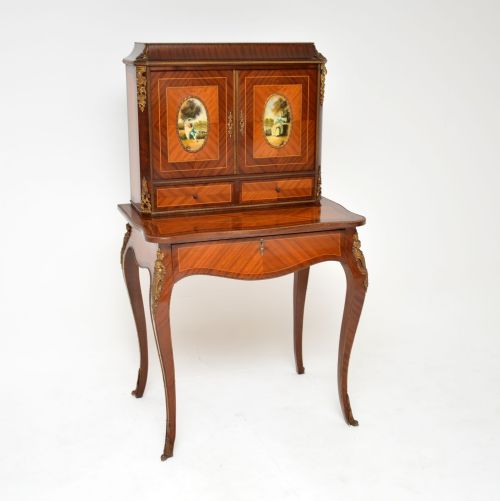
The versions most commonly met on this page take the form of nineteenth-century French writing cabinets, bureaux de dame, and bonheur du jour desks. These are frequently fashioned in walnut, kingwood, or mahogany, styled after Louis XV and Rococo revivals.
Beyond the standard escritoire, related writing forms such as secretaires and ladies writing desks appear across the inventory. They share the defining characteristic of ornamental metalwork and marquetry inlay.
How they were made
Cabinet makers constructed these pieces using dense timber carcases of walnut, kingwood, and mahogany, often overlaid with intricate marquetry and geometric veneer patterns. Panels of vernis martin or inlaid brass provide additional surface enrichment alongside the primary woods.
The signature ormolu mounts are cast and gilded bronze elements that accent corners, friezes, and feet to highlight the structural lines. Original marble tops frequently crown the upper surfaces of nineteenth-century examples, adding weight and refined contrast to the timber.
Several ladies writing desks preserve hidden compartments designed for secret correspondence and miniature treasures.
What varies in quality
The refinement of the ormolu casting largely distinguishes finer pieces from standard production, with superior mounts displaying crisp chiselling and deep, even gilding. The precision of the marquetry and the choice of dense timbers such as kingwood or burr walnut also indicate higher atelier standards.
Structural integrity of the drop-down writing flap and the complexity of the interior pigeonholes and small drawers affect the overall standing of an escritoire. Integration of original marble tops and signed cabinet work further elevates a piece within the historical record.
Mathieu Befort·Befort Jeune
The Ormolu Mounted Escritoire Glossary
- Ormolu
- Gilded bronze used for decorative mounts and fittings on furniture. It provides a bright metallic contrast to dark woods.
- Escritoire
- A writing cabinet featuring a sloping or folding writing surface concealing drawers and pigeonholes. It combines storage with a compact desk function.
- Marquetry
- Inlaid patterns of wood veneers applied to furniture surfaces to create pictorial or geometric designs. It requires precise cutting of various timber species.
- Bonheur du jour
- A light lady's writing desk featuring a small cabinet or tiered shelving superstructure on top. The form gained popularity during the nineteenth-century French revival periods.
- Secretaire a abattant
- A tall upright writing cabinet with a drop-front fall-flap that opens to reveal an organised interior. This form offers substantial vertical storage alongside a writing surface.
Ormolu Mounted Escritoire: Frequently Asked Questions
How were these writing desks used historically?
These cabinets served as private spaces for correspondence, document storage, and keeping personal accounts. The drop-front flap provided a clean writing surface that could be closed to conceal unanswered letters and papers.
In grand nineteenth-century drawing rooms, pieces like the bonheur du jour also functioned as decorative display surfaces for small ornaments alongside their practical writing duties.
How do I care for marble and wood surfaces?
Maintain the timber surfaces by dusting regularly with a dry cloth and applying traditional wax polish sparingly when the wood appears dry. Avoid placing pieces near direct heat sources or strong sunlight to protect the polish and veneers.
Keep marble tops clear of acidic substances such as citrus or alcohol, wiping any spills immediately to prevent etching the polished stone surface.
How can I tell nineteenth-century pieces from later reproductions?
Examine the timber construction methods, interior drawer linings, and the backboards for signs of period hand-tooling and natural material shrinkage. Nineteenth-century examples often utilise oak or mahogany secondary woods inside the drawers rather than modern plywood.
The ormolu mounts on genuine period pieces are individually cast, chased, and secured with traditional screws or pins rather than modern synthetic adhesives.
What is the difference between an escritoire and a bureau?
An escritoire typically refers to an upright writing cabinet with a fall-front panel, often featuring elaborate ormolu mounts and fine veneer work. A bureau more commonly designates a desk with a sloping lid that opens downward.
Both forms offer fitted compartments for stationery, but the escritoire leans toward a more architectural cabinet format.