

Brown Marquetry Writing Desk
A brown marquetry writing desk brings together intricate timber work and practical workspace, offering both utility and historic artistry to a room.
Brown Marquetry Writing Desk
A brown marquetry writing desk combines a dedicated surface for correspondence with elaborate patterned wood veneers. These pieces range from compact ladies writing tables to substantial bureau bookcases originating across Britain and continental Europe.
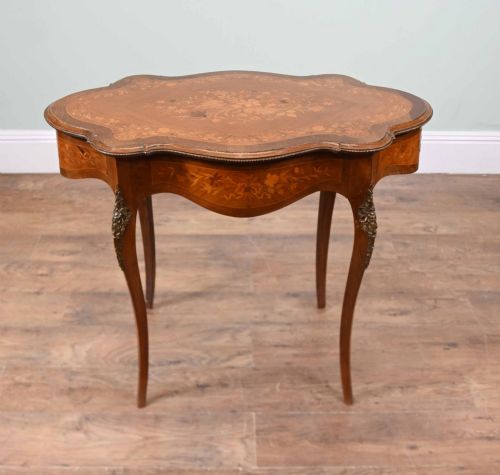
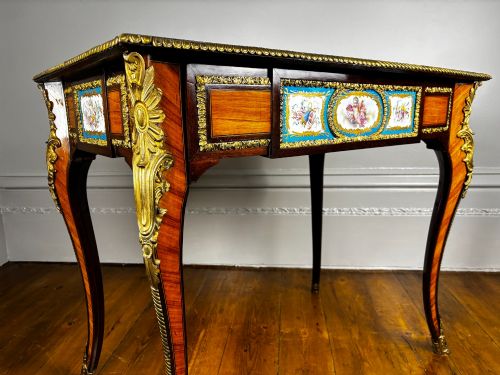
The selection leans heavily toward nineteenth-century continental examples, particularly French and Dutch pieces incorporating floral or geometric designs. Walnut, mahogany and kingwood form the primary carcass woods for these writing surfaces.
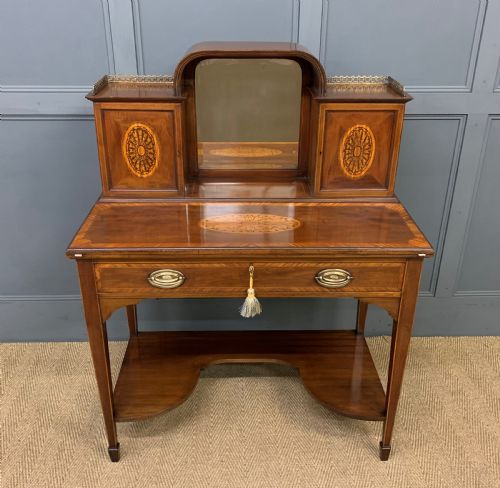
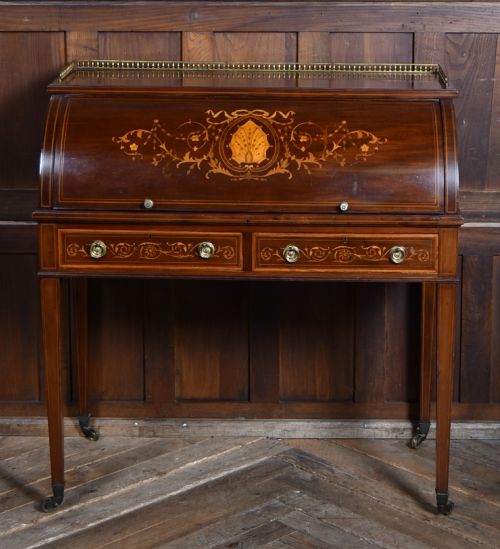
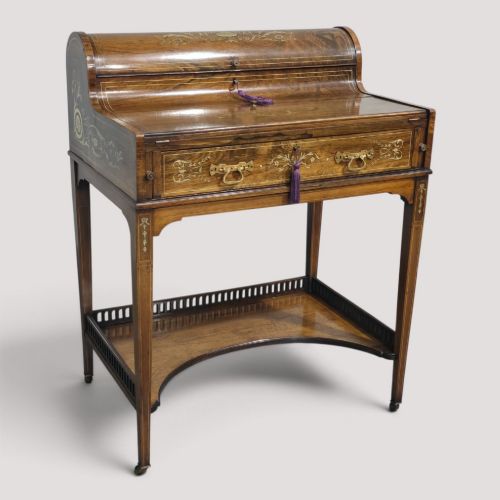
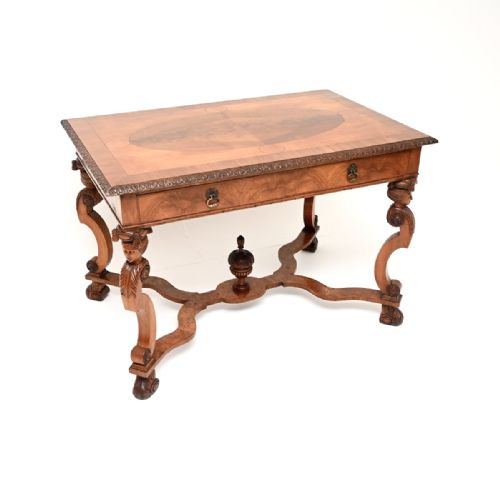
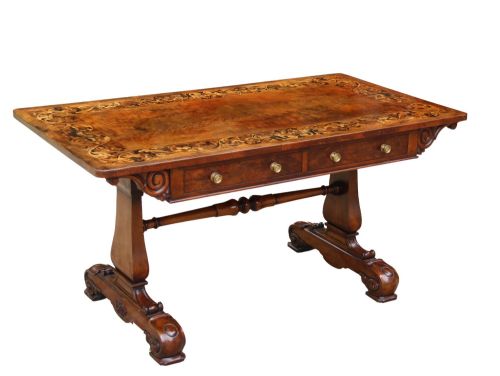
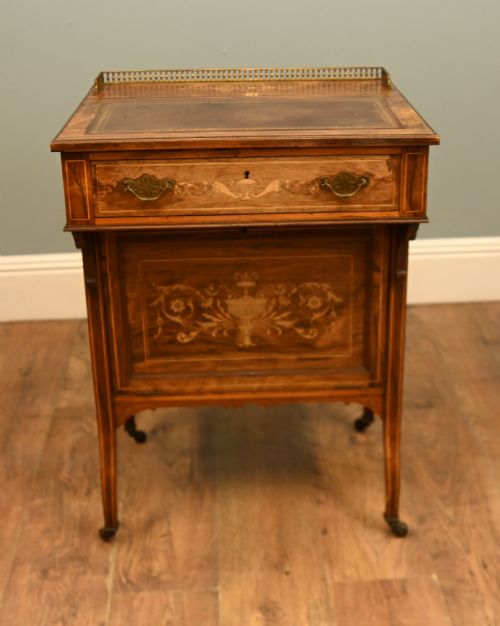
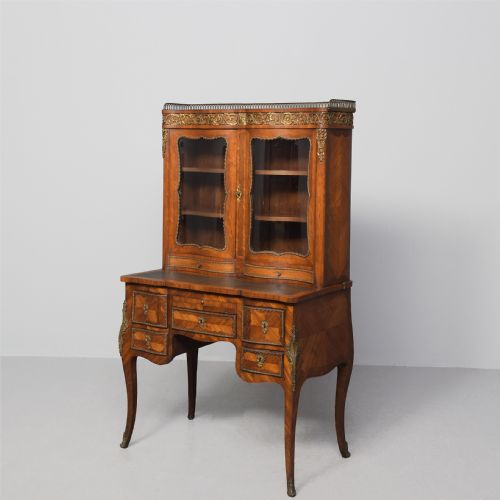
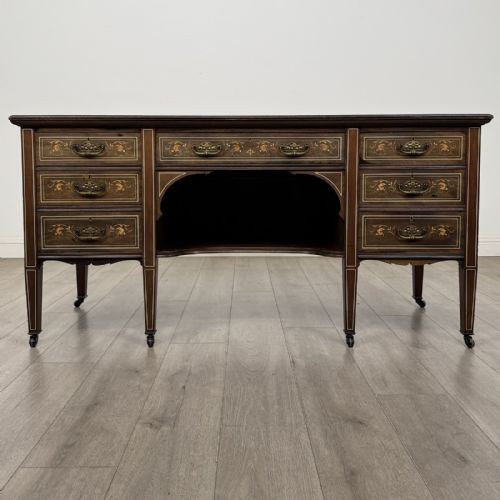
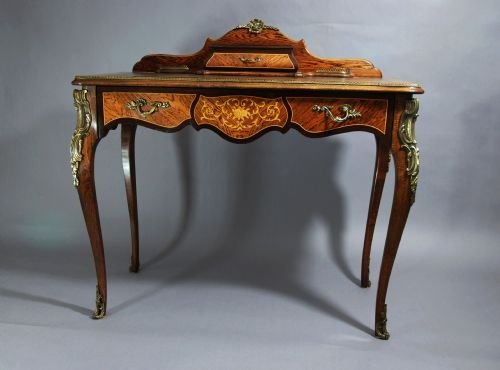
Buyers encounter various forms including fall-front bureaux, bonheur du jour writing cabinets, and freestanding centre tables. Each variation provides a distinct method of concealing writing supplies while displaying intricate veneer work.
Materials and construction
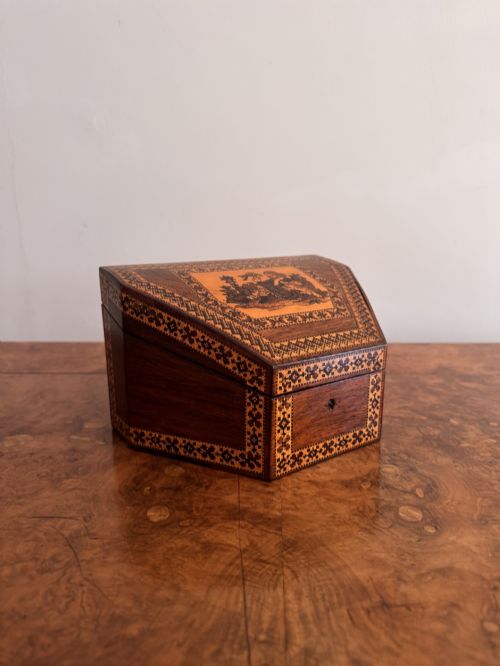
Cabinetmakers constructed these pieces using solid carcasses of oak, walnut or mahogany, then applied fine veneers across the visible surfaces. Contrasting timbers such as satinwood, fruitwood and kingwood were cut into delicate shapes to form pictorial or geometric marquetry panels.
Many examples incorporate cast or chased ormolu mounts, brass stringing and leather writing inserts to frame the timber marquetry. Joinery relied on traditional dovetails and mortise-and-tenon methods to ensure stability across large expanses of veneered wood.
Brown Marquetry Writing Desk Retail Price Guide 2026
Typical asking prices for brown marquetry writing desk among the pieces listed under this phrase on Sellingantiques today, from the lower quarter to the upper quarter. They describe what is for sale here now, not the wider market.
The inventory spans the seventeenth to the twentieth centuries, featuring walnut, mahogany, satinwood and kingwood across multiple European design traditions.
Indicators of quality
The standard of a brown marquetry writing desk depends on the complexity and precision of the veneer work. Superior examples show seamless junctions between contrasting timbers with minimal filler, whereas lesser pieces rely on painted details rather than inlaid woods.
Hardware and secondary timbers also distinguish finer workshops from standard production. High-grade desks use solid secondary woods like oak throughout interior drawers, accompanied by finely cast bronze or ormolu mounts rather than stamped sheet brass.
Edwards and Roberts
The Brown Marquetry Writing Desk Glossary
- Marquetry
- The art of forming decorative patterns by fitting together small pieces of veneer onto a structural carcass. This technique allows cabinetmakers to create complex floral, geometric or pictorial designs using various coloured timbers.
- Bureau bookcase
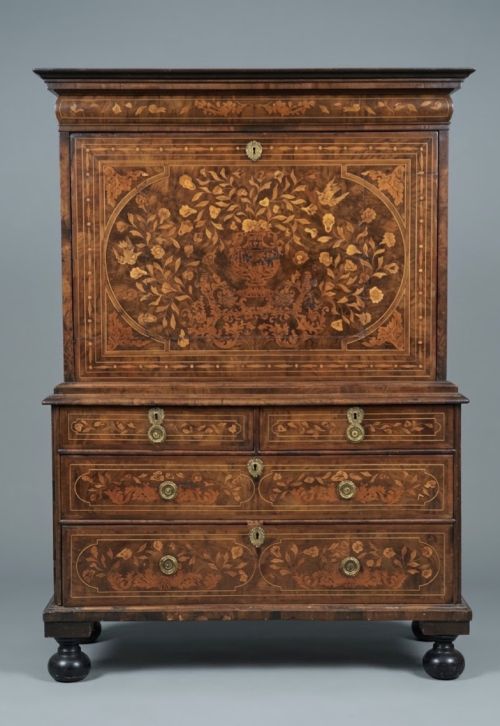
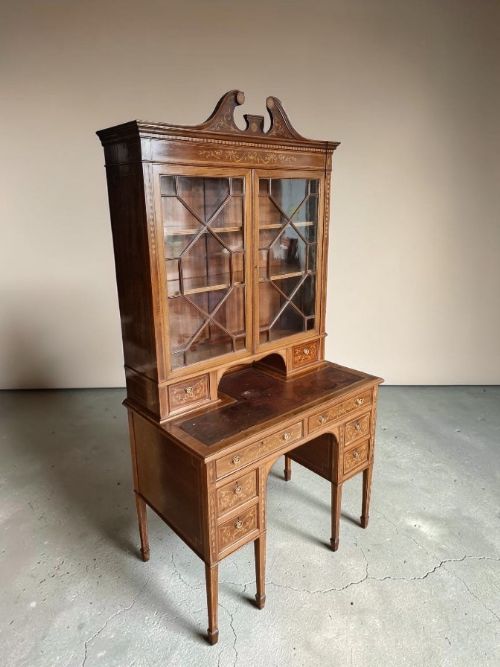
- A dual-purpose piece featuring a sloping writing flap above or below shelved storage enclosed by doors. These large items often display extensive floral marquetry across their fall fronts and cornices.
- Ormolu
- Gilt bronze mounts applied to the corners, feet and edges of fine furniture. This material adds metallic contrast to dark woods and protects vulnerable veneer edges from impact.
- Bonheur du jour
- A light ladies writing desk featuring a small cabinet or set of pigeonholes upon the upper surface. These dainty pieces frequently utilise satinwood and kingwood alongside floral inlay.
- Bureau plat
- A freestanding flat-topped writing table without a superstructure, commonly associated with eighteenth and nineteenth century French cabinetmaking. These desks usually feature drawers beneath the writing surface and elaborate marquetry tops.
Brown Marquetry Writing Desk: Frequently Asked Questions
What is a brown marquetry writing desk used for?
These pieces serve as functional writing surfaces while functioning as decorative focal points within a study or reception room. Interior compartments organise correspondence and writing implements.
Many styles include lockable fall fronts or drawers to secure private papers, combining practical storage with artistic display.
How do I care for a veneered writing surface?
Maintain these desks by keeping them away from direct sunlight and heat sources to prevent the wood veneers from drying and lifting. Regular dusting with a dry, soft cloth preserves the polished finish.
Avoid using modern liquid polishes or silicone sprays, which can penetrate hairline cracks in old polishes and damage the underlying marquetry.
How do I distinguish Dutch from French marquetry?
Dutch pieces frequently display dense, exuberant floral and bird marquetry across dark walnut grounds, often featuring bombe silhouettes. The aesthetic prioritises abundant natural motifs across every available surface.
French examples, by contrast, tend to incorporate lighter kingwood or rosewood veneers framed by ormolu mounts, favouring restrained floral sprays or geometric parquetry patterns.
Are these desks suitable for daily computer work?
Antique writing desks accommodate laptops and paperwork, though care must be taken to protect antique leather or wood surfaces from scratches and heat. The shallow drawer depths of older desks may require external solutions for modern technology.
Using a blotter or leather pad protects the antique finish while providing a stable surface for writing or electronic devices.