

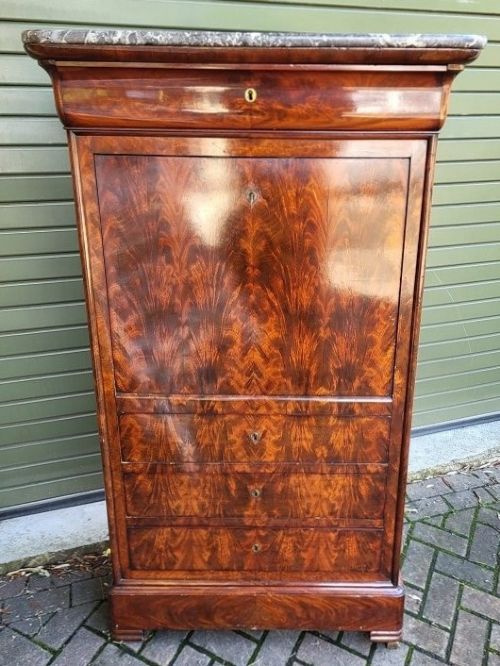


French Drop Front Secretaire
A french drop front secretaire combines concealed writing surfaces with formal elegance, offering a practical cabinet that folds down to reveal fitted compartments and drawers.
French Drop Front Secretaire
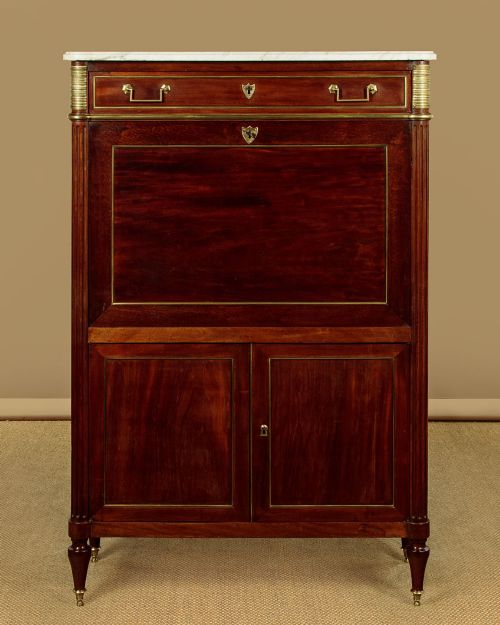
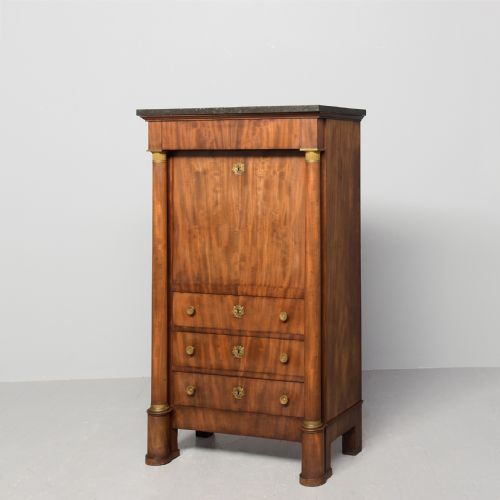
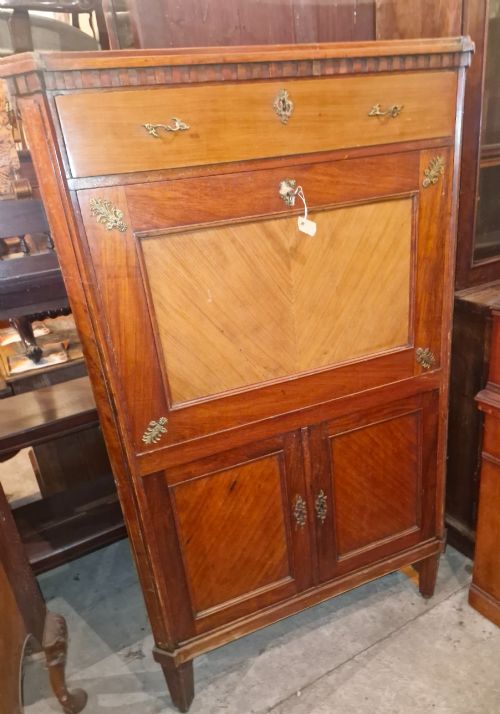
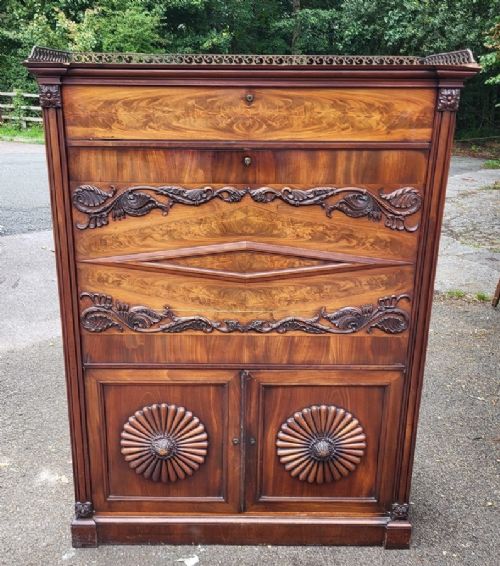
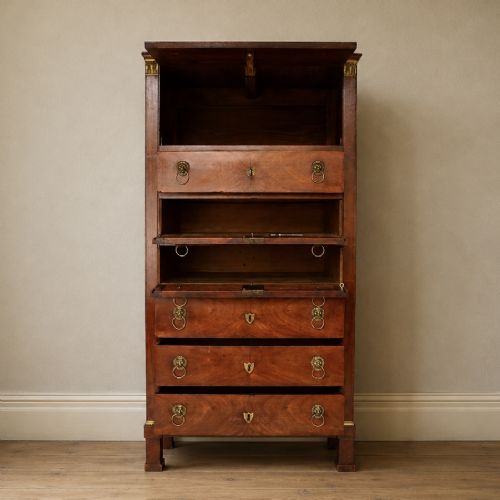
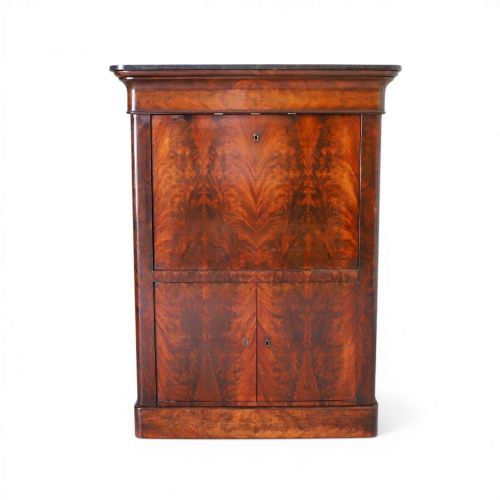
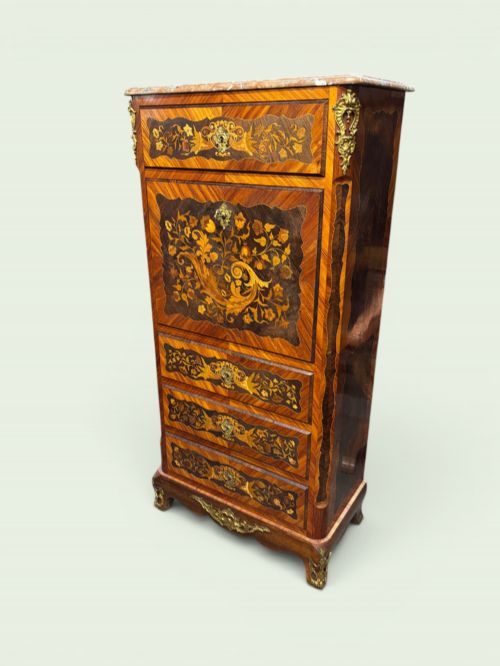
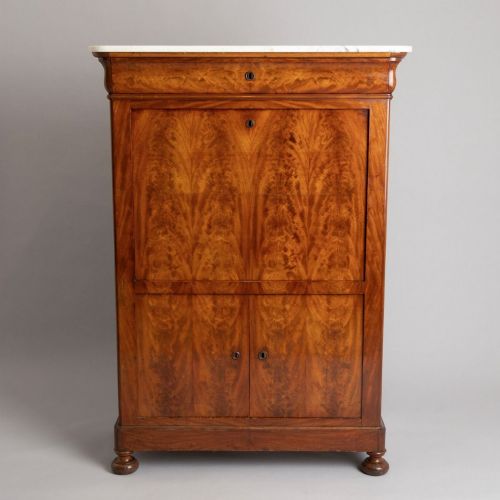
A french drop front secretaire is primarily encountered as a tall upright cabinet, known as a secretaire abattant or escritoire, designed to conceal a writing surface behind a hinged fall-front panel. These pieces span multiple periods from the eighteenth century through to the art deco era, though nineteenth-century iterations dominate the selection.
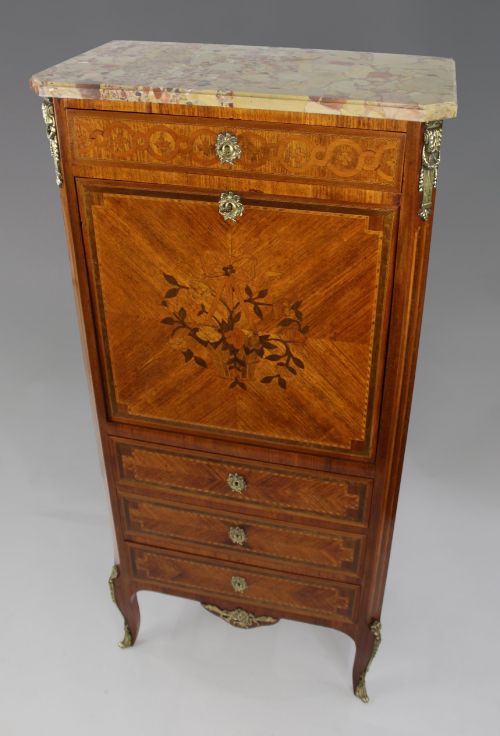
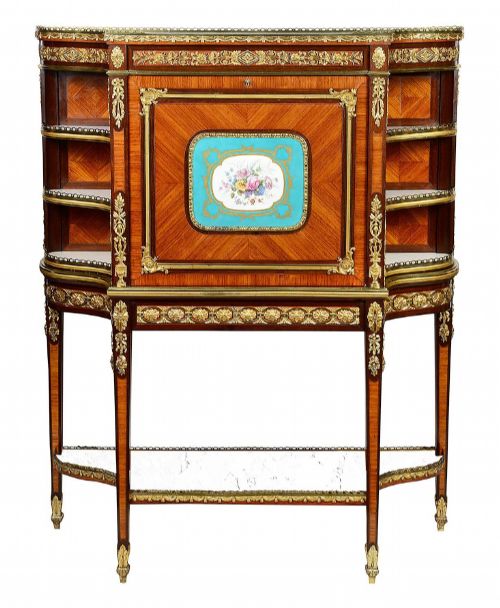
The forms vary from grand marquetry-inlaid writing cabinets surmounted by marble tops to narrower chests of drawers and pharmacy pieces. Makers drew inspiration from distinct historical revivals, producing examples aligned with Louis XV, Louis XVI, and Empire styles alongside simpler mahogany and walnut variants.
How They Were Made
Cabinetmakers constructed these writing cabinets using dense timbers such as mahogany, flame mahogany, walnut, kingwood, rosewood, and satinwood, often laid as delicate veneers or parquetry patterns over secondary woods. Structural integrity relied on precise joinery to support the heavy drop-front mechanism and internal writing surfaces.
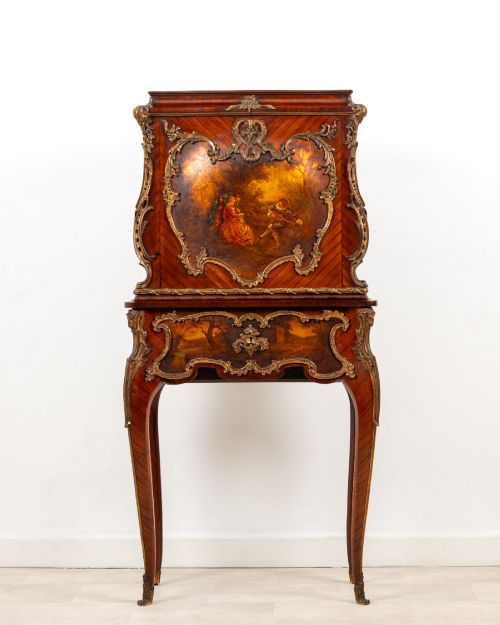
Decoration involved applied brass, gilt bronze, and ormolu mounts framing the cabinetry, complemented in certain workshops by painted vernis martin panels. Many examples incorporated inset marble tops in white or coloured varieties, requiring careful stone-cutting to fit the upper perimeter of the carcass.
Materials span mahogany, flame mahogany, kingwood, rosewood, walnut, satinwood, marble, brass, and ormolu across eighteenth- to twentieth-century pieces.
What Varies in Quality
The distinction between standard and superior pieces rests on the crispness of the ormolu mounts, the complexity of the wood veneers, and the execution of internal secret drawers. High-tier examples display meticulous parquetry or marquetry work across every elevation, including the interior writing drop.
Structural refinement shows in the fitting of the marble top and the seamless alignment of the drop-front panel when closed. Lesser examples rely on simpler timber grains without bronze mounts, while masterworks signed by documented makers command attention through precise hand-chased metalwork and balanced proportions.
Blake, London·Millet
The French Drop Front Secretaire Glossary
- Secrétaire à abattant
- A tall upright writing cabinet featuring a hinged drop-front panel that opens to reveal a desk interior. This term forms the standard continental designation for the furniture type.
- Ormolu
- Gilded bronze mounts applied to furniture for decorative effect. The material adds sculptural detail around drawers and corners.
- Marquetry
- Elaborate wood veneer patterns arranged to form pictorial or geometric designs. Craftsmen utilised contrasting timbers to create these decorative surfaces.
- Vernis martin
- A type of decorative lacquer finish developed in France, mimicking Asian lacquerware. It appears on specialised cabinet panels.
- Parquetry
- Geometric wood inlay patterns assembled from small contrasting veneer blocks. This technique creates parquet floor-like motifs on cabinet doors and drops.
French Drop Front Secretaire: Frequently Asked Questions
How do I use the drop front?
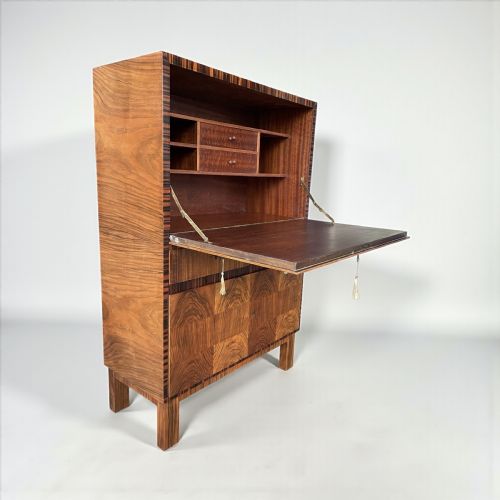
The drop-front panel typically lowers via a key or side latches to rest horizontally, supported by internal brackets or chains. This action exposes a leather- or wood-lined writing surface alongside pigeonholes and small drawers.
Once finished writing, the panel lifts back into the vertical position and locks securely to conceal the interior contents and keep documents out of sight.
Where were these cabinets placed?
These tall cabinets were traditionally designed for reception rooms, bedchambers, or private studies where space for a full pedestal desk was limited. Their vertical footprint allowed them to sit against drawing-room walls while offering storage.
The inclusion of a drop-front desk meant owners could conduct correspondence in formal rooms without dedicating floor space to a permanent writing table.
How do I distinguish between periods?
Period identification relies on the interplay of decorative styles, wood choices, and hardware mounts. Eighteenth-century and revival pieces often exhibit curved lines and elaborate marquetry, whereas Empire and nineteenth-century variants favour rectilinear proportions and heavier ormolu mounts.
Art deco examples abandon traditional revival motifs entirely, employing streamlined geometries and modern veneers from the twentieth century.
Can I store heavy books inside?
The internal shelves and drawers are engineered for writing stationery, ledgers, and correspondence rather than heavy library volumes. The drop-front mechanism itself relies on hinges and internal supports designed for light writing pressure.
Placing excessive weight on the open writing flap can strain the supporting pivots, so heavier reference books are best kept in dedicated bookcases.