

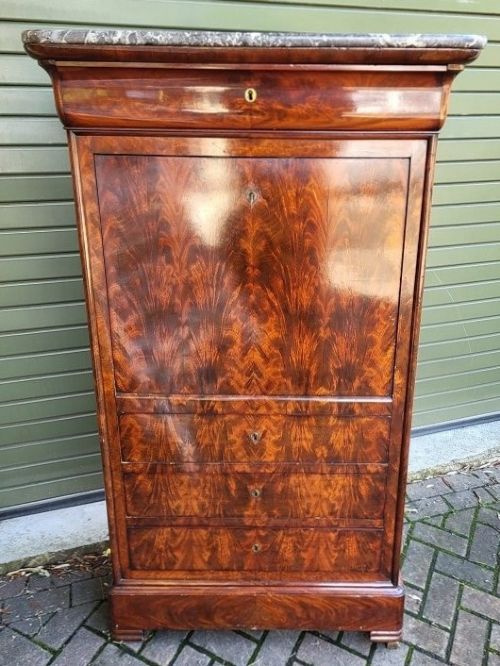


Fall Front Escritoire
A fall front escritoire brings a private, fitted writing surface that conceals correspondence behind a hinged panel when not in use.
Fall Front Escritoire
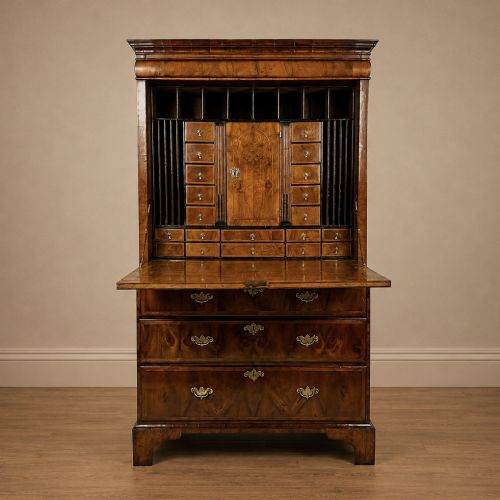
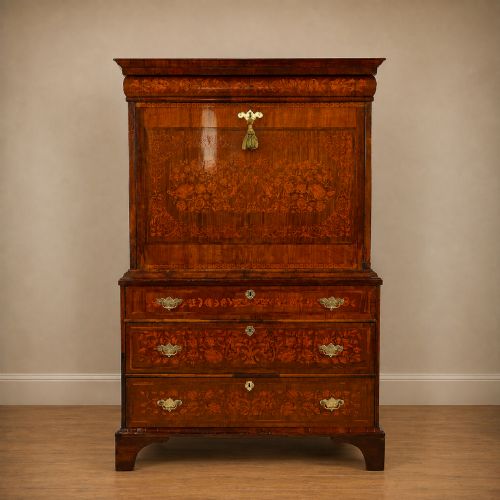
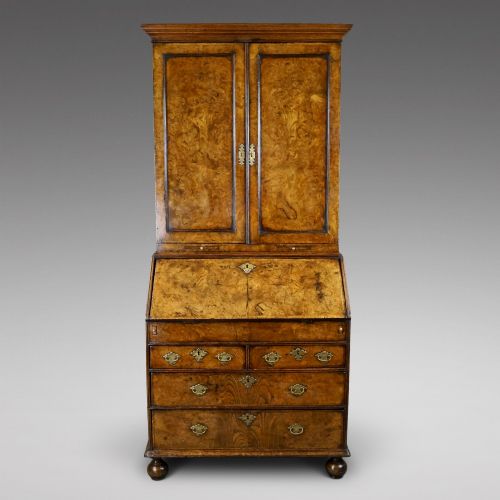
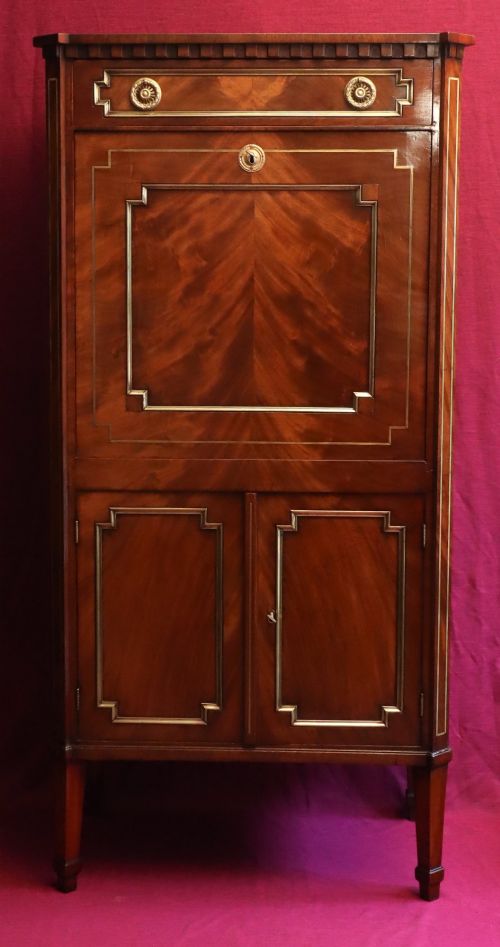
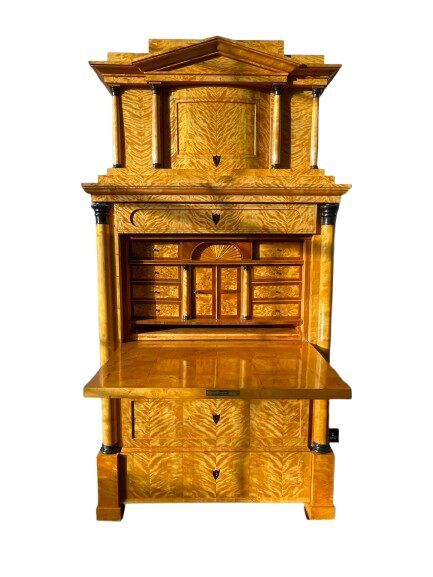
A fall front escritoire is a dedicated writing cabinet featuring a vertical drop-down writing flap that opens to reveal internal drawers and pigeonholes. When exploring options for a fall front escritoire, buyers encounter forms spanning several centuries, from early walnut examples to later mahogany and marquetry pieces.
The selection ranges from tall upright cabinets to compact desks designed for domestic correspondence. English and continental workshops produced these writing cabinets using figured timbers, decorative veneers, and fitted interiors.
Materials and construction
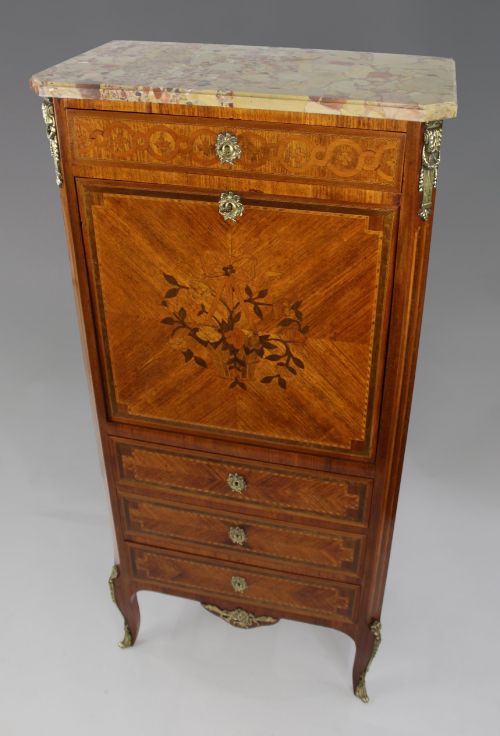
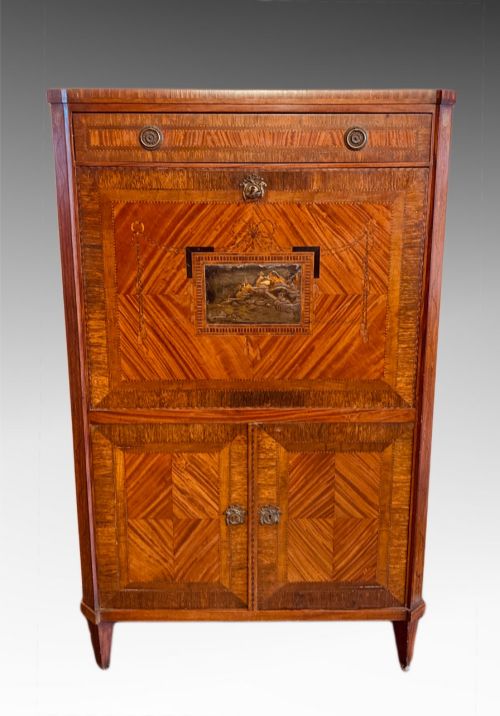
Cabinet makers utilised fine timbers including walnut, mahogany, satinwood, and rosewood, often laid over secondary woods as veneers. Marquetry inlay, brass mounts, ormolu, and marble tops appear across French, English, and continental examples.
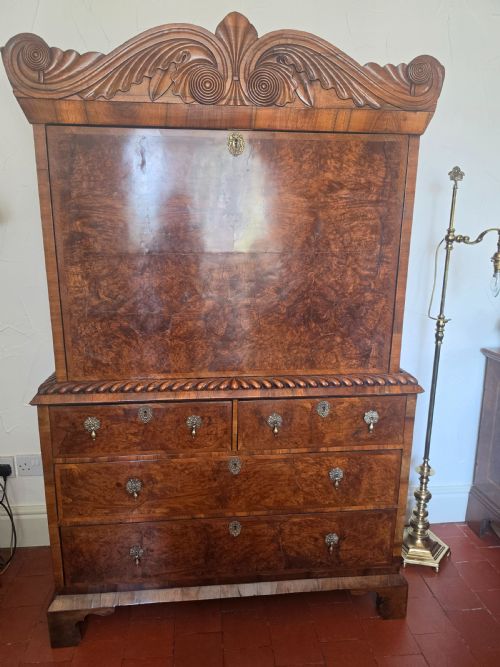
The drop-down flap requires precise joinery and internal supports to bear the weight of writing. Drawers within the interior are constructed with traditional joints, while exterior surfaces display figured grain patterns such as burr elm or oyster walnut.
Secret drawers hidden behind pigeonholes kept family secrets safe from curious guests.
Assessing quality and craftsmanship
Quality rests upon the selection of timber veneers and the intricacy of the internal fittings. Pieces with matching grain patterns across the fall front and drawer fronts display greater cabinet-making skill.
The preservation of original brass hardware, internal compartments, and working locks distinguishes superior examples. The crispness of marquetry inlay and the stability of the fall-down mechanism indicate the standard of execution.
Gregory & Co. of London
The Fall Front Escritoire Glossary
- Escritoire
- A writing cabinet or desk equipped with a writing flap and internal compartments. This term is often used interchangeably with bureau or secretaire.
- Fall front
- A hinged writing flap that drops into a horizontal position for writing and lifts vertically to conceal the interior. It serves as the defining characteristic of these writing cabinets.
- Marquetry
- Decorative patterns formed by the insertion of various woods, veneers, or other materials into a solid wood ground. It frequently adorns continental escritoires.
- Oyster walnut
- Slices cut transversely from small branches or roots of walnut trees to produce circular or oval patterns resembling oyster shells. This technique appears on William and Mary period pieces.
- Ormolu
- Gilded bronze mounts and decorative elements applied to furniture frames, particularly common on French nineteenth-century examples.
Fall Front Escritoire: Frequently Asked Questions
How do I date an antique walnut escritoire?
Dating relies upon timber selection, hardware, and construction methods. Early examples from the late seventeenth and early eighteenth centuries frequently feature burr walnut, oyster veneers, and bun feet.
Later nineteenth-century interpretations adopt different proportions, polished mahogany veneers, or continental marquetry designs while retaining the core vertical writing format.
Were these desks used standing or sitting?
Fall front escritoires were designed to be used while seated, with the fall front lowered to create a horizontal writing ledge at table height. The internal compartments kept ink, paper, and letters organised close at hand.
When closed, the vertical cabinet kept private correspondence out of sight in domestic reception rooms or studies.
Why do some escritoires feature marble tops?
Marble tops appear frequently on nineteenth-century French escritoires and secretaires à abattant. They added a decorative weight and a durable, smooth surface to the top of the cabinet.
This continental design choice contrasted with the all-wood construction typical of earlier English walnut and mahogany examples.