


French Tall Desk Cabinet
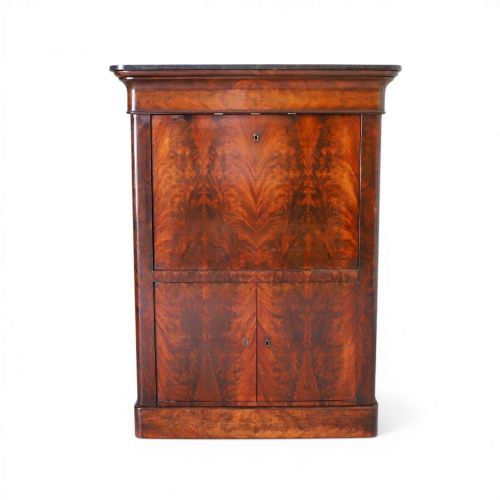
A french tall desk cabinet brings architectural verticality and hidden writing surfaces into a room.
French Tall Desk Cabinet
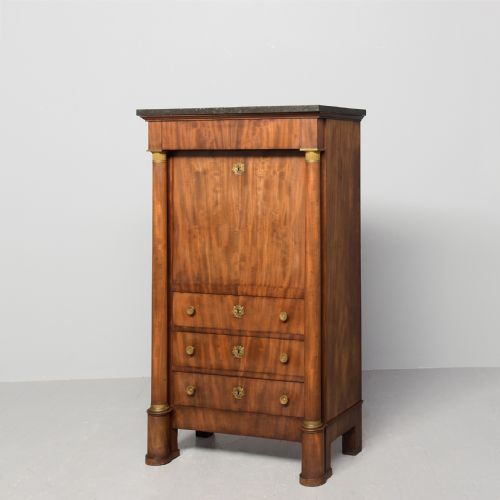
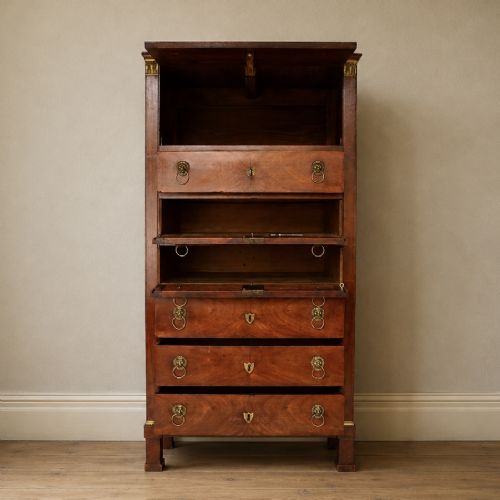
When searching for a french tall desk cabinet, you encounter case pieces designed for upright storage with a drop-down writing surface. These objects combine the vertical presence of a chest of drawers with the utility of a writing desk.
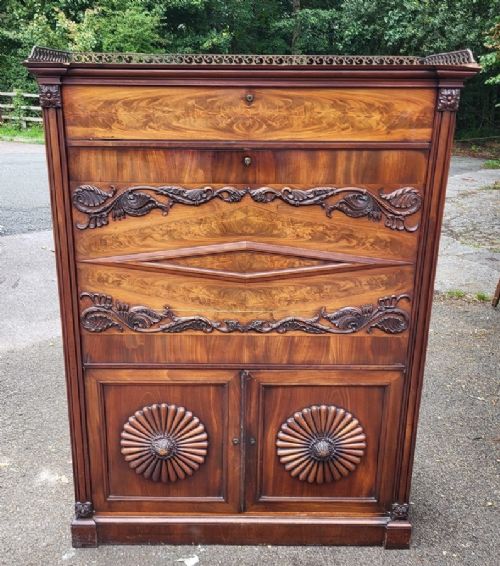
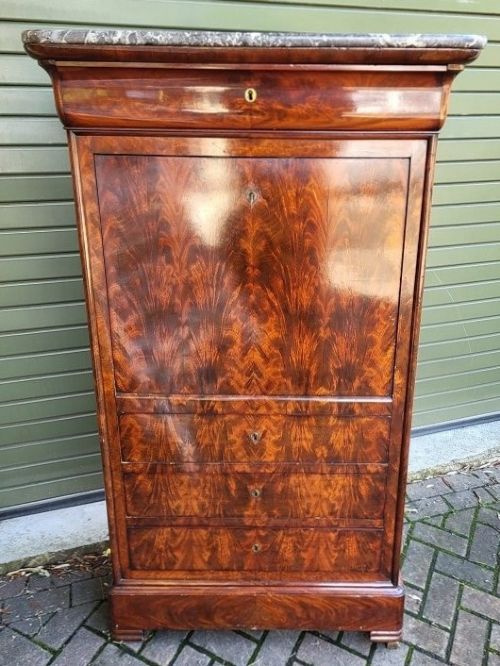
The selections here span the nineteenth century and the early twentieth century, featuring forms such as the secretaire abattant and the escritoire. Mahogany, flame mahogany, kingwood, walnut, and rosewood form the primary carcasses of these pieces.
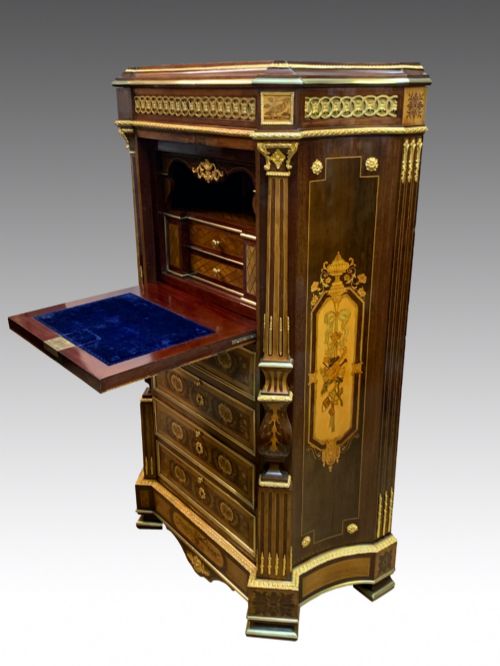
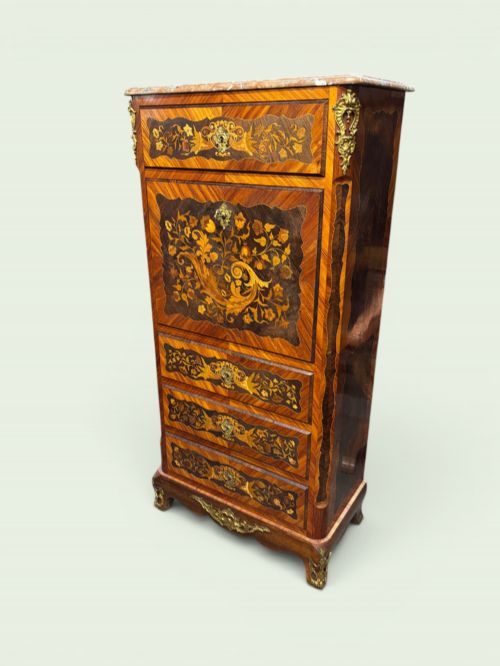
Stylistic influences draw heavily from French Empire, Louis XV, and Louis XVI revivals, alongside French Restoration designs. Many examples incorporate marble tops and elaborate marquetry inlay alongside internal compartments and secret drawers.
Materials and Construction
Cabinetmakers utilised dense hardwoods like mahogany, walnut, and kingwood as foundations for veneering, often selecting flame mahogany or intricate marquetry patterns for the primary visible surfaces. Carcasses were built with structural stability in mind to support the heavy marble tops frequently mounted above.
Cast or chased ormolu mounts were applied to corners, keyholes, and feet to accent the architectural lines of the furniture. Internal compartments required precise joinery to house concealed drawers and pigeonholes accessed via the hinged writing flap.
Listings feature nineteenth-century walnut, mahogany, and kingwood cabinets with marble tops and ormolu mounts.
Assessing Quality and Execution
The distinction between tiers of execution rests upon the crispness of the marquetry and the weight of the bronze or ormolu mounts. Finer pieces demonstrate seamless veneer matching across the drop-front panel and internal drawers.
Structural integrity of the fall-front mechanism dictates longevity, as hinges and internal support brackets must bear the weight of the writing surface. Original marble slabs and intact internal secret compartments elevate the standing of a piece within its period.
Maison Krieger·Millet
The French Tall Desk Cabinet Glossary
- Secretaire abattant
- A tall upright desk featuring a hinged drop-front writing surface that conceals internal drawers and pigeonholes. This form maximises vertical storage while providing a dedicated writing space.
- Ormolu
- Gilt bronze mounts applied for decorative effect on furniture corners and drawer frames. The technique involves applying a mercury-gold amalgam to bronze.
- Marquetry
- Decorative veneer patterns formed by fitting together thin pieces of wood, shell, or ivory. Craftsmen assemble these motifs to create pictorial or geometric surface designs.
- Kingwood
- A dense, heavily figured Brazilian timber utilised in high-end cabinetry for its rich grain. It appears frequently in marquetry and decorative banding.
- Escritoire
- A small writing cabinet or desk. The term describes upright furniture designed specifically for correspondence and document storage.
French Tall Desk Cabinet: Frequently Asked Questions
What is a secretaire abattant?
A secretaire abattant is an upright cabinet featuring a drop-down front panel that serves as a writing surface.
Behind this hinged flap lie small drawers and pigeonholes for correspondence and documents.
How were these cabinets used?
These pieces served as private writing desks and storage cabinets in nineteenth-century domestic interiors.
The vertical format allowed owners to keep papers organised while saving valuable floor space in reception rooms or bedrooms.
How do I identify the period?
Dating relies upon timber choices, mount styles, and structural characteristics associated with nineteenth-century French cabinetmaking.
Empire and Restoration pieces display different aesthetic vocabularies compared to later Louis XV and XVI revival items.
Are marble tops original?
Many nineteenth-century examples incorporated fitted marble slabs to provide a durable and decorative upper surface.
Inspect the edges and undersides to see how the stone integrates with the timber framework of the cabinet.