

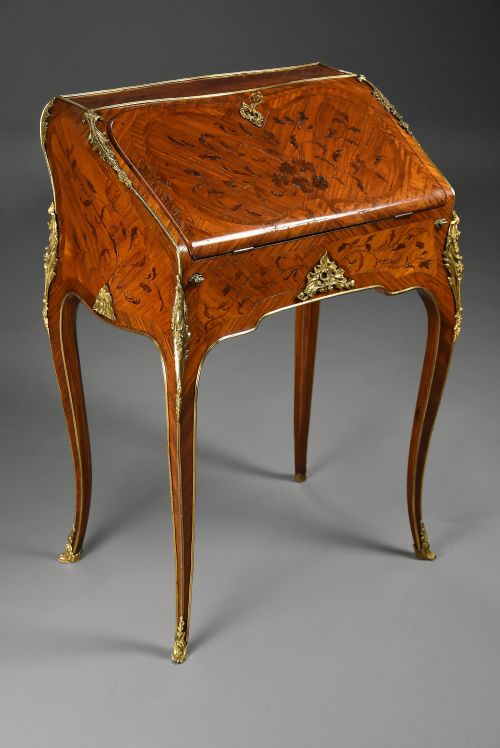


Louis XV Kingwood Secretaire
A louis xv kingwood secretaire combines rich timber and bronze mounts for a functional centrepiece.
Louis XV Kingwood Secretaire
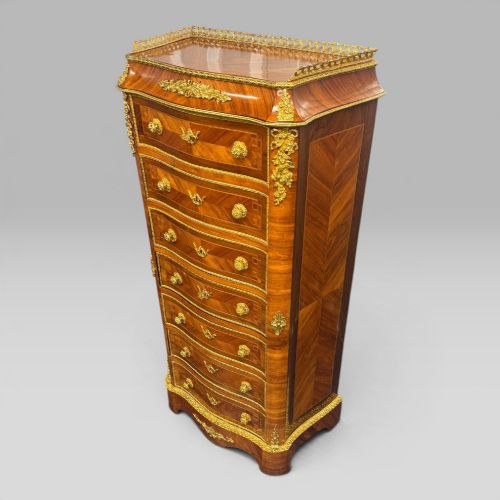
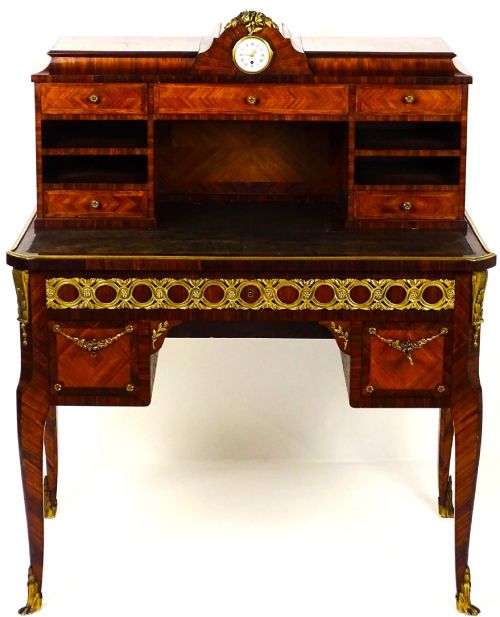
A louis xv kingwood secretaire is a sophisticated item of writing furniture designed for storage and secret correspondence. The pieces on this page appear primarily from the nineteenth century alongside mid eighteenth century examples, spanning writing desks, bureaux and writing cabinets.
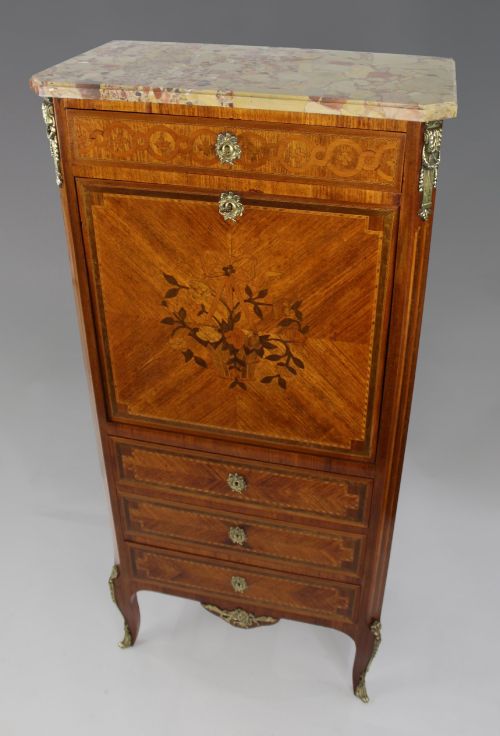
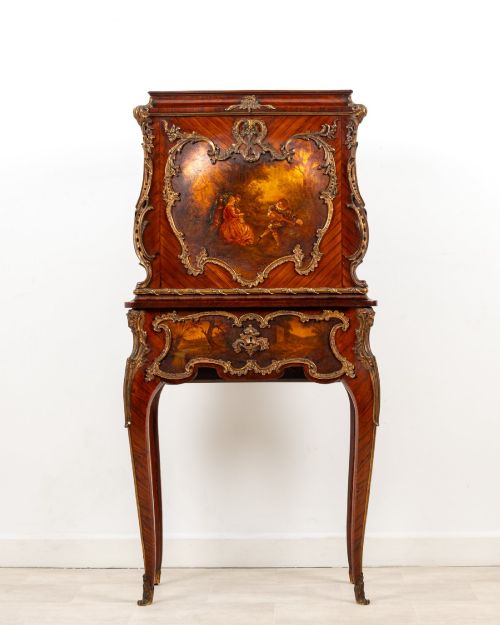
Buyers will encounter revival pieces featuring marquetry and vernis martin panels alongside authentic mid eighteenth century works. Forms range from petite secretaire en pente slopes to tall secretaire abattant cabinets fitted with marble tops.
Originating in France, these items bring together elaborate desk formats with specialised writing surfaces. The selection reflects both true period craftsmanship and later nineteenth century interpretations of the rococo style.
Materials and construction methods
Construction relies heavily on kingwood veneers applied to carcases, frequently paired with rosewood and detailed marquetry. Ormolu and gilt bronze mounts frame the corners, drawer edges and panels to accentuate the serpentine contours.
Many cabinets incorporate inset marble tops and leather writing surfaces alongside brass hardware. Vernis Martin lacquer work appears on specific panels, providing glossy painted decoration characteristic of the period.
Louis XV Kingwood Secretaire Retail Price Guide 2026
Typical asking prices for louis xv kingwood secretaire among the pieces listed under this phrase on Sellingantiques today, from the lower quarter to the upper quarter. They describe what is for sale here now, not the wider market.
Secret compartments hidden behind miniature drawers kept love letters safe from prying eyes.
Distinctions in craftsmanship
Quality rests upon the precision of the kingwood grain matching and the crispness of the ormolu casting. Finer examples display deeply chased gilt bronze mounts that integrate seamlessly with the timber curves.
The sophistication of the internal compartments and the execution of the marquetry dictate the upper tier of pieces. Inferior versions show simpler veneering without the nuanced hand-finishing found on maker-attributed desks.
Paul Sormani·BVRB
The Louis XV Kingwood Secretaire Glossary
- Secretaire abattant
- A tall upright writing cabinet featuring a drop-down fall front that conceals fitted interior drawers. This form allows a compact footprint while offering a stable writing surface.
- Kingwood
- A dense Brazilian timber prized for its rich dark violet-brown grain and golden stripes. It serves as the primary decorative veneer across these French cabinets.
- Ormolu
- Gilded bronze cast and chased to mount upon furniture corners and key escutcheons. The technique adds metallic relief to the polished wood surfaces.
- Vernis Martin
- A simulated Japanese lacquer developed in France during the eighteenth century. It uses multiple resin layers to produce translucent painted scenes.
- Marquetry
- Inlaid wood pieces arranged to form geometric patterns or pictorial designs on the furniture exterior. Craftsmen select contrasting veneers to create tonal depth.
Louis XV Kingwood Secretaire: Frequently Asked Questions
What is a louis xv kingwood secretaire?
A louis xv kingwood secretaire is a French writing cabinet built with a drop front or slope. It provides enclosed desk space combined with decorative timber and metal mounts.
These items range from mid eighteenth century originals to nineteenth century revival pieces produced in French workshops.
How do I use a secretaire abattant?
The drop-down fall front unlocks to reveal a writing surface supported by internal hinges or stays. Small drawers and pigeonholes sit behind this flap for letters and ink.
When closed, the cabinet presents a neat facade suitable for formal reception rooms.
Where does kingwood come from?
Kingwood is a dense hardwood imported from South America, particularly Brazil, during the eighteenth century. Cabinetmakers valued it for its striking dark and light figuring.
It is cut into thin veneers rather than used as solid timber due to its weight.
How do I date a nineteenth century piece?
Nineteenth century revival pieces adopt eighteenth century forms but utilise machine-sawn veneers and different internal construction woods. Stylistic cues include revival mounts and specific maker signatures.
Examining the secondary timbers inside the drawers often clarifies the actual period of manufacture.