




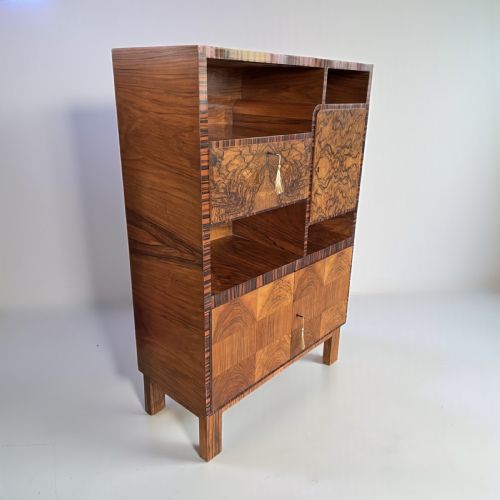
Rosewood Display Shelves
These rosewood display shelves bring warmth and refined tiered storage to a room, ranging from compact wall units to elaborate Victorian open bookcases.
Rosewood Display Shelves
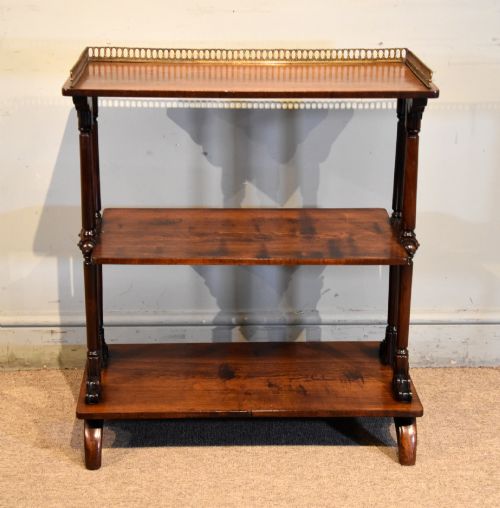
When buyers search for rosewood display shelves, they encounter a variety of multi-tiered wooden furniture designed to hold books and decorative objects. These pieces span several distinct eras, notably the 19th Century, Victorian, Regency, and Edwardian periods.
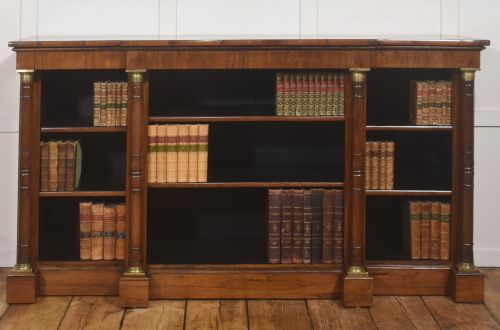
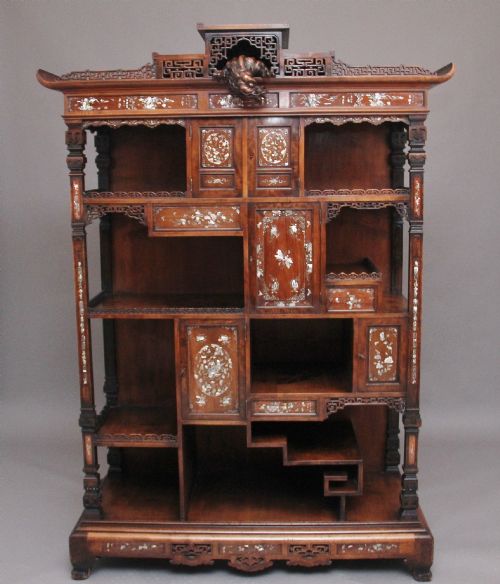
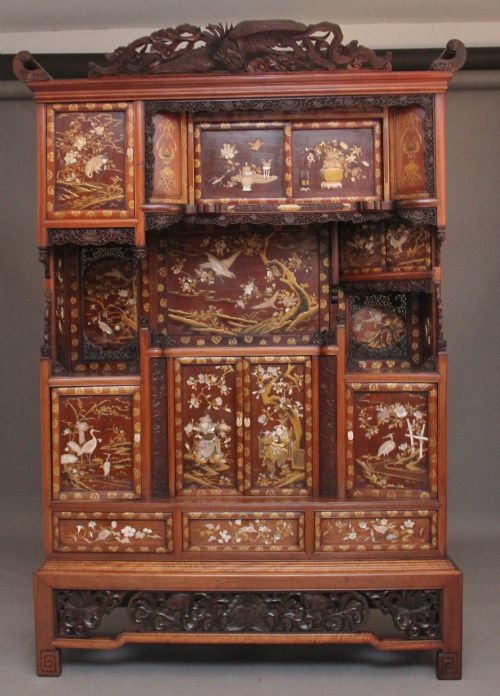
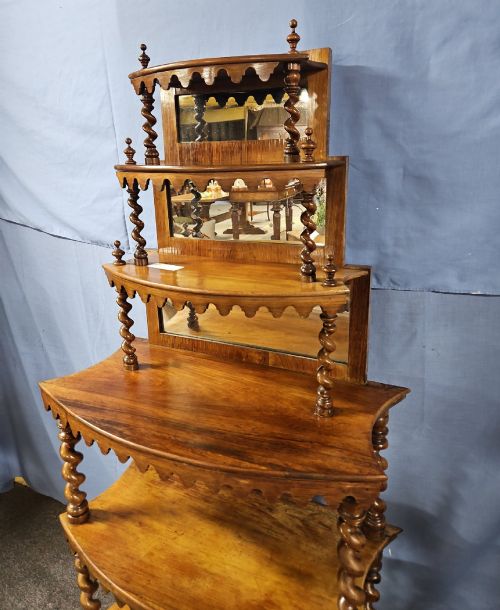
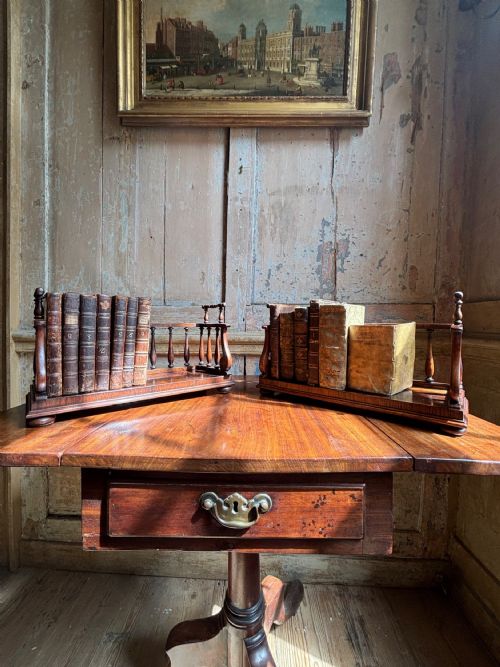
The selections on this page most commonly appear as open bookcases, whatnots, etageres, and wall shelves. Makers from different traditions adapted the form, producing English Regency designs alongside French, Chinese Qing style, and Japanese Meiji period cabinets.
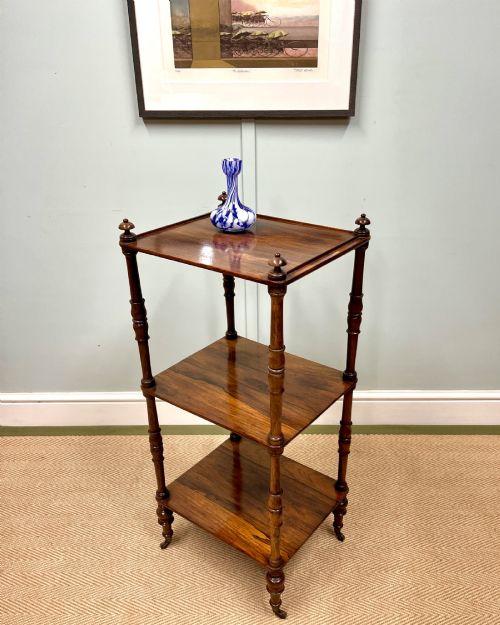
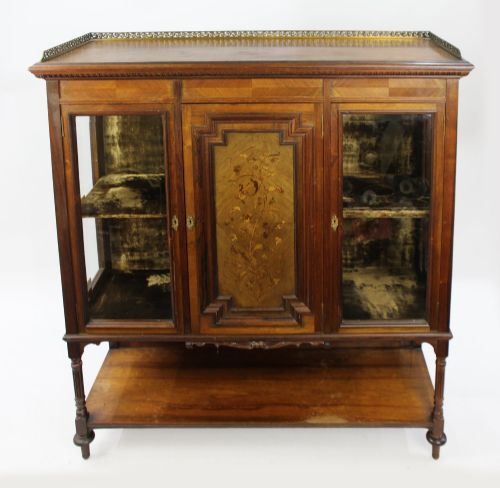
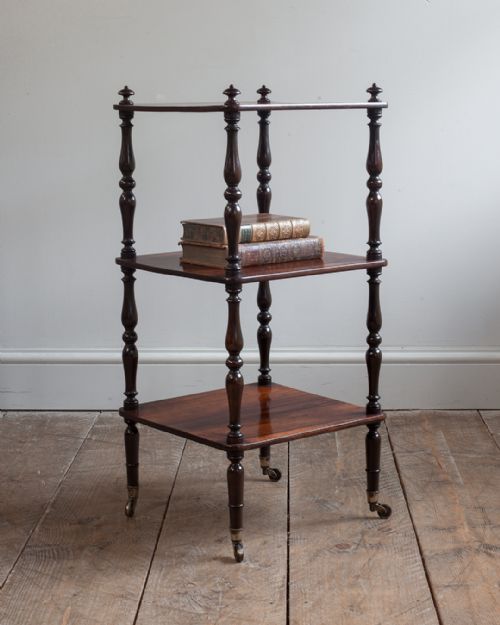
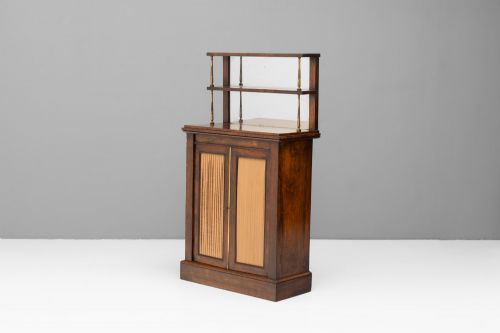
The simpler versions provide straightforward open shelving supported by slender columns or uprights. More elaborate examples incorporate tiered stages, glass vitrine tops, or lower cupboards for enclosed storage.
How they were made
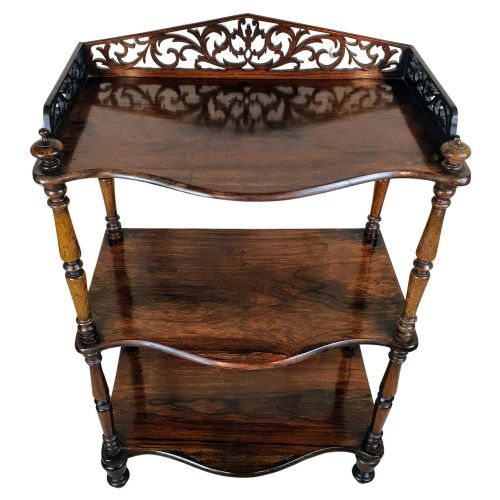
The primary material across these pieces is rosewood, often utilised as a rich veneer over secondary timbers such as softwood or hardwood. Cabinet makers enhanced the dark grain using brass inlay, ormolu mounts, and delicate mother of pearl detailing.
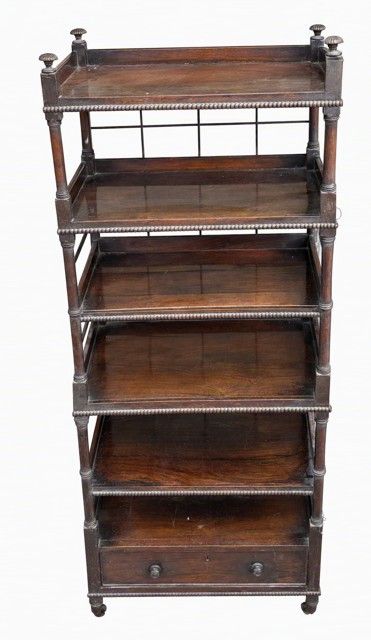
Structural elements frequently include turned or fluted columns supporting multiple graduated tiers. Glass panels appear in doors and vitrine tops, while surfaces occasionally feature patinated marble inserts or brass galleries to secure the edges.
Rosewood Display Shelves Retail Price Guide 2026
Typical asking prices for rosewood display shelves among the pieces listed under this phrase on Sellingantiques today, from the lower quarter to the upper quarter. They describe what is for sale here now, not the wider market.
The furniture forms range from open bookcases and whatnots to Chinese pagoda display cabinets and Japanese shodana units.
What varies in quality
Quality in these pieces depends heavily on the crispness of the timber selection and the precision of the joinery. Finer examples display carefully matched rosewood veneers with continuous grain patterns across the tiers and doors.
The secondary decoration dictates the upper tier of craftsmanship. Hand-chiselled ormolu mounts, tight brass stringing, and well-executed mother of pearl or marquetry inlay separate standard utilitarian furniture from exceptional display pieces.
Gillows·Samson and Son London
The Rosewood Display Shelves Glossary
- Etagere
- A French tiered shelving unit designed for ornaments and decorative items. These often incorporate mirrors, delicate inlay, or glass panels.
- Chiffonier
- A low cabinet or sideboard with shelving or a raised superstructure on top. The form developed during the Regency and Victorian eras for storage and display.
- Shodana
- A traditional Japanese multi-tiered display cabinet with asymmetrical shelving compartments. These pieces arrived in Western interiors during the late nineteenth century.
- Ormolu
- Gilded bronze mounts applied to furniture for decorative effect. The technique was particularly popular in French and revivalist pieces.
Rosewood Display Shelves: Frequently Asked Questions
What is the difference between a whatnot and an etagere?
A whatnot is a practical English tiered shelving unit designed primarily for holding books and household objects within reach.
An etagere is typically a lighter, more decorative French form intended specifically for displaying ornaments and curiosities.
How do I identify a Regency rosewood bookcase?
Regency bookcases generally display classical proportions, restrained architectural lines, and dark rosewood veneers. They often feature brass inlay, open shelves, and turned feet.
Later Victorian versions tend to be heavier and incorporate more elaborate carvings or mixed materials like marble and ormolu.
Were these shelves used in bedrooms or living rooms?
These pieces suited principal reception rooms, libraries, and drawing rooms where homeowners displayed prized collections and leather-bound volumes.
Smaller tabletop etageres and wall shelves were placed in parlours and boudoirs to hold porcelain, miniatures, and small decorative items.
What does a Japanese Meiji period influence mean for these shelves?
Pieces with a Meiji period or shodana influence reflect the late nineteenth-century European fascination with Japanese design. They feature asymmetrical shelving compartments, distinct joinery, and oriental motifs.
Cabinet makers blended these exotic forms with traditional Western rosewood construction to create hybrid display cabinets.
Are the shelves adjustable on antique bookcases?
Many open bookcases from the Regency and Victorian periods feature adjustable wooden shelving supported by brass rack strips or wooden pegs.
Wall shelves and tiered whatnots typically have fixed platforms secured permanently into the vertical uprights or columns.