




Rosewood Display Credenza
A rosewood display credenza brings rich timber and glazed storage together, offering a stately focal point for a formal interior.
Rosewood Display Credenza
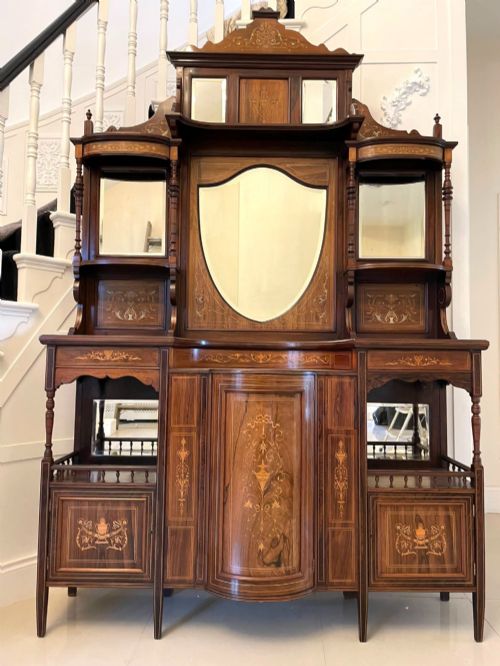
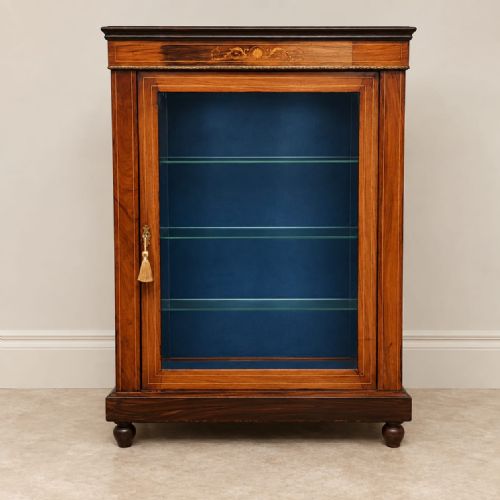
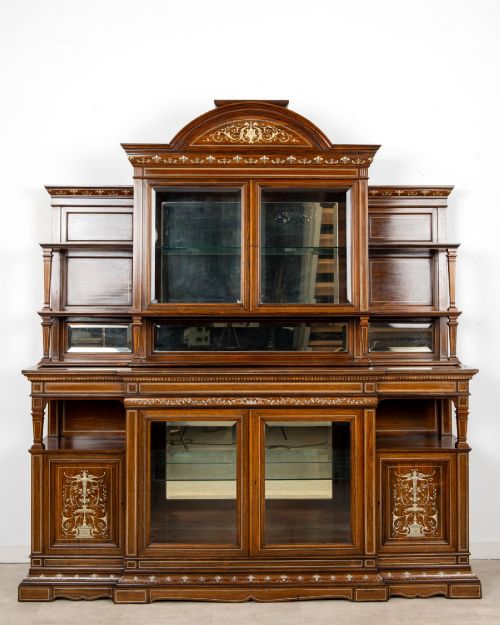
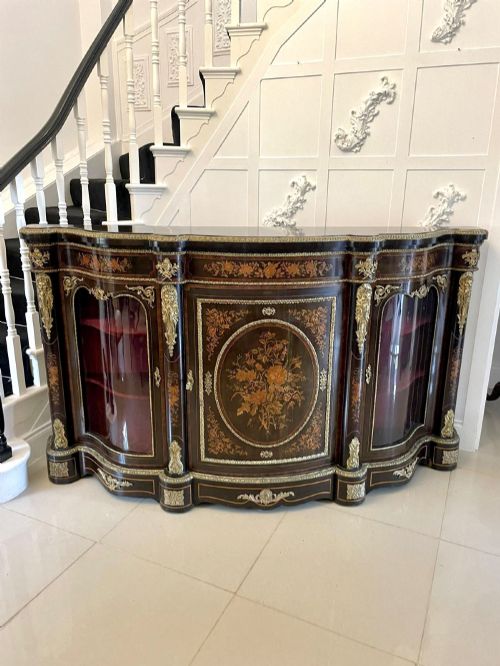
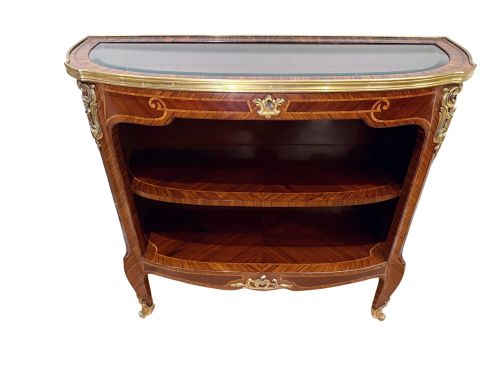
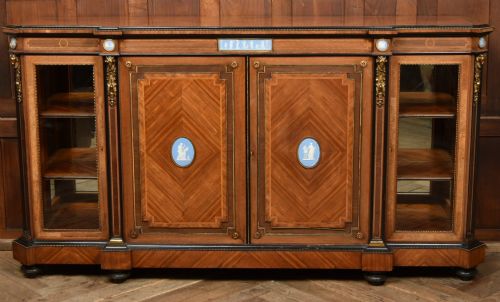
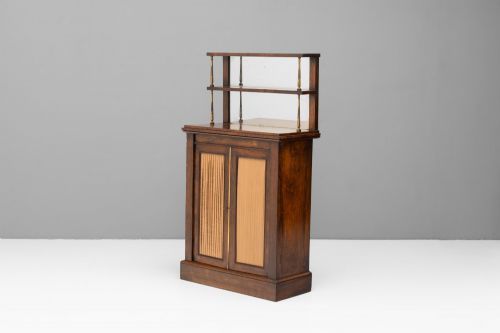
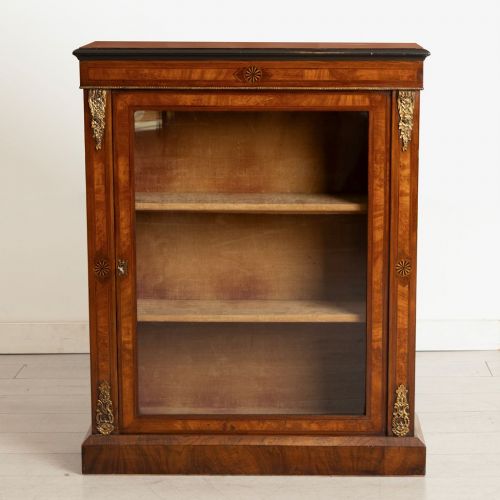
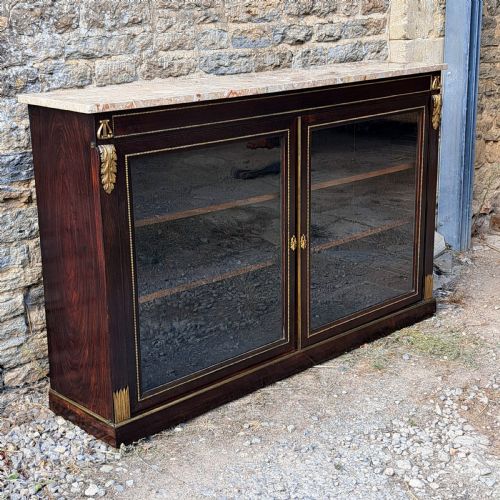
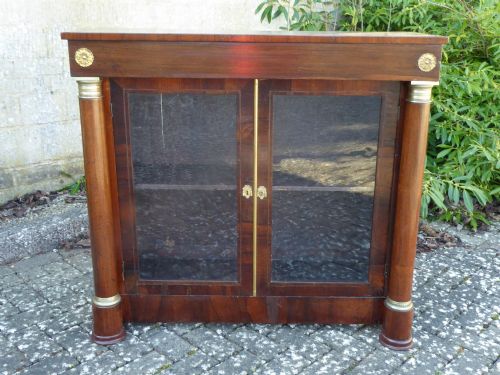
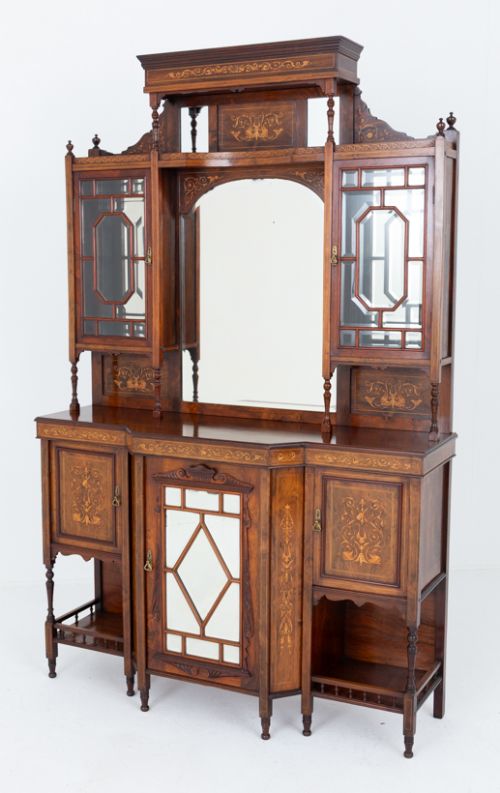
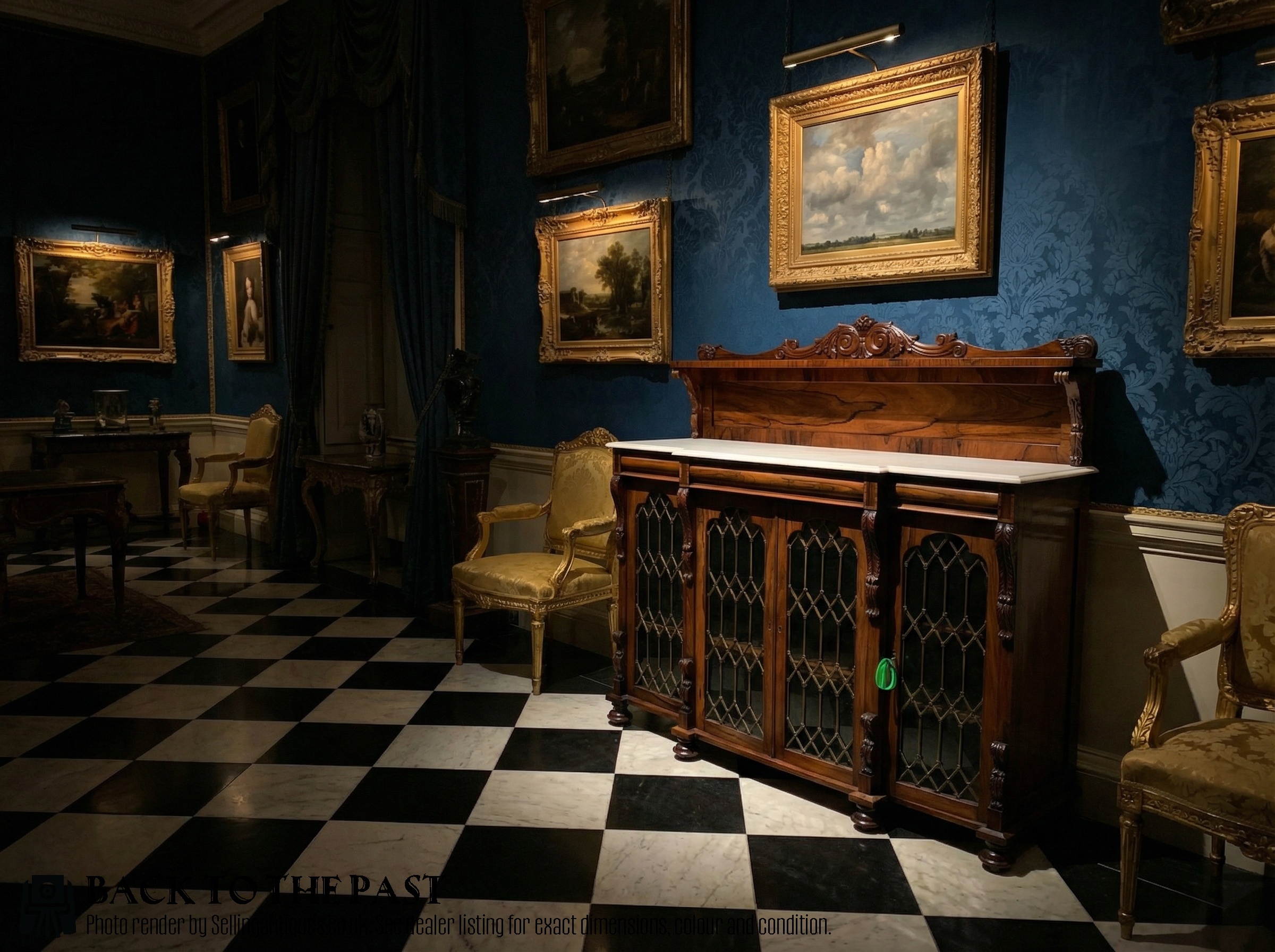
A rosewood display credenza combines the functions of a low cabinet, a bookcase, and a showcase for prized possessions, emerging primarily across the nineteenth century. These pieces bridge the gap between closed storage and open display, frequently incorporating mirrored backs and glass doors to catch the light. Buyers encounter diverse forms, from Regency brass-inlaid side cabinets to elaborate Victorian marquetry credenzas and Edwardian variations.
The profile typically stays low and horizontal, designed to sit against a principal wall in a reception room or parlour. Pieces from the Regency and William IV periods tend towards architectural dignity with brass inlay, whereas Victorian and later examples often embrace floral marquetry and serpentine fronts. Pier cabinets and chiffoniers also appear within this category, sharing the core materials and ornamental language of the wider credenza family.
Materials and Construction Methods
Makers utilised dense, dark rosewood as the primary timber, often selecting veneers with striking grain patterns to cover solid pine or oak carcases. Brass stringing, ormolu mounts, and delicate floral marquetry in satinwood provide contrasting highlights across the facades of nineteenth-century examples. Glass panels and mirrored backs complete the construction, requiring precise joinery to house fragile elements securely within heavy timber frames.
Surface finishing relied on hand-applied French polish, which deepens the natural reddish-brown tones of the rosewood and protects the detailed inlay work. Carved wooden details, gilt bronze mounts, and painted panels appear on pieces influenced by French Louis XV Revival and Aesthetic Movement styles. Structural integrity depends on stable carcase construction and sound veneering techniques that withstand environmental shifts without lifting.
Many Victorian pier cabinets were built narrow enough to squeeze precisely into the draughty wall space left between two tall drawing-room windows.
Distinguishing Quality in Construction and Design
The standard of a rosewood display credenza rests on the crispness of the brass inlay, the precision of the marquetry, and the selection of the timber veneer. Superior pieces display book-matched grain patterns that flow symmetrically across doors and drawers, demonstrating deliberate planning by the cabinetmaker. Finer examples also feature well-cast ormolu mounts and heavy, clear glass rather than common trade replacements.
Structural refinement dictates the longevity and visual balance of the piece, visible in the snug fit of glazed doors and the weight of the interior shelving. Cabinets bearing maker attributions or stamps often demonstrate superior internal finishing and more ambitious architectural proportions. Conversely, simpler execution appears in later or more utilitarian pieces where inlay is replaced by basic painted decoration.
Collinson and Lock·Edwards and Roberts
The Rosewood Display Credenza Glossary
- Credenza
- A low dining or reception room cabinet used for storage and display. It typically lacks the tall superstructure of a sideboard.
- Marquetry
- Decorative patterns formed by fitting together thin veneers of different coloured woods and materials. This technique creates complex floral or geometric scenes across door panels.
- Ormolu
- Gilt bronze mounts applied to furniture for decorative effect. The metal is cast and chased before receiving a gold wash.
- Pier Cabinet
- A narrow cabinet designed specifically to stand against the wall space between windows. These pieces frequently incorporate glass doors for displaying porcelain.
- Chiffonier
- A compact sideboard or cabinet featuring shelves or a small tier above the main surface. It developed during the Regency and Victorian periods for domestic utility.
Rosewood Display Credenza: Frequently Asked Questions
What is a rosewood display credenza used for?
These cabinets served historically to store fine tableware while displaying porcelain, glassware, or decorative objects behind glass doors.
Today, collectors utilise them in living spaces and dining rooms to combine ambient display with practical, enclosed storage.
How do I date a rosewood credenza?
Dating relies on examining the structural timber, hardware, and decorative styles characteristic of periods like the Regency or Victorian era.
Earlier pieces from the 1820s often feature clean architectural lines with brass inlay, whereas 1860s and 1880s examples favour complex marquetry and serpentine shapes.
Are rosewood cabinets delicate?
Rosewood is a hard, dense tropical timber that offers robust durability for daily domestic use when treated with basic care.
The main areas requiring attention are the French polished finish and the delicate veneer or inlay work, which benefit from stable room humidity.
What distinguishes a chiffonier from a credenza?
A chiffonier is typically smaller and often includes a raised shelf or back tier above the main surface for supplementary display.
A credenza offers a lower, more expansive silhouette designed primarily for continuous surface display and substantial floor presence.