

Rosewood Chiffonier Sideboard
A rosewood chiffonier sideboard brings the rich grain and compact storage of the nineteenth century straight into a modern dining room or hall.
Rosewood Chiffonier Sideboard
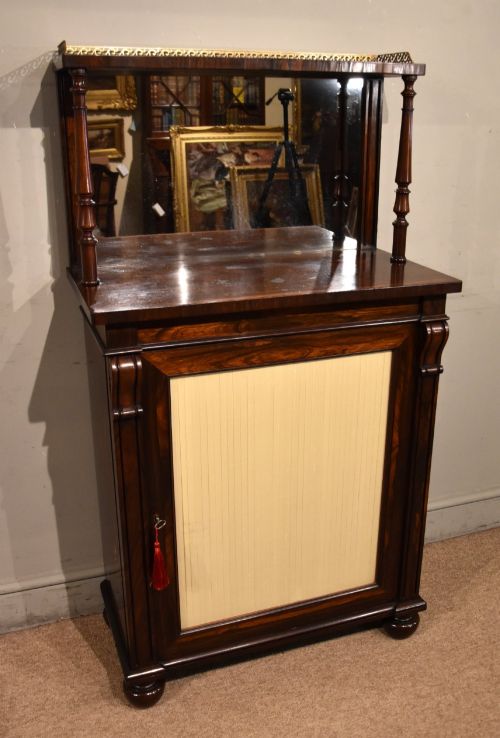
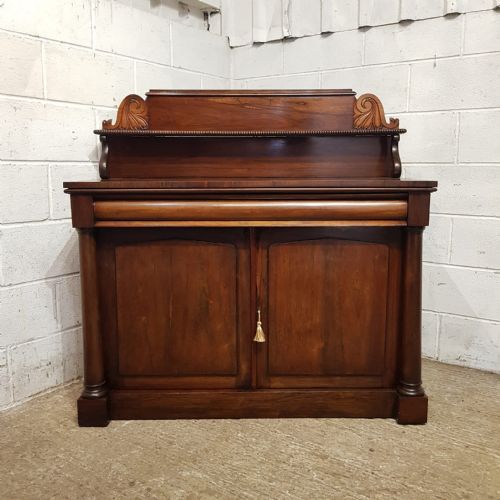
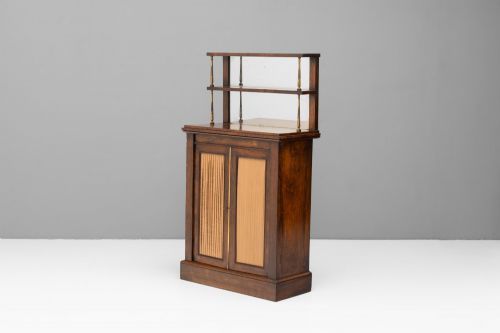
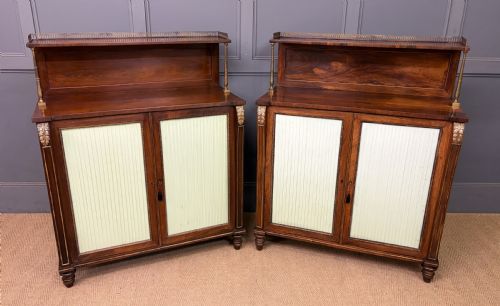
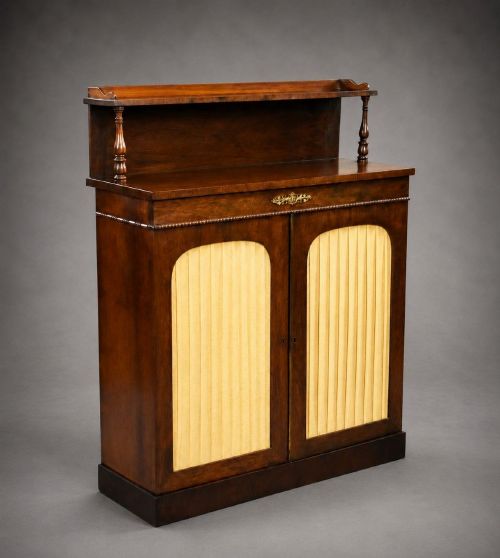
A rosewood chiffonier sideboard combines the enclosed lower cupboards of a small sideboard with the raised shelf back typical of a traditional chiffonier. These compact pieces date predominantly from the Regency, William IV, and Victorian eras, serving originally to store dining silver and display glassware in formal rooms.
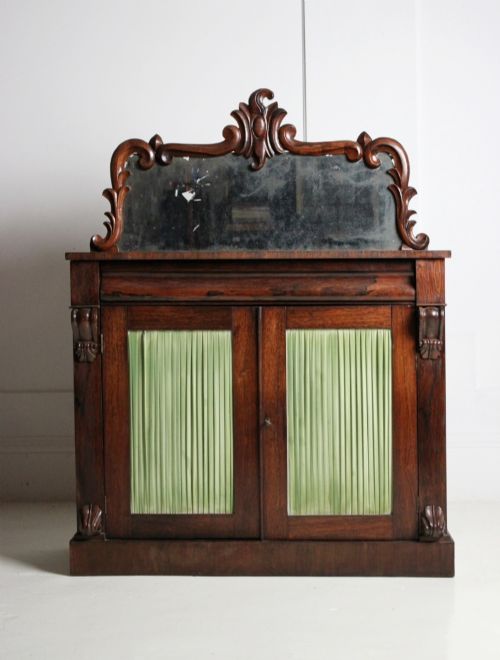
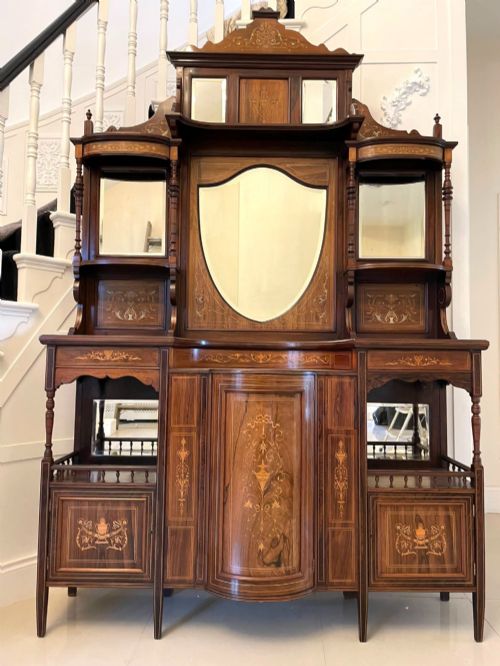
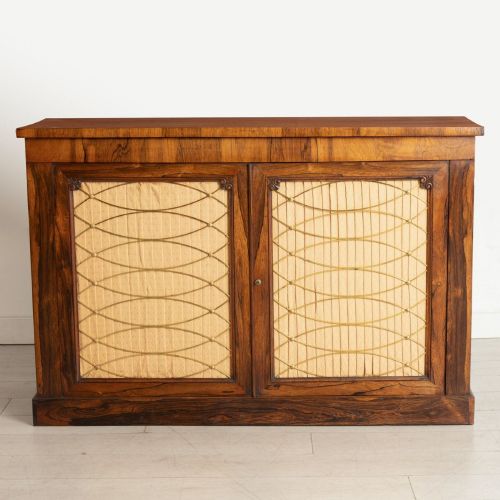
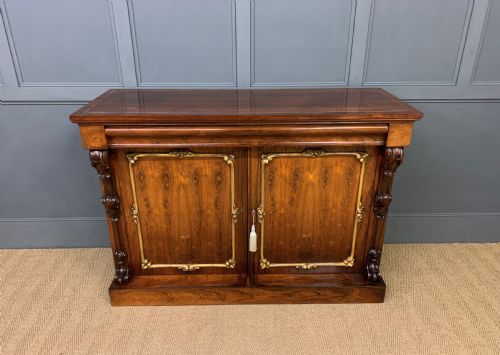
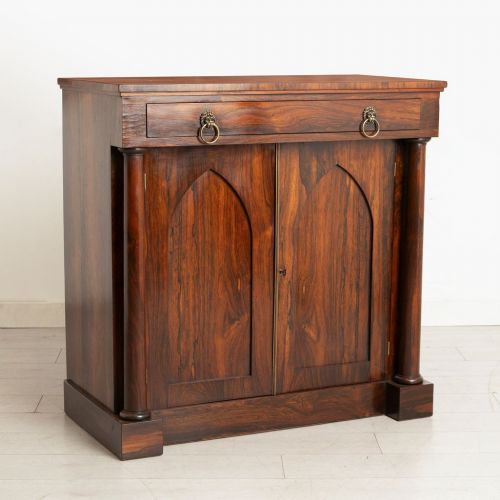
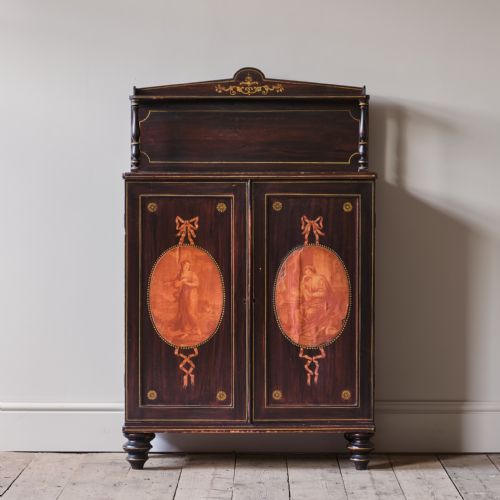
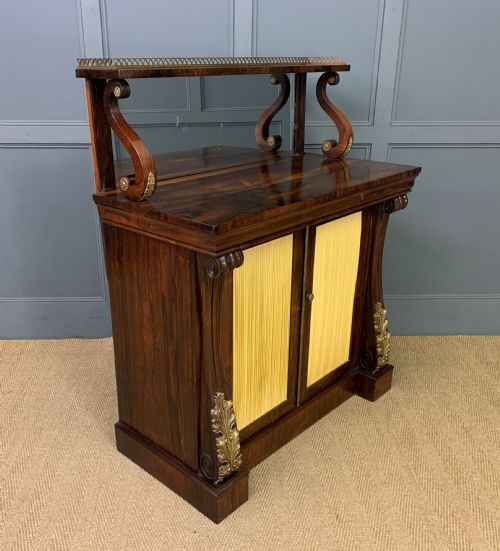
The version most commonly met on this page is the Regency or early Victorian low cabinet, often fitted with panelled or fabric-backed doors beneath a single drawer. Later Victorian and Edwardian examples frequently incorporate marquetry inlay and mirror glass, shifting the function from dining room utility toward decorative display.
Makers and cabinetmakers of the nineteenth century utilised the dense timber for its deep reddish-brown colour and dark figuring. Surviving forms range from simple pine carcases finished with simulated rosewood paint to breakfront cabinets mounted in brass.
Materials and construction methods
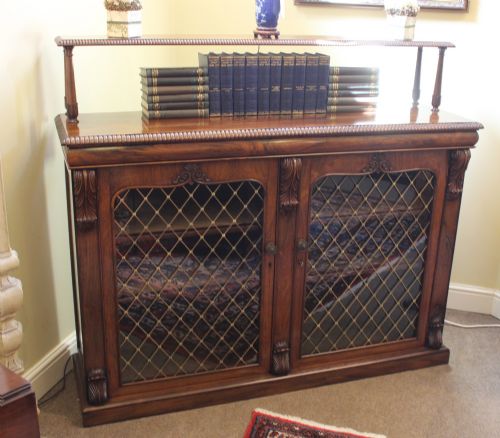
Cabinetmakers built these pieces using solid timbers and veneers of rosewood, occasionally applying simulated rosewood paint over a pine carcase to mimic the exotic wood. Brass mounts, brass inlay, and gilt grilles frequently accent the doors, alongside silk or fabric pleated panels behind glazed or open frames.
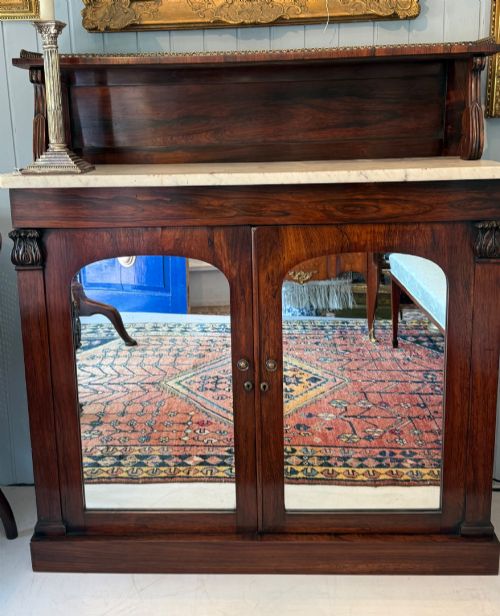
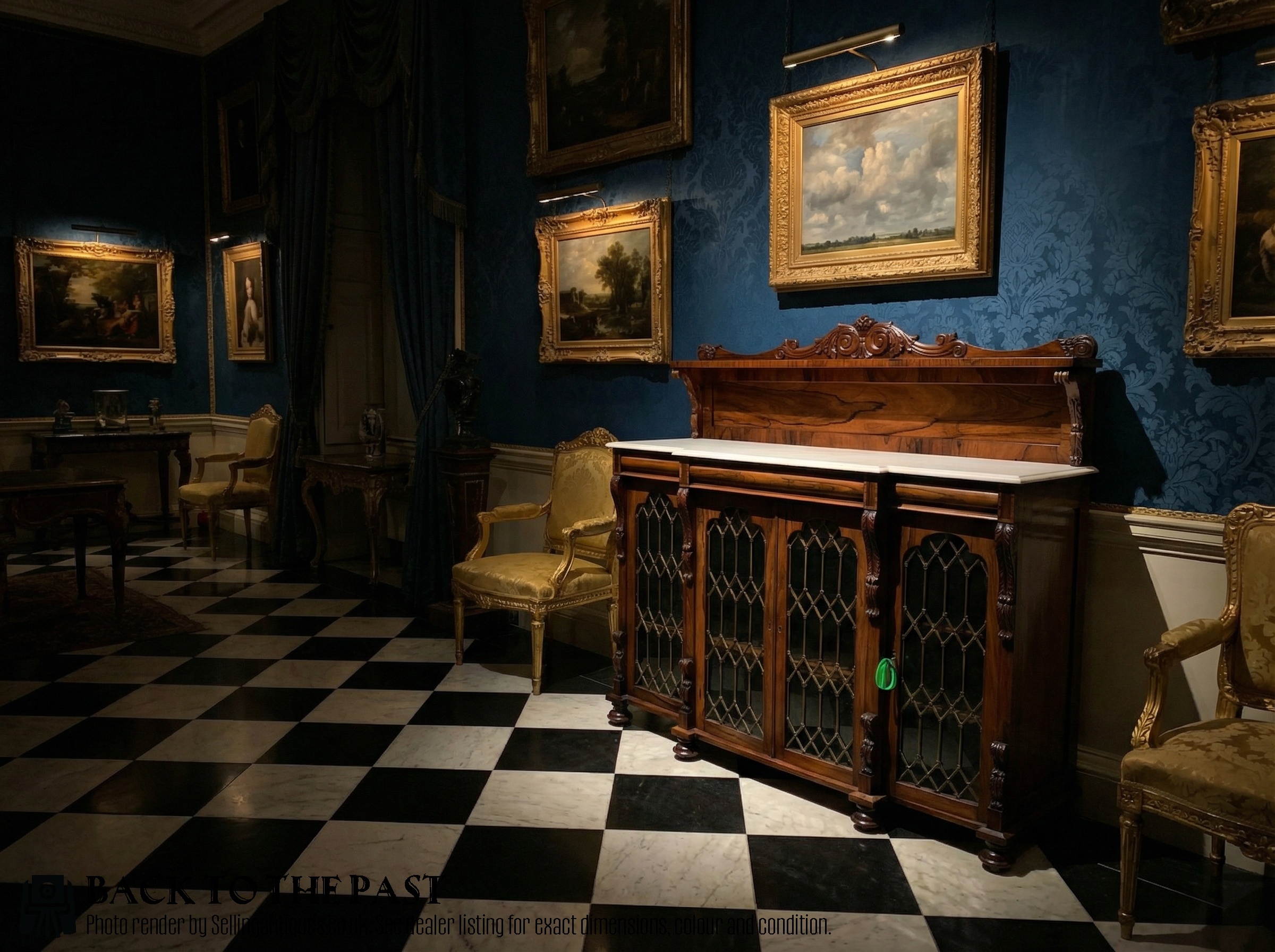
Later Victorian and Edwardian iterations introduced marble tops, mirrored backs, and delicate marquetry inlay using contrasting woods. Structural interiors relied on secondary timbers such as mahogany or oak for drawer linings and internal shelving.
Regency cabinetmakers occasionally painted ordinary pine to mimic rosewood, proving that faux finishes have charmed buyers for two centuries.
Assessing quality and craftsmanship
The distinction between standard utility pieces and the finest work lies in the choice of timber and the precision of the brass or marquetry detailing. Superior examples exhibit carefully matched grain patterns across the doors and drawers, rather than random or mismatched veneer sections.
Original mounts, integrated locks, and well-fitted interior shelving separate unaltered survivals from heavily restored or later altered examples. The crispness of the carving on early Regency and William IV pieces indicates the level of workshop skill involved.
Holland & Sons·Gillows
The Rosewood Chiffonier Sideboard Glossary
- Chiffonier
- A low compact sideboard or cabinet equipped with enclosed cupboards below and often a shelf superstructure above. It evolved during the Regency period as a versatile dining room piece.
- Credenza
- A sideboard or display cabinet lacking the high shelf back of a chiffonier, often featuring serpentine fronts and glass doors. Victorian iterations frequently incorporate mirror glass and marble tops.
- Breakfront
- A cabinet design where the central section projects forward from the flanking outer cupboards. This architectural arrangement creates depth and visual balance on larger sideboards.
- Marquetry
- Decorative patterns formed by inserting thin veneers of different coloured woods into a contrasting background. Late Victorian and Edwardian pieces frequently employ this technique on cabinet doors.
- Goncalo Alves
- An exotic dense timber resembling rosewood, occasionally utilised by cabinetmakers during the Regency period for high-status side cabinets.
Rosewood Chiffonier Sideboard: Frequently Asked Questions
How do I date a rosewood chiffonier?
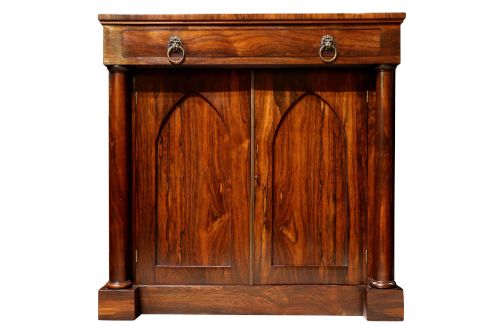
Early Regency examples display architectural restraint with brass inlay and classical mounts, while William IV pieces lean towards heavier scrolling supports and robust proportions.
Victorian and Edwardian variations introduce mirror glass, marble tops, and intricate marquetry inlay that reflect later nineteenth-century tastes for display.
Were these pieces used only in dining rooms?
While originally designed for dining spaces to hold silver and ceramics, their compact footprint made them suitable for drawing rooms and entrance halls.
Mirrored Victorian versions and later Edwardian cabinets were frequently placed in reception rooms to display decorative glassware and ornaments.
Why is simulated rosewood found on some pieces?
Makers occasionally painted pine or secondary timbers to imitate the rich grain and deep colour of genuine rosewood when importing the exotic wood proved costly.
Simulated paint finishes allowed workshops to offer fashionable Regency furniture at a lower cost while maintaining the desired aesthetic.