
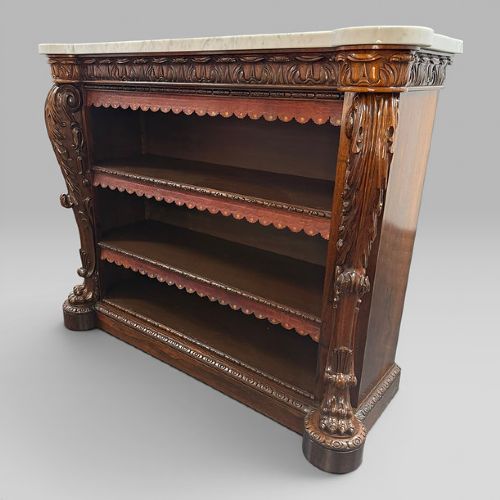
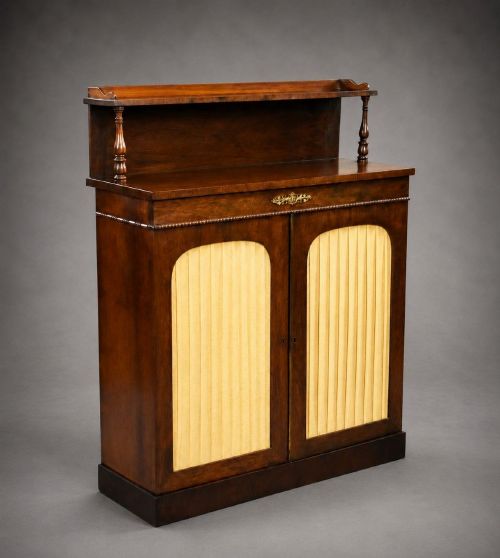

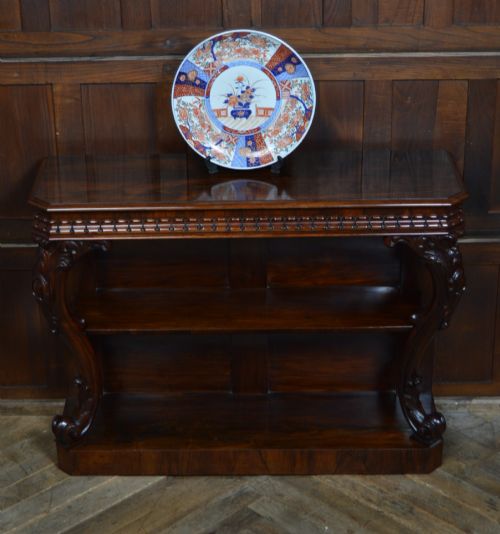


Rosewood Credenza Shelves
Rosewood credenza shelves and related chiffoniers offer rich timber grain and polished brass detail for disciplined display.
Rosewood Credenza Shelves
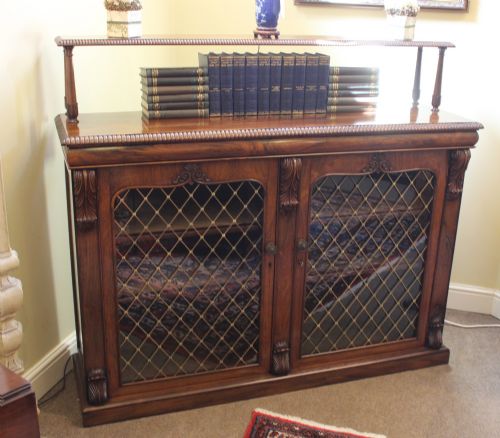
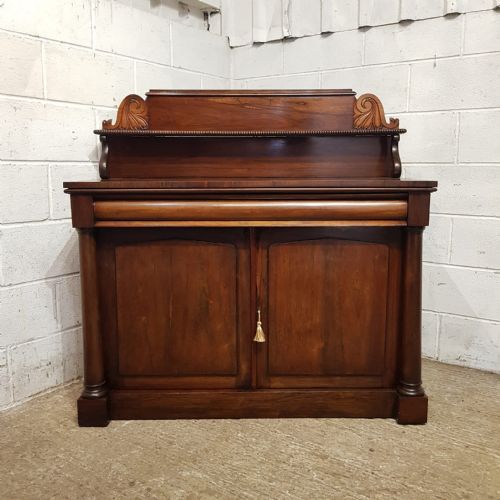
When you search for rosewood credenza shelves, you encounter low cabinets, chiffoniers, and open bookcases that combine storage with display surfaces. The forms you meet most often on this page belong to the Regency and Victorian periods, with William IV examples appearing frequently.
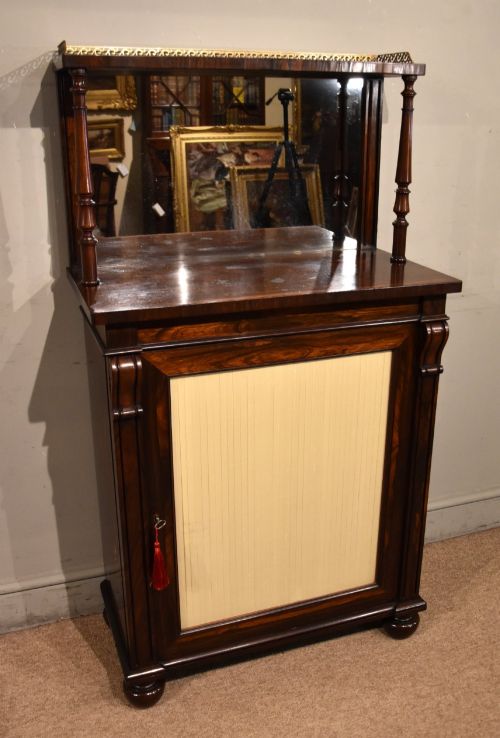
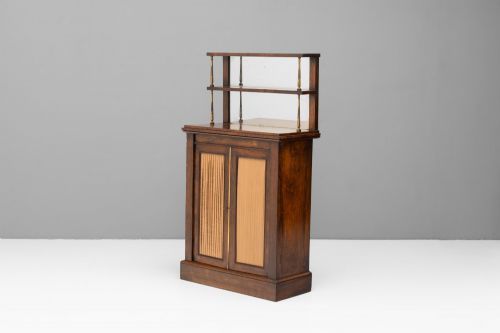
These pieces function primarily as side cabinets or chiffoniers, often featuring tiered shelving above the main body. The timber displays deep reddish-brown figuring, complemented by brass inlay, mirror glass, or marble tops.
Materials and construction methods
Cabinet makers utilised dense tropical rosewood veneers over stable secondary timbers, often applying French polish to accentuate the grain. Brass stringing, ormolu mounts, and gilt detailing provide contrast to the dark wood.
Many items incorporate white or pink marble tops, mirrored backs, and glazed doors. Silk or fabric linings occasionally back open shelving and vitrine cabinets.
Listings span the Regency, William IV, and Victorian eras, incorporating materials such as rosewood, brass, marble, and mirror glass.
Assessing quality and craftsmanship
Quality reveals itself in the precision of the brass inlay and the selection of the rosewood veneers. Finer items exhibit continuous grain matching across doors and drawer fronts rather than erratic patches.
Structural integrity in the shelving supports and the execution of carved parcel gilt or ormolu mounts distinguish standard production from master workshop output.
Attributed Gillows·Robert Strahan·John McLean
The Rosewood Credenza Shelves Glossary
- Chiffonier
- A low cabinet with a raised shelf or tiers above, developed in the Regency period for dining rooms and parlours. These often incorporate enclosed cupboards below.
- Palisander
- A continental European term for rosewood, frequently used in nineteenth-century trade descriptions for dense, heavily figured timber.
- Ormolu
- Gilded bronze used for decorative mounts and feet on high-status cabinets.
- Vitrine
- A glass-fronted cabinet designed for the display of porcelain and small ornaments.
- Brass inlay
- Fine strips of brass set flush into the timber surface in geometric or floral patterns.
Rosewood Credenza Shelves: Frequently Asked Questions
What is a rosewood chiffonier?
A rosewood chiffonier is a low nineteenth-century cabinet featuring enclosed lower storage and one or more display shelves mounted above. They served primarily in reception rooms for holding books, porcelain, or dining silver.
Surviving examples date mainly from the Regency, William IV, and Victorian eras. The timber provides a dark, heavily figured surface that suits formal interiors.
How do I date a rosewood bookcase?
Dating relies on stylistic markers such as brass inlay, proportions, and associated motifs. Regency and William IV pieces often display heavier architectural columns or precise brass stringing.
Later Victorian iterations tend towards glazed doors and varied crests. The choice of marble tops and mirror glass also assists in placing the piece within the nineteenth century.
Where should I place a side cabinet?
These cabinets work well in living rooms, hallways, or dining spaces where a shallow footprint is required. Their upper shelves allow for the display of small ceramics or books.
Keep rosewood furniture away from direct sunlight and strong heat sources to protect the French polish and prevent timber movement.
What is simulated rosewood?
Simulated rosewood is a painted finish where common timber is grained to imitate the rich colour and figuring of true rosewood. Makers used this technique to achieve an expensive look at a lower cost.
These pieces require the same gentle care as solid hardwood furniture. Avoid abrasive cleaning products to preserve the painted decoration.