


Rosewood Chest of Drawers
A rosewood chest of drawers brings rich grain and deep colour to a room, offering practical storage through centuries of cabinet-making.
Rosewood Chest of Drawers
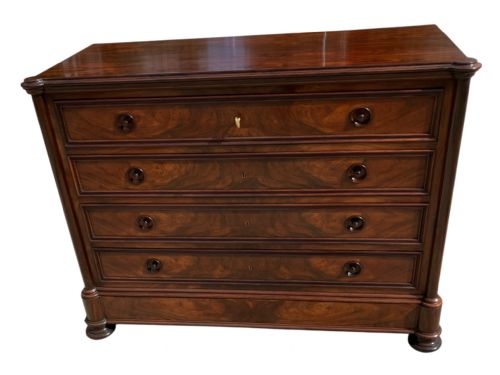
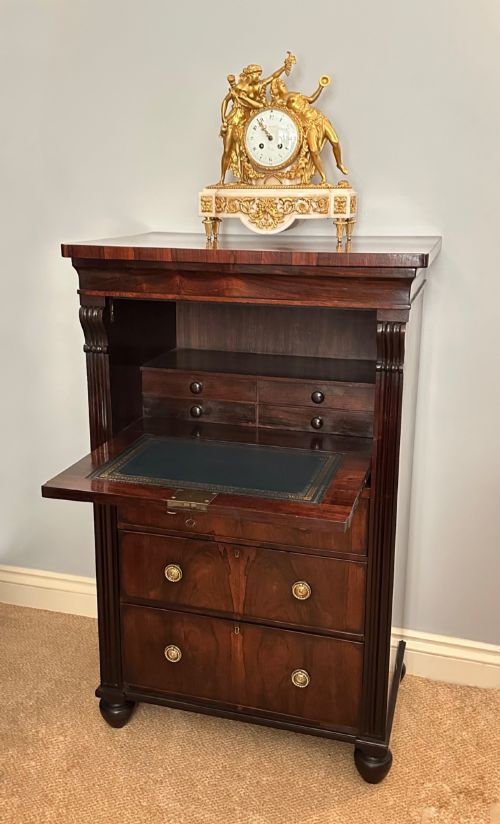
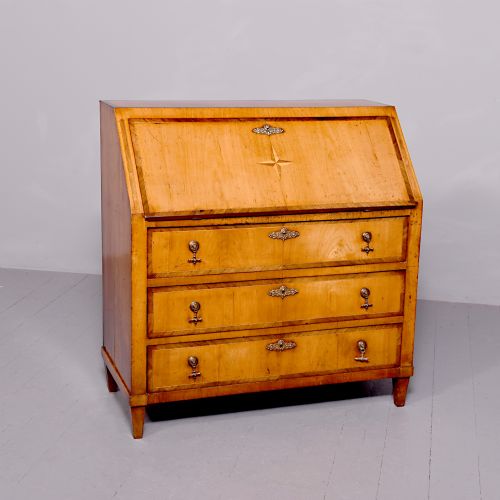
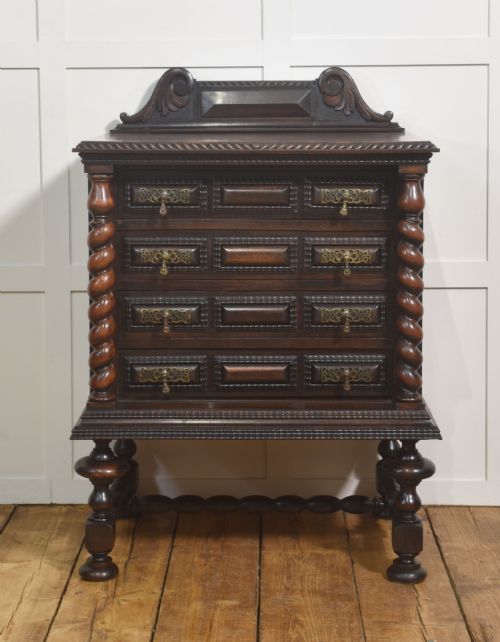
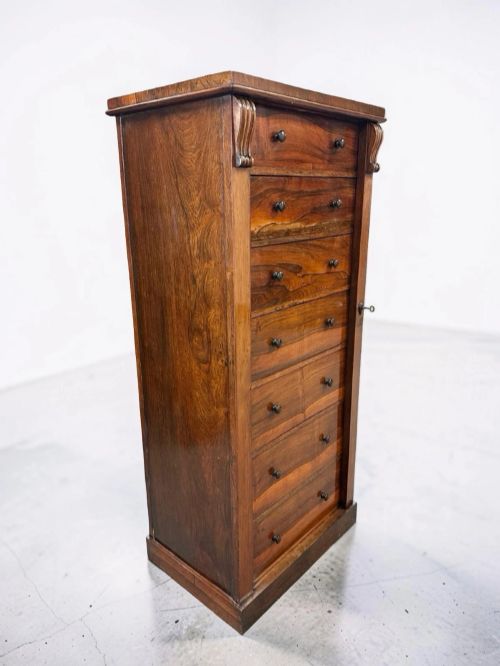
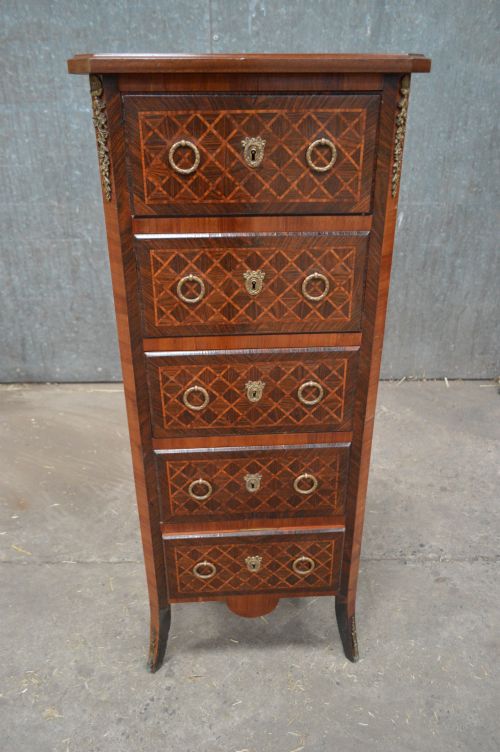
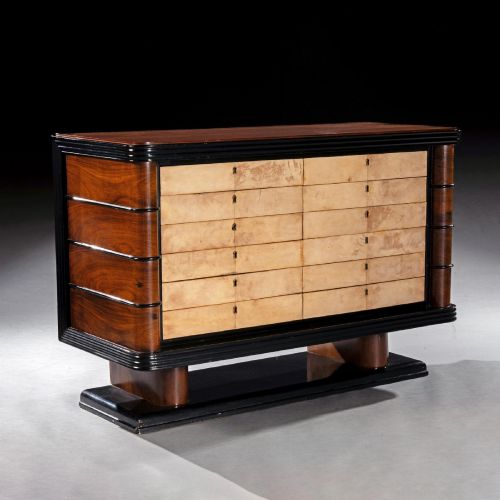
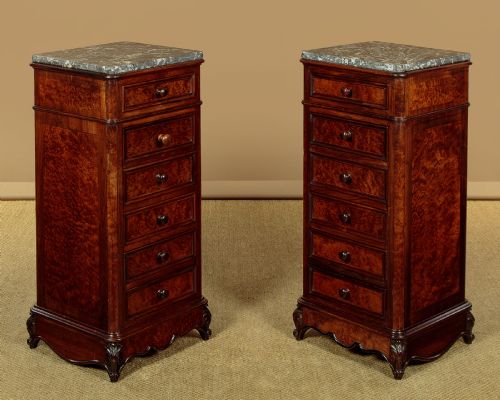
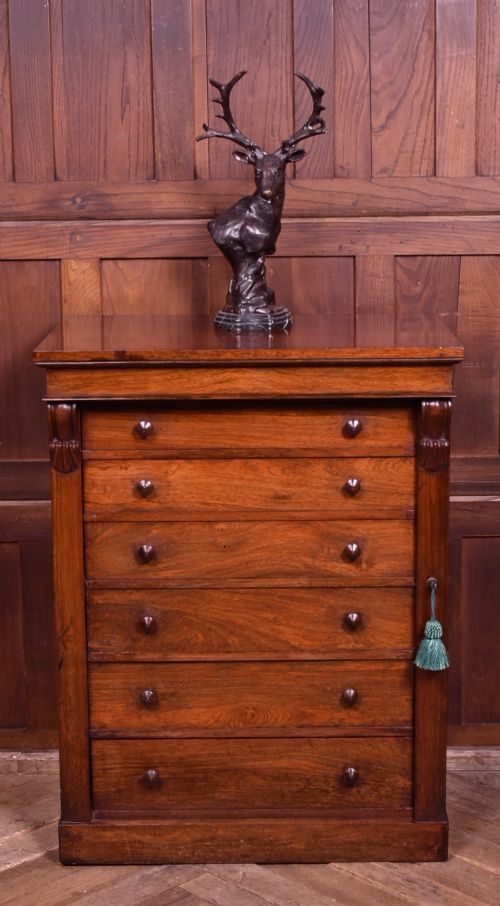
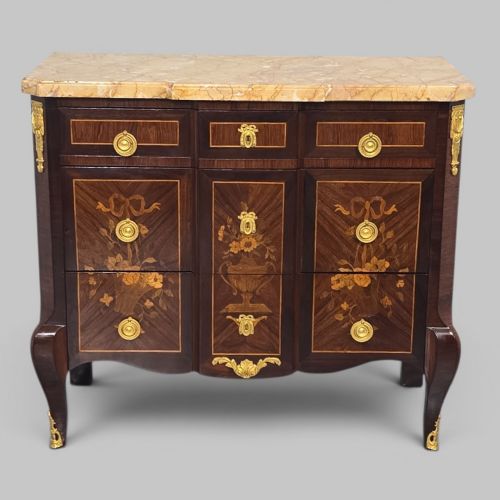
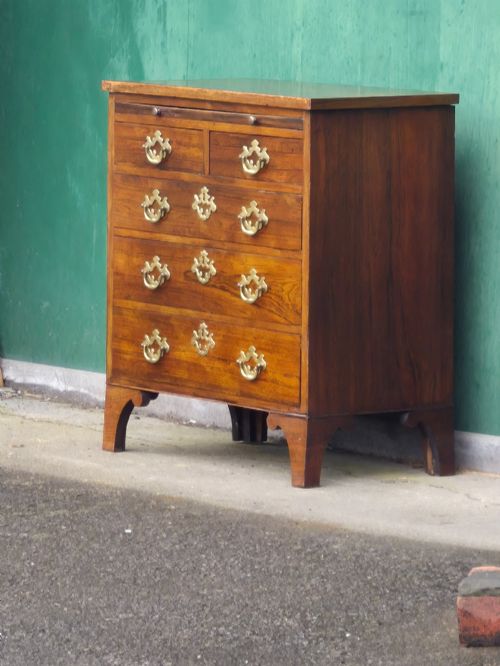
A rosewood chest of drawers spans multiple periods, including the Regency era, the Victorian period, and the 18th century, taking many structural forms. Pieces on this page appear as traditional horizontal drawer chests, tall Wellington chests, writing cabinets, and French commodes with marble tops.
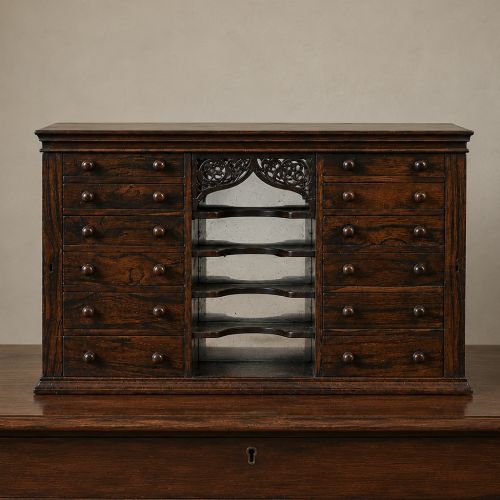
The selection ranges from compact bedside drawer pedestals and miniature apprentice chests to large continental commodes and bureau bookcases. Buyers encounter British vernacular pieces alongside continental European marquetry work and campaign-style campaign chests.
Makers and workshops across Britain and France utilised the heavy, figured timber for domestic storage, often incorporating specialist writing compartments or locking pilaster bars found in Wellington designs.
How They Were Made
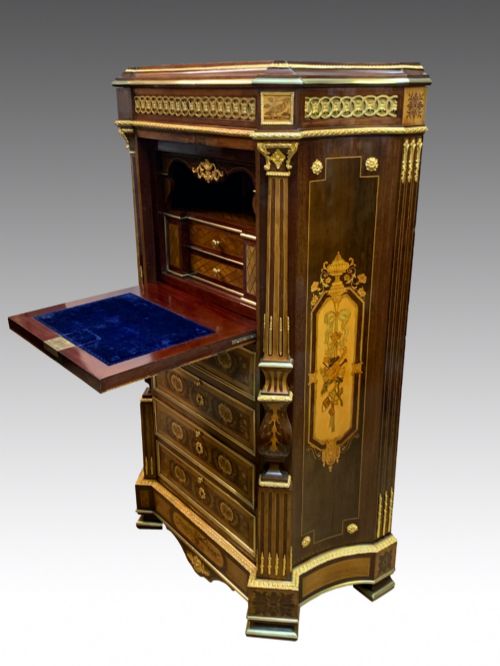
Cabinet-makers constructed these pieces using dense rosewood veneers applied to secondary structural timbers, creating elaborate grain patterns across drawer fronts and top surfaces. Marquetry and parquetry designs integrate contrasting woods such as satinwood, tulipwood, kingwood, and walnut into geometric or floral motifs.
Many examples incorporate hardware and structural fittings of cast brass, ormolu mounts, and fitted white or grey marble slabs inset into the top surface of commodes. Drawer construction typically relies on hand-cut dovetail joints, while specialised pieces feature folding writing slides and concealed locking mechanisms.
Rosewood Chest of Drawers Retail Price Guide 2026
Typical asking prices for rosewood chest of drawers among the pieces listed under this phrase on Sellingantiques today, from the lower quarter to the upper quarter. They describe what is for sale here now, not the wider market.
Listings feature pieces incorporating brass, marble, ormolu, kingwood, walnut, satinwood, and leather alongside solid and veneered rosewood.
What Varies in Quality
Quality in a rosewood chest of drawers rests upon the choice of timber veneer and the precision of the cabinet-making. Superior pieces display book-matched grain continuity across all drawer fronts and crisp execution in inlaid parquetry or marquetry patterns.
Structural integrity and original hardware dictate value at the upper end of the scale. Pieces retaining their original marble tops, fire-gilt ormolu mounts, working locks with keys, and uncompromised internal drawer linings represent the finer examples of period craftsmanship.
Maison Krieger·Edwards and Roberts·Gillow
The Rosewood Chest of Drawers Glossary
- Wellington chest
- A tall, narrow chest of drawers secured by a hinged locking pilaster bar on one side. This design originated in the 19th century and typically accommodates seven drawers.
- Marquetry
- Decorative veneer work forming pictorial or floral patterns using various coloured woods. Craftsmen cut thin sheets of timber and assemble them onto a ground veneer.
- Commode
- A low French chest of drawers standing on legs, popular during the 18th and 19th centuries. These pieces frequently feature serpentine fronts and marble tops.
- Parquetry
- Geometric mosaic woodwork formed by small pieces of veneer laid in repeating patterns. It differs from marquetry through its reliance on angular, repeating shapes rather than pictorial designs.
- Semainier
- A tall seven-drawer chest designed to hold a week of clothing. The French form often incorporates delicate marquetry and a marble slab top.
Rosewood Chest of Drawers: Frequently Asked Questions
What is a Wellington chest?
A Wellington chest is a tall, narrow style featuring a locking side pilaster that secures all the drawers simultaneously. This form provides substantial vertical storage with a minimal footprint.
Cabinet-makers originally designed them for paperwork and linen, making them distinct from standard horizontal chests of drawers.
How do I clean a rosewood surface?
Maintain rosewood surfaces by dusting with a soft, dry cloth and applying traditional beeswax periodically to nourish the timber. Avoid modern silicone polishes and keep the wood away from direct sunlight and heat sources.
Protecting the original French polish preserves the rich grain and deep colour inherent in antique rosewood.
Can I use a commode as a bedside cabinet?
Small commodes and bedside drawer pedestals fit well beside modern beds, offering enclosed storage and a durable surface. Marble-topped versions provide practical resistance to water and everyday wear.
Checking the height and width against the bed frame ensures the proportions match the room.
How do I date a rosewood chest?
Dating relies on examining the construction techniques, timber thickness, and secondary woods used inside the carcass and drawer linings. Regency and Victorian pieces exhibit distinct hardware styles, dovetailing methods, and decorative motifs.
Comparing the stylistic details against known period characteristics helps establish the approximate decade of manufacture.