

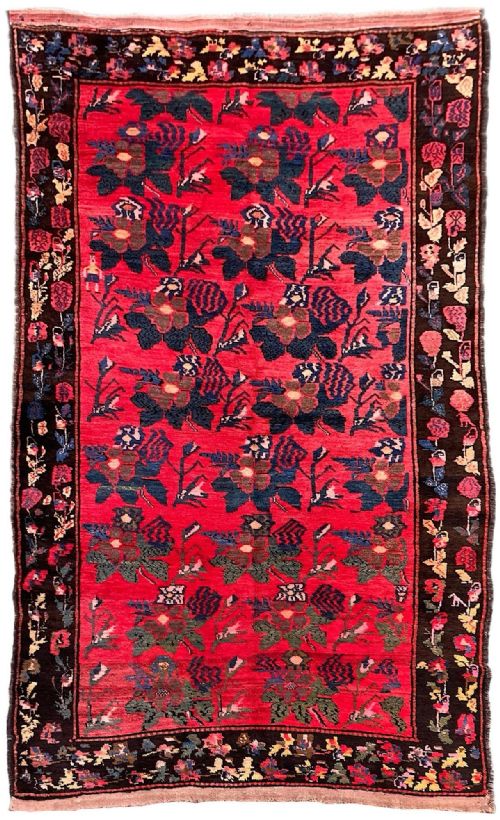


Rose Wool Rug
A rose wool rug brings warmth and botanical pattern to a room, spanning styles from Bessarabian kilims to Persian carpets.
Rose Wool Rug
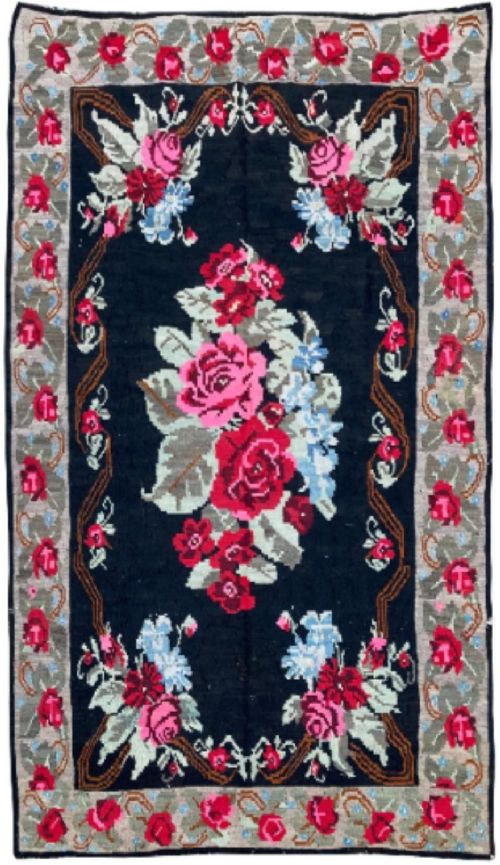
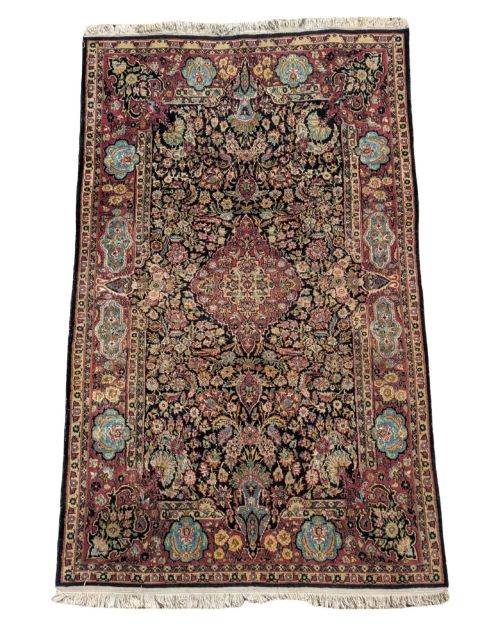
A rose wool rug encompasses flatweave kilims, pile carpets and runners produced across various global weaving traditions from the nineteenth century into the twentieth century. When searching for a rose wool rug, collectors frequently encounter Bessarabian flatweaves, Caucasian Karabagh pieces with French-inspired rose motifs, and Turkish Oushak or Persian Sarouk carpets. These floor coverings bridge European floral aesthetics and Eastern weaving techniques.
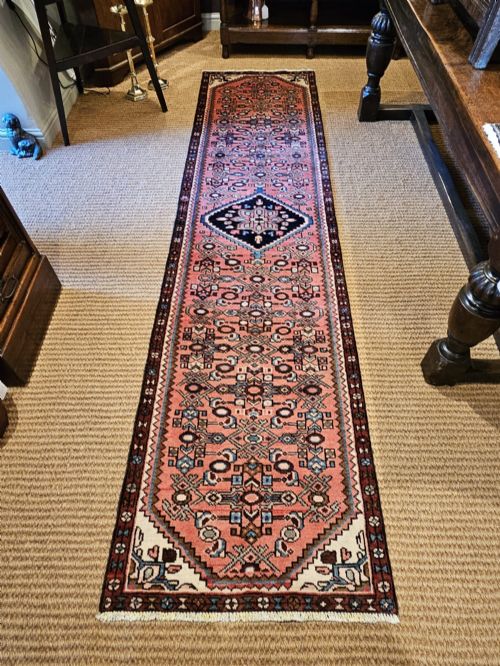
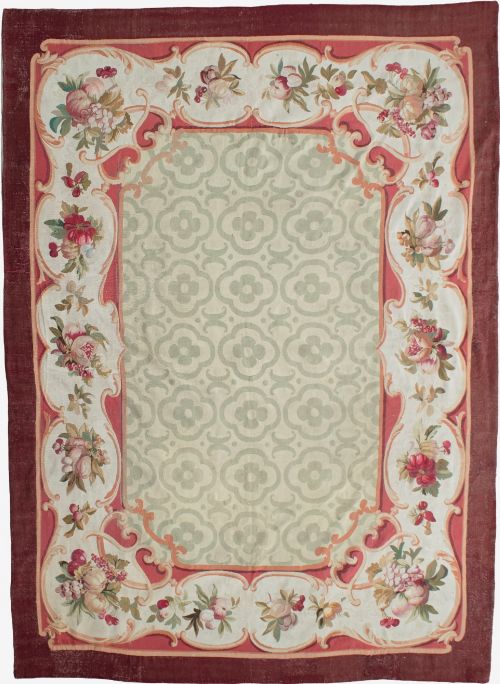
The material foundation across these pieces relies predominantly on wool, sometimes accented with cotton foundations or silk highlights. Designs range from large central medallions to botanical sprays and realistic floral bouquets set against pink or neutral grounds. Formats vary from small area rugs to substantial room-sized carpets and long runner rugs.
Materials and construction
Weavers constructed these textiles primarily using wool for the pile or surface design, paired with cotton or wool for the warp and weft foundations. Certain regional pieces incorporate silk highlights to add definition to specific floral elements within the pattern. Natural and early synthetic dyes provided the palette, yielding characteristic rose pinks, soft creams and deeper ground colours.
Techniques diverge between knotted-pile carpets, such as those from Kashan and Hamadan, and flatwoven kilims originating in Bessarabia or the Caucasus. Flatweaves rely on interlocking weft threads to build geometric and floral designs without a raised pile. Knotted pieces secure individual tufts of wool around the warp threads before shearing the surface level.
A nineteenth-century weaver occasionally inserted a stray knot of mismatched wool, leaving a tiny secret signature for anyone patient enough to inspect the back.
Distinguishing quality factors
Quality in these textiles rests upon the density of the weave, the clarity of the botanical design, and the integrity of the materials. Tighter knots or precise flatweave stitching allow intricate floral details, such as individual petals in a rose motif, to remain sharp and well-defined.
The sophistication of the colour palette and the balance of the composition further separate standard examples from finer works. Harmonious dye saturation and balanced borders reflect the skill of the original workshop and the quality of the wool employed.
The Rose Wool Rug Glossary
- Kilim
- A flatwoven textile produced without a pile, common in Bessarabian and Caucasian pieces. This technique creates a lightweight rug with identical patterns visible on both sides.
- Pile
- The upright loops or cut tufts of yarn that form the soft surface of a knotted rug. Tighter pile density usually indicates a greater investment of time during manufacture.
- Warp
- The vertical foundation threads stretched lengthwise on a loom before weaving begins. Weft threads pass horizontally over and under these structural elements.
- Medallion
- A central ornamental design motif placed in the middle of the rug field. Many Persian and Turkish carpets anchor their overall composition around this central shape.
- Ground
- The background colour of the main field behind the primary floral or geometric motifs. In these pieces, the ground frequently appears in shades of pink, red or neutral tones.
Rose Wool Rug: Frequently Asked Questions
How do I clean a vintage wool rug?
Gentle surface brushing and professional specialist washing preserve the wool fibres and natural dyes. Avoid harsh chemical immersion.
Regular light vacuuming without a rotating brush bar prevents dirt accumulation in the pile or flatweave structure.
Are these rugs suitable for high-traffic hallways?
Long runner formats and sturdier pile carpets handle moderate foot traffic well. Placing a quality underlay beneath the textile prevents slipping and reduces fibre friction.
Flatweaves function effectively in lighter traffic areas or bedrooms where furniture weight remains minimal.
How can I distinguish a Bessarabian kilim from a Persian rug?
Bessarabian pieces utilise a flatweave construction with distinctive regional floral sprays influenced by European aesthetics. Persian examples typically feature a knotted pile and traditional regional medallion or all-over garden layouts.
Examining the reverse side immediately reveals the flat structure of a kilim versus the knotted tufts of a carpet.
What period do most of these rugs date from?
The selection spans the nineteenth century through the interwar decades of the twentieth century. Pieces from the Victorian and Edwardian eras frequently exhibit botanical designs.
Later examples from the nineteen-twenties and nineteen-thirties reflect continued traditional weaving methods in regional workshops.