






Blue Pink Persian Rug
These hand woven wool and cotton floor coverings deliver distinctive blue pink persian rug combinations created across various regional workshops.
Blue Pink Persian Rug
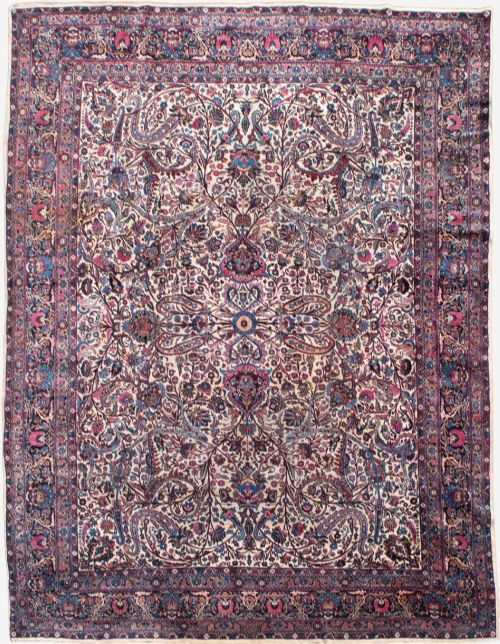
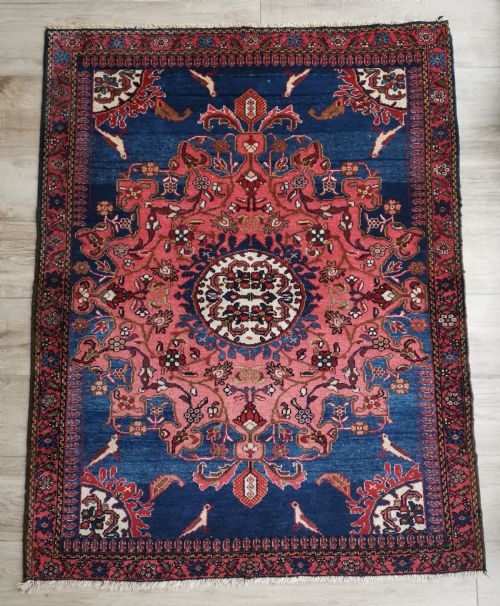
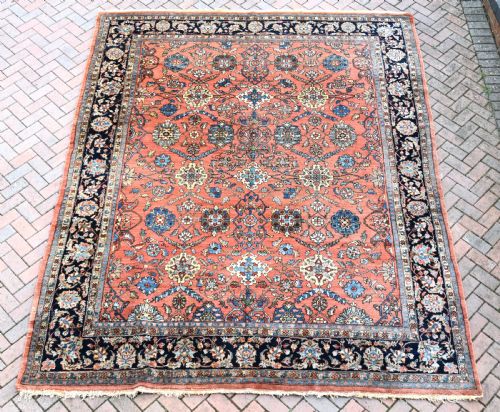
When you search for a blue pink persian rug, you are looking at hand woven wool and cotton floor coverings that originate from traditional weaving centres across Persia and neighbouring regions. These pieces span from the late nineteenth century through to the early decades of the twentieth century, encompassing village and nomadic formats alongside grander city carpets.
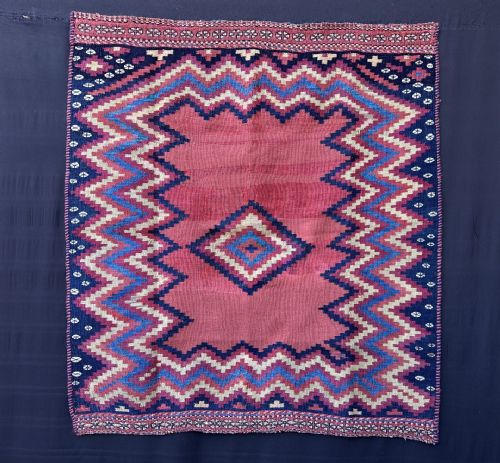
The examples you are most likely to meet on this page include Persian Kirman, Sarouk, Heriz, and Bidjar pieces, alongside regional variants such as Afshar sofreh bread cloths and Tafresh rugs. Their formats range from small hearth rugs and area sizes to exceptionally long runners and large carpets.
Village and tribal weaves bring geometric medallions and repeating motifs, while city workshops favour elaborate floral fields and medallions rendered in softer palettes. Each piece reflects the specific regional heritage and knotting traditions of its maker.
How they were made
These floor coverings are constructed using wool pile knotted onto sturdy cotton or wool foundations, employing traditional hand knotting techniques that ensure durability. Natural dyes provide the underlying tones, interacting with the fibre over decades to develop rich patination.
Nomadic and village pieces often utilise chunky wool yarns on heavy foundations, whereas city workshops employ finer knot counts to execute intricate floral curves. Flatweave structures also appear among the offerings, providing lighter alternatives to piled carpets.
Nomadic weavers occasionally embedded small protective charms directly into the foundation yarns to ward off misfortune.
What varies in quality
Quality in these textiles depends heavily on the density of the knotting and the fineness of the wool used in the pile. Tighter knots allow intricate curves in floral city designs to remain sharp and well defined.
The stability of the foundation and the integrity of the original selvedges and ends also separate robust examples from compromised ones. Furthermore, the depth and harmonious interaction of the natural dyes elevate certain compositions above standard production.
The Blue Pink Persian Rug Glossary
- Pile
- The vertical or diagonal yarn that forms the soft upper surface of the rug. This is sheared to a uniform height after knotting.
- Sofreh
- A flatwoven or piled cloth used traditionally for preparing bread or serving meals among nomadic groups. These serve practical domestic functions within tribal communities.
- Selvedge
- The reinforced side cords of a rug that prevent the edges from unravelling. Skilled weavers finish these edges securely to protect the structure.
- Medallion
- A large central ornamental design motif placed in the middle of the field. This geometric or floral shape anchors the entire composition.
Blue Pink Persian Rug: Frequently Asked Questions
How do I clean an antique rug?
Professional dusting and gentle washing by specialists in vintage textiles are essential for preserving the wool pile and natural dyes.
Avoid immersion washing or harsh chemical treatments at home, as these methods weaken cotton foundations and cause colour migration.
Where were these rugs made?
Production centres span various provinces across Persia, including Kerman, Heriz, Sarouk, and Bidjar, alongside related regional weaving traditions.
Each location developed distinct structural methods, wool characteristics, and design vocabularies that identify the origin of the piece.
Are these rugs suitable for high traffic?
Many traditional village and city weaves utilise dense wool pile on sturdy cotton foundations, making them resilient for everyday use.
Placing a quality underlay beneath the carpet absorbs foot impact and prevents slipping on hard floors.
How are different regional styles identified?
Inspectors look at the knotting structure, palette choices, wool texture, and specific border motifs to determine the likely provenance of a textile.
City workshops display refined floral curves, whereas tribal pieces tend towards bold geometric structures and characteristic abrash colour shifts.