



Rose Gold Padlock
These rose gold padlock pieces bring together secure fastening and romantic symbolism in wearable form.
Rose Gold Padlock
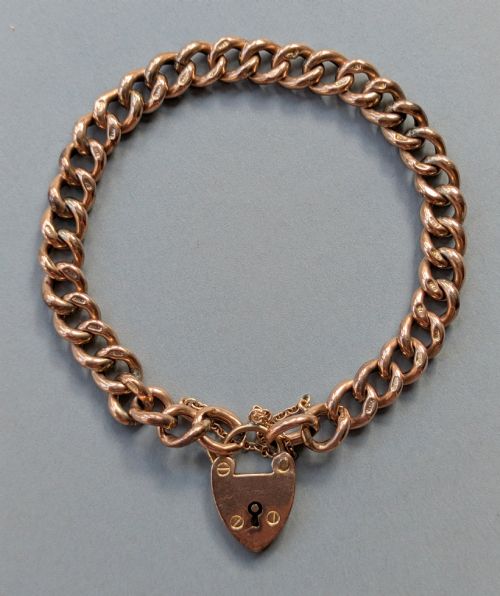
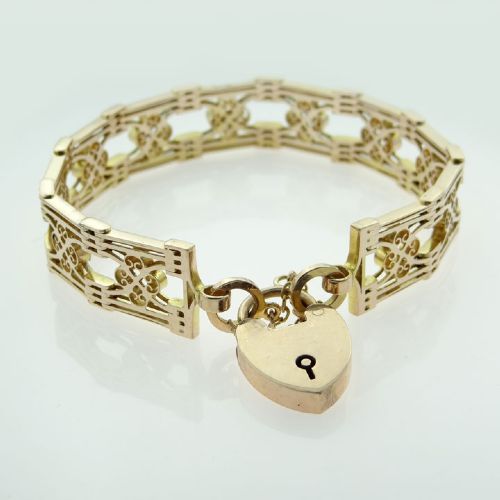
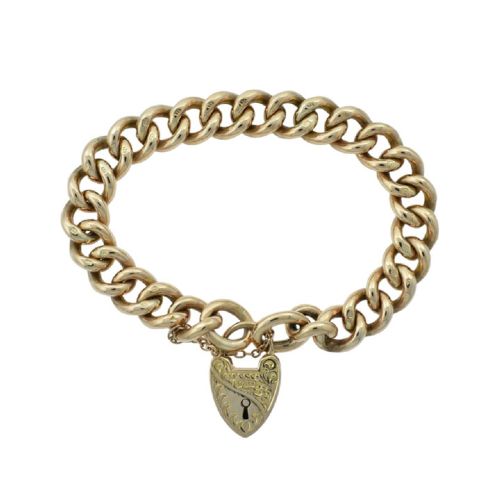
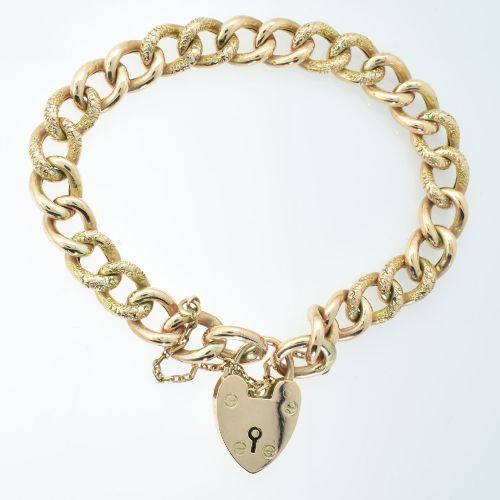
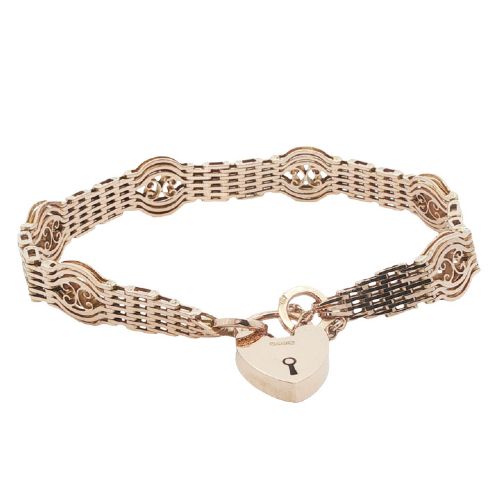
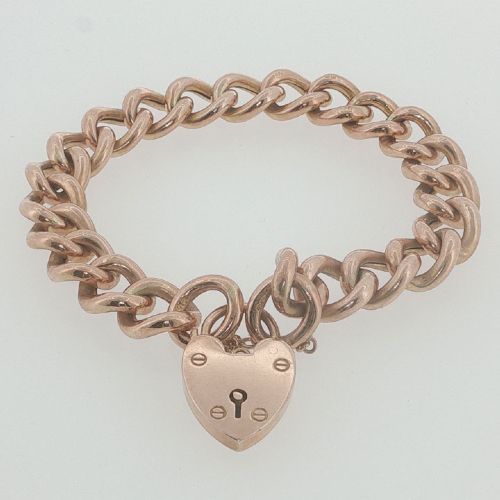
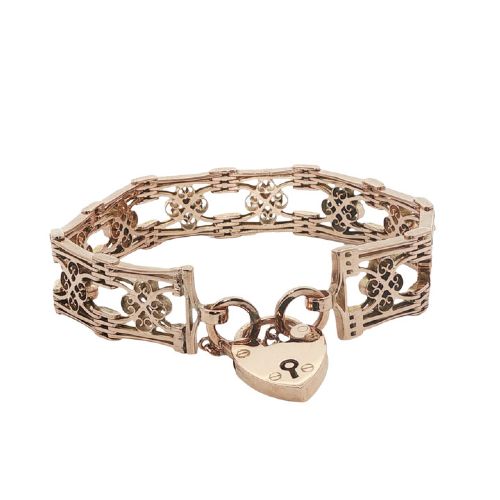
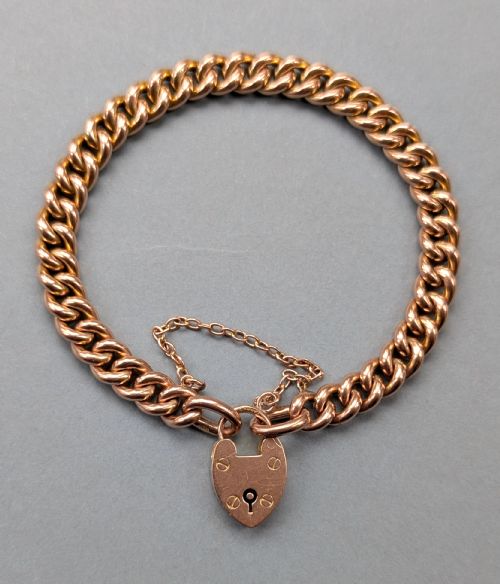
When you search for rose gold padlock jewellery, you encounter distinct items primarily spanning the Victorian, Edwardian, and 1960 periods. The majority of these pieces take the form of substantial link bracelets, often curb or gate designs, secured by a functional heart-shaped padlock.
Beyond bracelets, the selection includes pendants and charms designed around the same distinctive rose gold padlock motif. These items originate predominantly from the late nineteenth and early twentieth centuries, reflecting the high regard for warm-toned gold during those eras.
How they were made
The construction of these items relies heavily on 9ct rose gold and 15ct rose gold, shaped into interlocking curb links, fancy links, or multi-bar gate bracelet structures. Metal smiths employed techniques such as hand engraving to decorate the surfaces of links and padlocks with floral or geometric patterns.
Many padlocks and associated chains incorporate additional materials like seed pearls, sapphires, opals, or niello work for decorative contrast. Hallmarking on the metal components often points to specific assay offices, such as Chester or Birmingham, providing provenance regarding their origin.
Rose Gold Padlock Retail Price Guide 2026
Typical asking prices for rose gold padlock among the pieces listed under this phrase on Sellingantiques today, from the lower quarter to the upper quarter. They describe what is for sale here now, not the wider market.
Victorian wearers occasionally secured their gate bracelets so permanently with these padlocks that the clasps required special care to open.
What varies in quality
The distinction between standard examples and superior specimens rests on the heft of the gold and the complexity of the link work. Heavy, solid curb chains and multi-bar gate bracelets demand more material and labour than hollow alternatives.
Quality also shows in the depth and crispness of the hand engraving across the bracelet and padlock surface. Furthermore, the inclusion of accents like seed pearl crescents or specific gemstones elevates the execution of the design.
W.H.Wilmot Birmingham
The Rose Gold Padlock Glossary
- Curb link
- A type of chain made of oval links that have been twisted and flattened so they lie flat. It forms a durable foundation for many antique bracelets.
- Gate bracelet
- A style featuring parallel bars connected by vertical links, reminiscent of a country gate. This form provides a wide structure well suited to padlock clasps.
- Niello
- A black metallic alloy used as a contrast inlay on engraved metal surfaces. It highlights intricate patterns against the warm tone of rose gold or silver.
- Assay office
- An official body that tests the purity of precious metals and stamps items with hallmarks. Marks from towns like Chester and Birmingham help date pieces accurately.
- Fetter trombone
- A specific chain pattern alternating long and short links. This configuration appears in Edwardian bracelet designs.
Rose Gold Padlock: Frequently Asked Questions
What is a rose gold padlock bracelet?
A rose gold padlock bracelet is a traditional link chain secured by a heart-shaped metal clasp that functions like a miniature padlock. These pieces became extremely popular during the Victorian and Edwardian eras.
They were frequently worn as sentimental tokens or charm bracelets, often holding significant personal meaning for the original owner.
How do I date a padlock bracelet?
Dating these pieces involves examining the hallmarks stamped on the metal components, which indicate the assay office and the year of manufacture. Stylistic elements like gate link configurations or hand engraving styles also provide chronological clues.
Most antique examples date from the Victorian and Edwardian periods, though similar vintage designs extend into later decades.
Are these padlocks functional?
Many of the heart padlocks on these bracelets are fully functional snap-shut clasps operated by pressing a small lever or spring mechanism. They were designed to keep the bracelet securely fastened around the wrist during daily wear.
Some examples also served as lockets or charms, integrating dual purposes into a single piece of jewellery.
What is the difference between solid and hollow chains?
Solid curb chain bracelets consist of completely solid gold links, offering substantial weight and durability for everyday wear. Hollow versions utilise formed metal tubing to create a larger visual presence with less actual weight of gold.
Both types appear frequently in the historical record, appealing to different preferences for heft and comfort.