

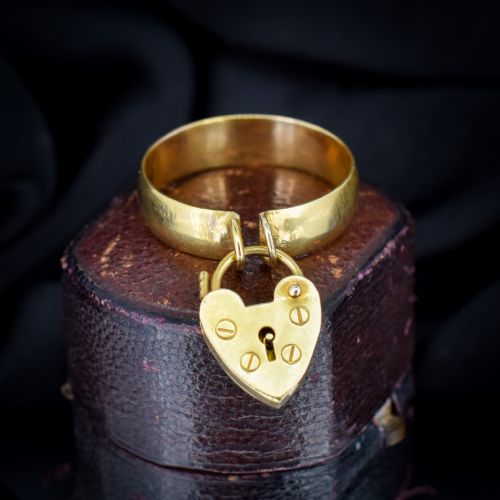


Victorian Heart Lock
A victorian heart lock is a symbolic clasp that fastens a bracelet or dangles as a pendant, prized for sentiment and security.
Victorian Heart Lock
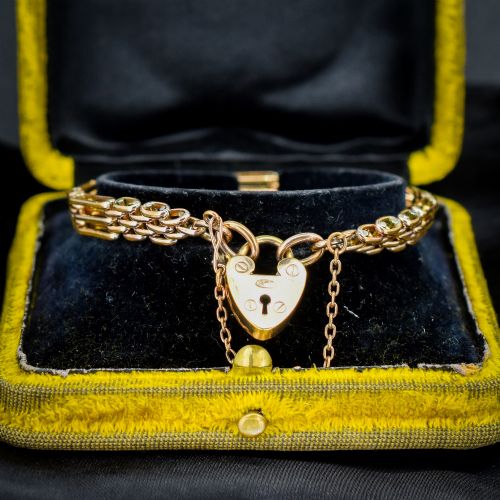
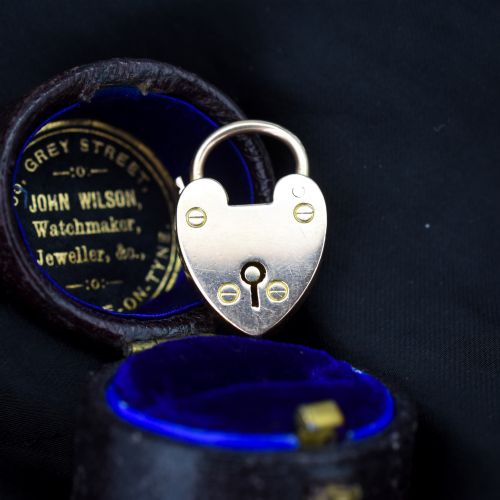
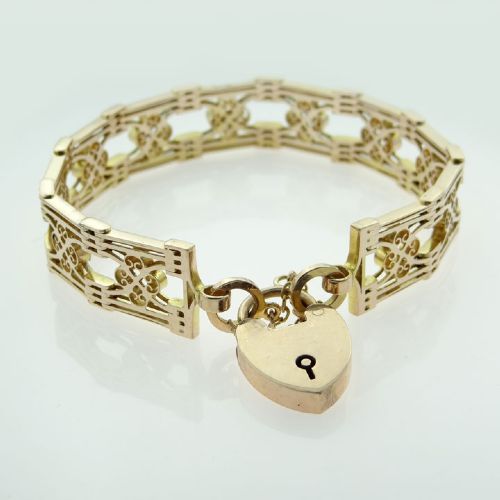
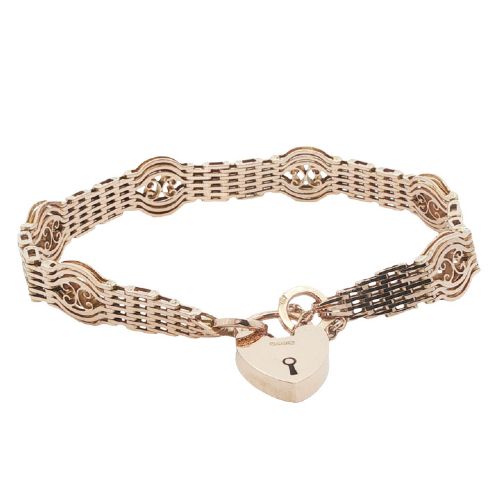
When you search for a victorian heart lock, you encounter sentimental clasps and pendants designed to symbolise devotion during the nineteenth century and subsequent revival periods. These pieces serve primarily as functional padlocks for curb link and gate bracelets, or as standalone charms and lockets suspended from chains.
The version you meet most often on this page is formed from nine-carat rose or yellow gold, frequently paired with a substantial curb chain bracelet. These functional clasps open via a hidden mechanism, securing the wrist while displaying chased engraving, seed pearls, or precious gems on the outward-facing shield.
How they were made
Goldsmiths shaped these pieces using yellow and rose gold alloys, often running from standard nine-carat to higher fifteen-carat purities. Metalworkers formed hollow puff hearts by soldering stamped halves together, or cast solid forms designed to withstand daily wear on a charm bracelet.
Craftsmen enriched the surface gold using hand engraving, chasing floral motifs, and flush-setting small rubies, sapphires, garnets, and seed pearls. Hinged mechanisms and internal spring levers required precise steel work to ensure the padlock clicked shut securely.
Victorian Heart Lock Retail Price Guide 2026
Typical asking prices for victorian heart lock among the pieces listed under this phrase on Sellingantiques today, from the lower quarter to the upper quarter. They describe what is for sale here now, not the wider market.
Materials recorded across these items include nine-carat rose gold, yellow gold, tortoiseshell, silver, sapphires, and seed pearls.
What varies in quality
The depth and crispness of the hand engraving distinguish finer examples from mass-produced or worn pieces, as shallow chasing wears flat over decades of friction against the wrist. Heavier gauge gold and intact interior springs demonstrate superior original manufacture compared to thin, dented hollow components.
The presence of undamaged gem settings, original seed pearls, and legible hallmarks provides a measure of distinction between standard production items and exceptional survivor pieces from the period.
The Victorian Heart Lock Glossary
- Padlock
- A portable lock with a shackle that can be opened or closed, adapted here as a decorative clasp for bracelets or worn as a pendant.
- Curb link
- A type of jewellery chain formed of interlocking, slightly flattened uniform links that lie flat against the skin.
- Puff heart
- A three-dimensional hollow heart pendant or locket constructed from two domed metal plates joined at a central seam.
- Seed pearl
- A very small, naturally occurring or cultured pearl used in clusters or crescents to embellish jewellery surfaces.
Victorian Heart Lock: Frequently Asked Questions
What is a heart lock used for?
These pieces functioned primarily as secure clasps for charm and curb link bracelets, requiring a matching key or a thumbnail push to release the shackle.
Over time, owners also wore them independently as pendants or charms suspended from neckchains to display sentiments of affection.
How do you open a heart padlock?
Most antique examples operate via a spring-loaded shackle or a small internal lever that releases when pressed with a fingernail or a small key.
Care should be taken not to force the mechanism if grit or age has stiffened the internal spring.
Are these locks made of solid gold?
The listings show items constructed from nine-carat, fifteen-carat, and eighteen-carat gold, encompassing both solid castings and hollow puffed constructions.
Hollow versions utilised less metal while maintaining a bold visual presence on heavy charm bracelets.
How can you tell the period of a heart lock?
Dating relies upon hallmarks stamped into the metal, the style of hand engraving, and whether the lock is attached to an original curb or gate bracelet.
Pieces span the Victorian era, Edwardian period, and later twentieth-century Victorian Revival styles.