
Gold Bracelet Clasp
A gold bracelet clasp secures historic curb, gate and pearl pieces using heart padlocks, dog clips and cluster mechanisms.
Gold Bracelet Clasp
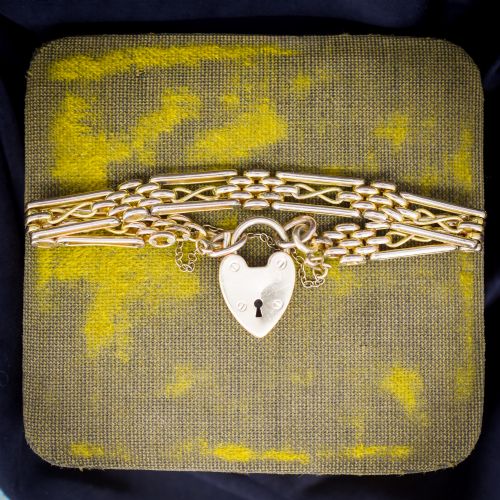
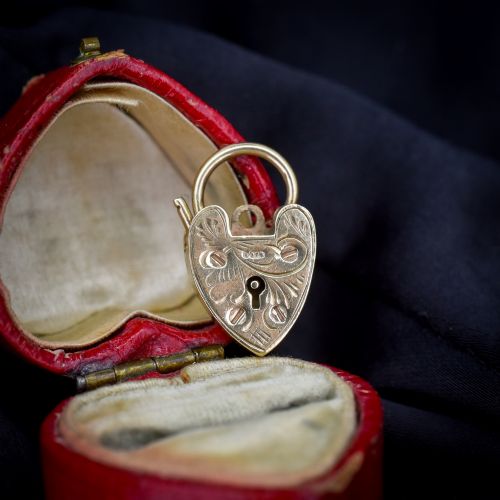
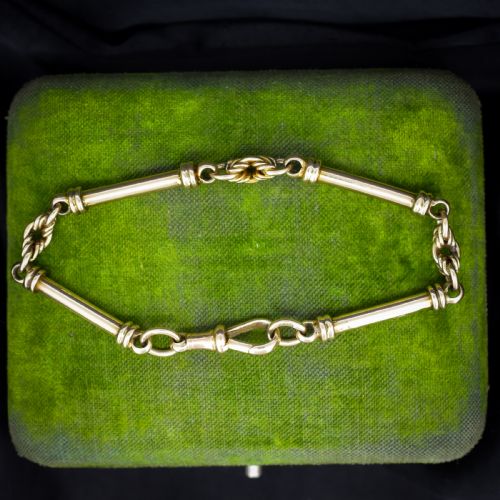
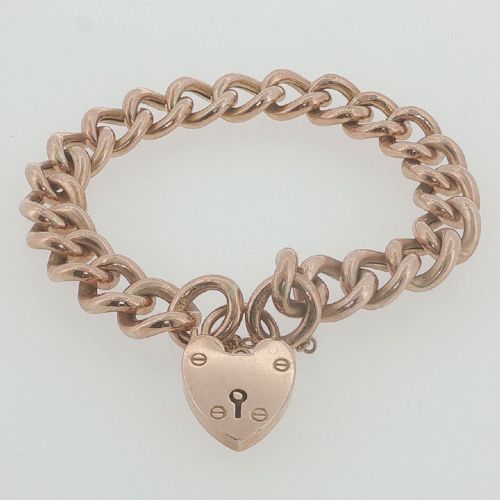
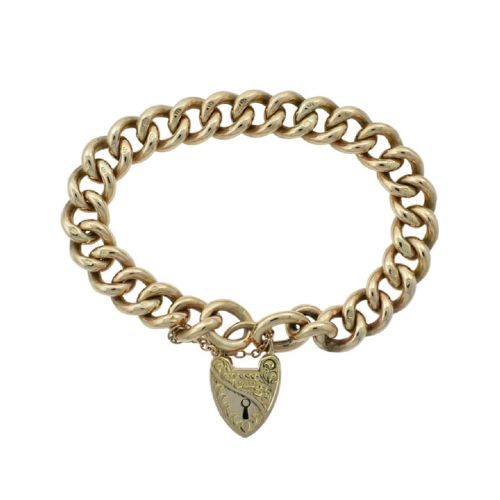
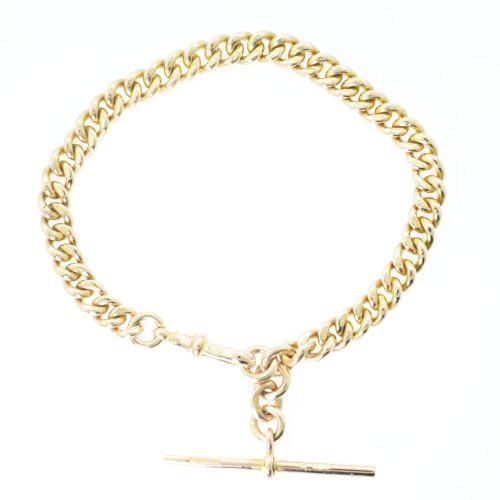
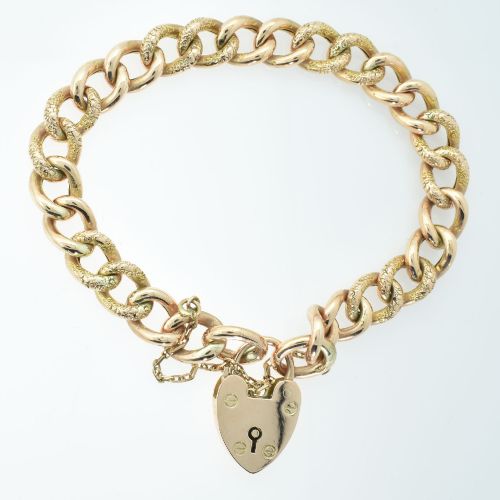
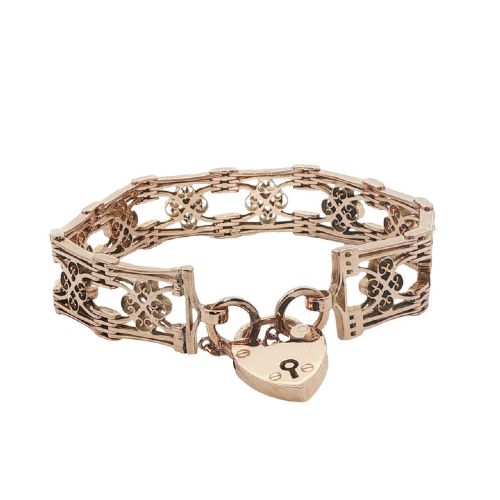
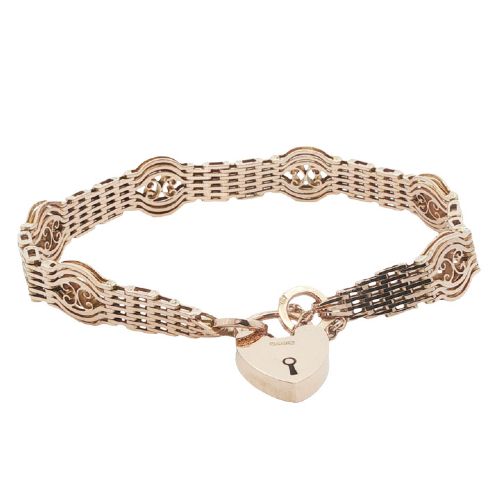
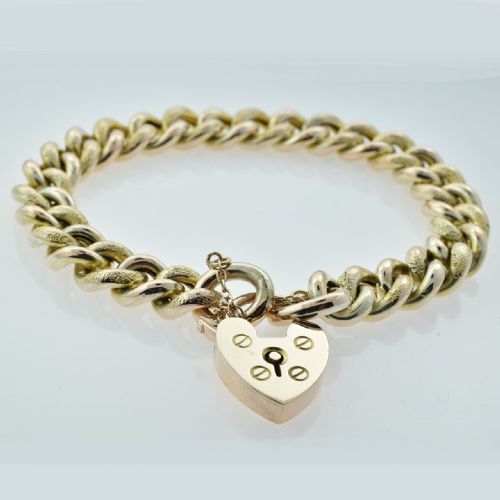
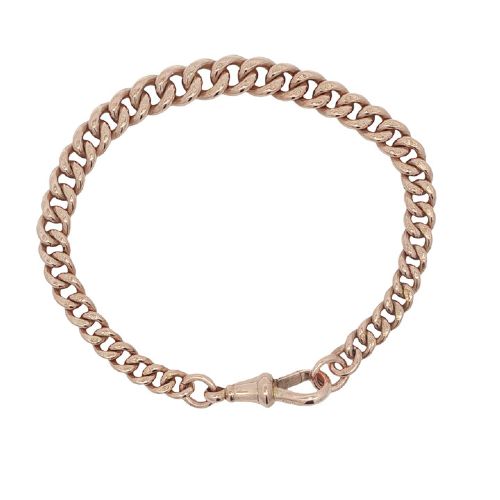
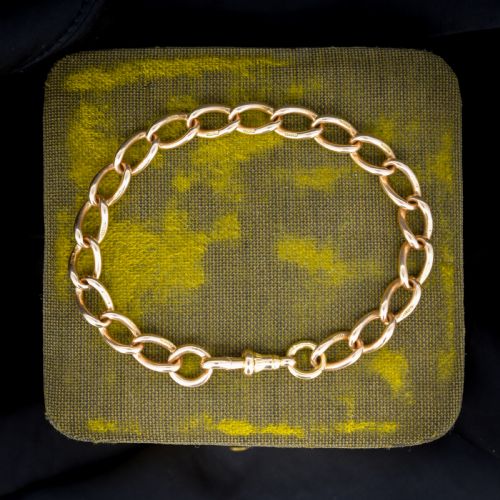
When searching for a gold bracelet clasp, collectors encounter functional closures that act as the focal point of Victorian, Edwardian and mid-century wristwear. The most common examples on this page are heart padlocks, dog clips and gem-set cluster clasps fitted to curb links, gate chains and multi-strand pearl bracelets.
The pieces span periods from the late Victorian era through the Edwardian years up to the 1950s and 1960s, appearing in forms ranging from heavy watch chains to delicate pearl strands. These components served to secure heavy gold links or pearl strands while displaying hallmarks, engravings or gemstones.
Originating largely from British workshops and hallmarked in cities such as London, Birmingham and Chester, these items combine practical security with decorative utility. Buyers find them integrated into solid rose gold, yellow gold and rolled gold configurations.
How they were made
Maker construction relies on 9ct rose, yellow and occasional 18ct or 14ct yellow gold, formed into solid links, hollow tubes, tubular bars and cast padlock bodies. Metal components were hand-assembled, soldered and engraved by hand, incorporating internal springs for padlocks and snap mechanisms for dog clips.
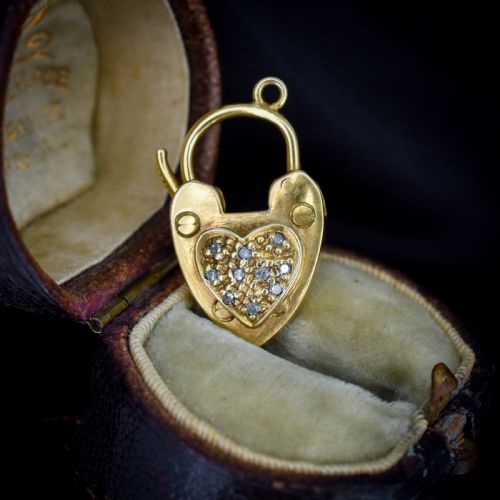
Gemstone integration involves flush-setting or claw-setting diamonds, rubies, sapphires, amethysts, turquoise, peridots and pearls directly into gold cluster clasps or padlock faces. Pearl bracelets utilise multi-strand stringing secured by box clasps or decorative gold plates.
Some Victorian gate bracelets include tiny internal mechanisms built so securely that they still click shut with absolute authority.
What varies in quality
Quality separates through the weight of the gold, the crispness of hand engraving and the structural integrity of internal springs in padlocks and dog clips. Heavier solid weights and complete, legible hallmarks distinguish superior examples from lighter or rolled gold alternatives.
The choice and grading of set gemstones, from natural pearls and diamonds to coloured stones like emeralds, rubies and sapphires, define the upper tier of design. Original matching components and un-rubbed chased decoration maintain the integrity of the piece.
Theo Fennell
The Gold Bracelet Clasp Glossary
- Padlock clasp
- A heart-shaped mechanical closure commonly found on Victorian and Edwardian gate and curb link bracelets. It functions with a spring-loaded shackle.
- Dog clip
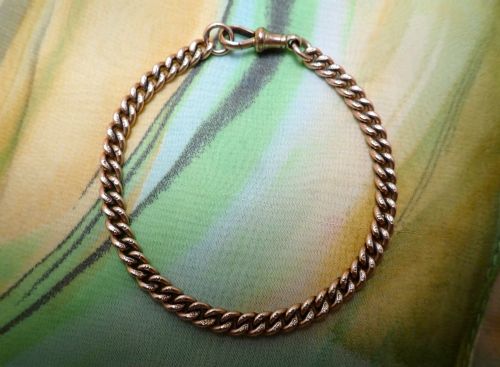
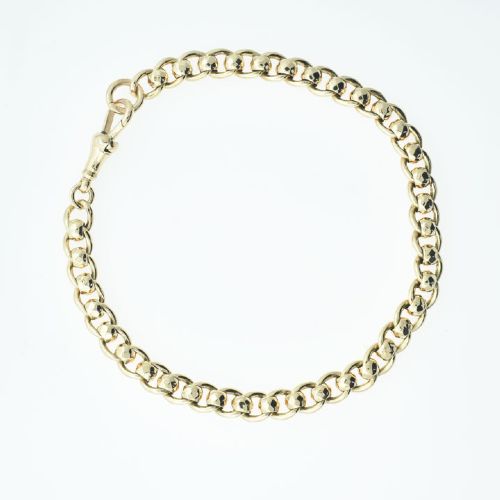
- A swivel-backed spring hook utilised on watch chains and charm bracelets to secure links. It allows the attached charm or clasp to rotate freely.
- Gate bracelet
- A wide wrist ornament formed of parallel stacked metal bars connected by vertical links. This style frequently fastens with a heart padlock.
- Curb link
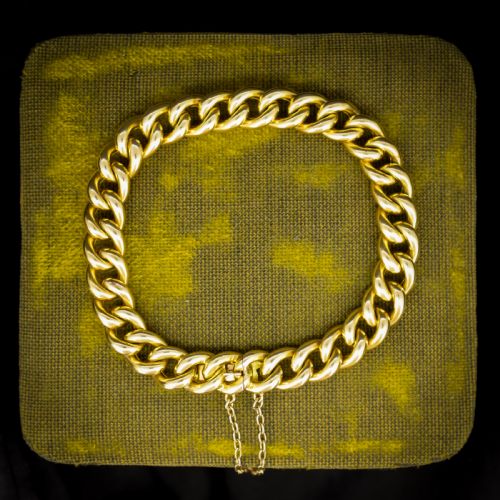
- A chain pattern composed of interlocking uniform links that lie flat against the wrist. Variations include hollow and solid 9ct gold iterations.
- Cluster clasp
- A central gemstone grouping, often featuring diamonds, pearls or turquoise, mounted on a gold base that acts as the bracelet fastening.
Gold Bracelet Clasp: Frequently Asked Questions
What periods do these clasps come from?
The inventory spans Victorian, Edwardian, 1950s and 1960s Retro periods, reflecting changing tastes in jewellery design.
Earlier pieces favour rose gold heart padlocks and heavy curb chains, while later decades introduce pearl strands with cluster or abstract gold fastenings.
How do heart padlock clasps work?
Heart padlocks function via a spring-loaded shackle that pushes inward to release from the jump ring or loop of the bracelet.
Many examples serve as both decorative charms and secure mechanical closures for gate and watch chain bracelets.
What gold purities are used?
Most items are constructed from 9ct gold, appearing in rose and yellow variations, alongside occasional 14ct and 18ct pieces.
Rolled gold is also recorded among the lighter historical examples on the page.
Are pearls original to the vintage clasps?
Many mid-century items feature multi-strand cultured pearls paired with dedicated diamond, sapphire, turquoise or peridot gold cluster clasps.
These configurations are preserved as complete vintage designs from the 1950s and 1960s.