
Antique Heart Padlock
An antique heart padlock fastens the history of sentiment to the wrist as a clasp or hangs close as a charm.
Antique Heart Padlock
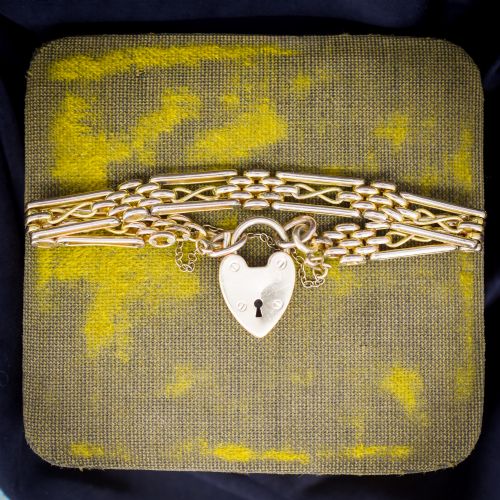
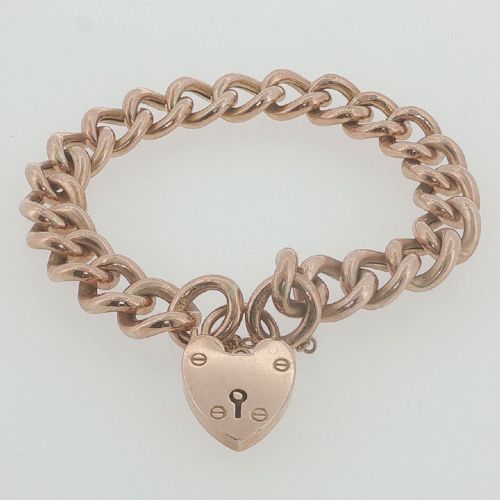
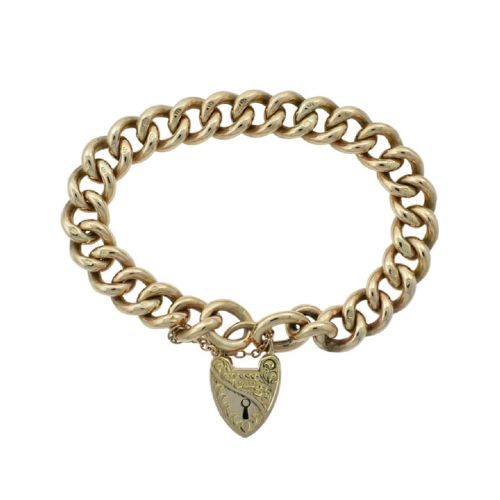
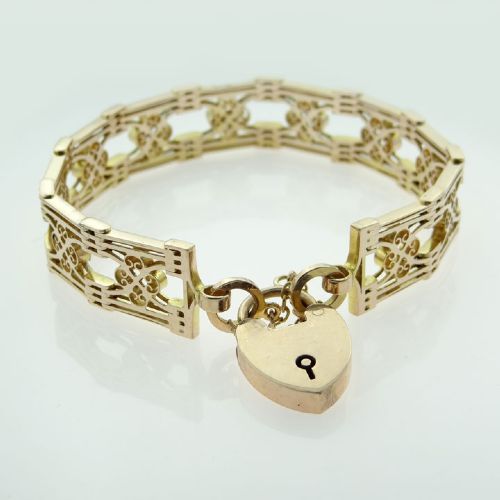
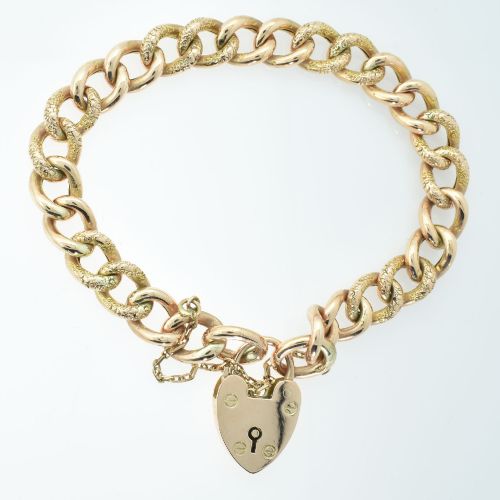
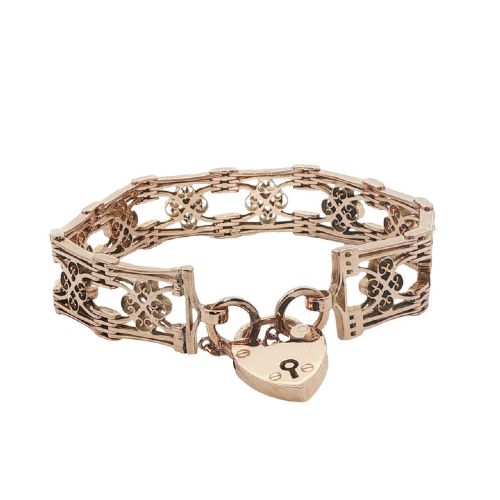
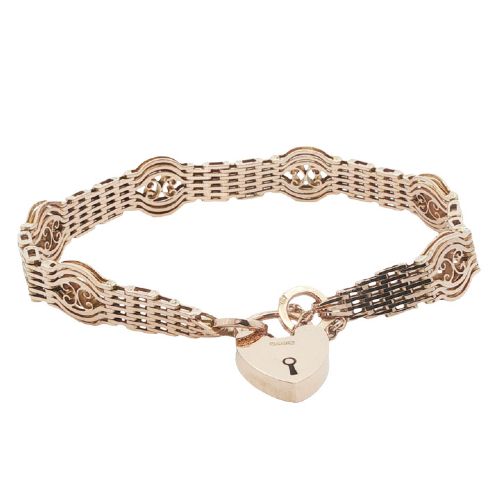
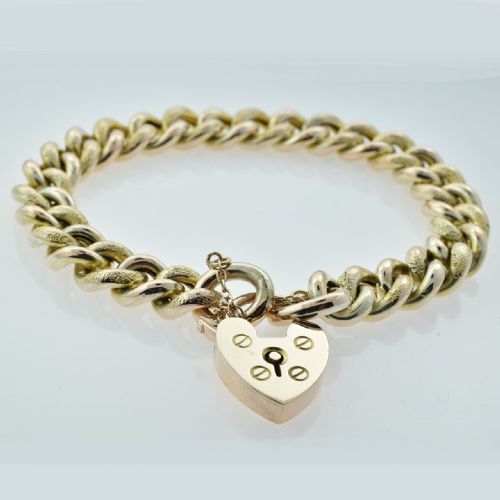
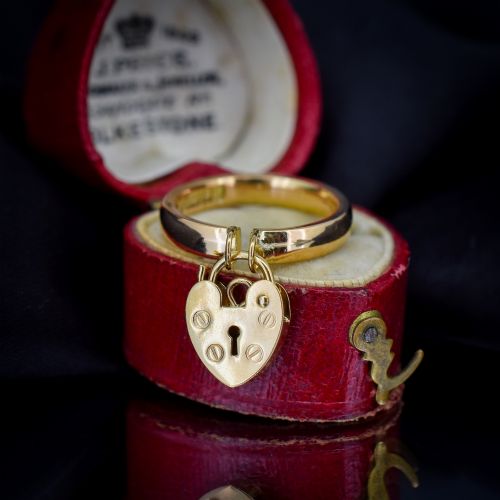
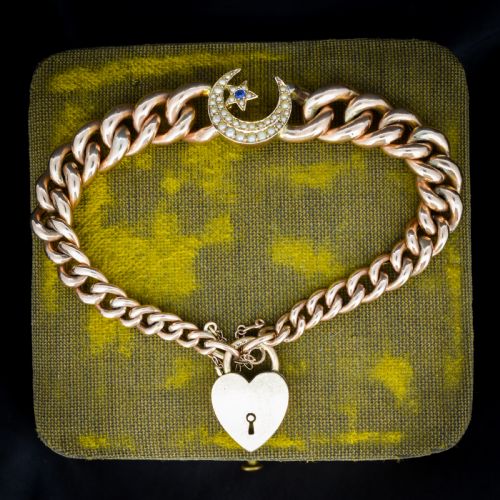
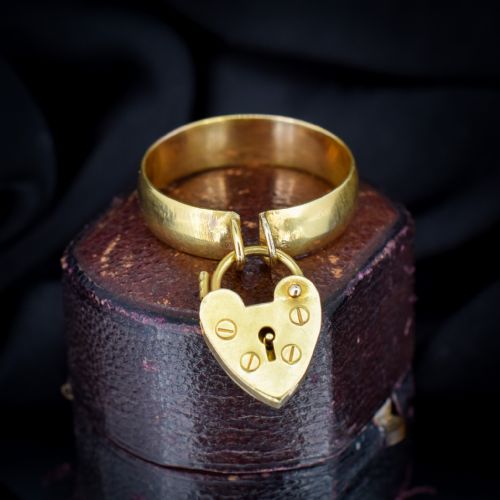
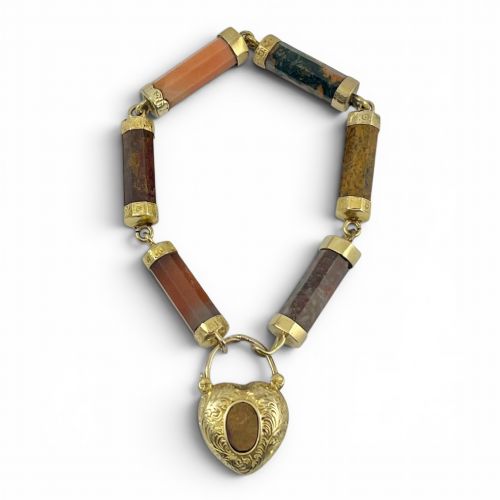
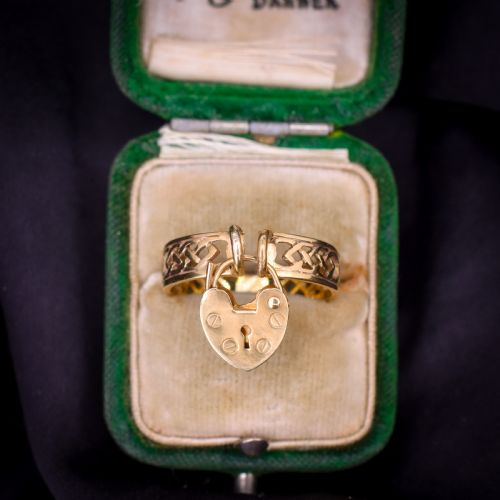
The antique heart padlock appears most frequently suspended from gate and curb link bracelets spanning the Victorian and Edwardian eras. These diminutive fastenings also manifest as charms, pendants, and drops upon bands, functioning historically as both secure clasps and tokens of affection.
The surviving pieces bridge the late nineteenth century and the early decades of the twentieth, moving from ornate chased gold into mid-century variations. While many serve as the active closure for heavy chain bracelets, others function independently as jewellery pendants.
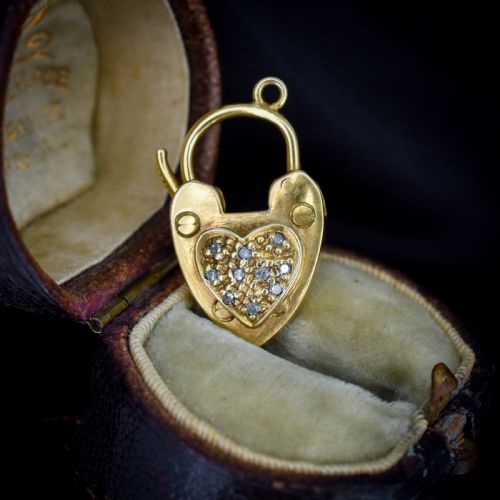
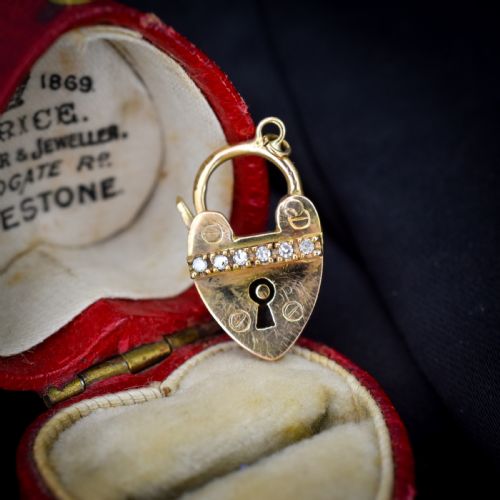
Collectors encounter these pieces mounted in various configurations, from simple polished gold shells to complex hinged mechanisms set with gemstones. The form remains remarkably consistent across periods, maintaining its symbolic silhouette while accommodating diverse chain weights and link styles.
Materials and Construction
The construction relies primarily on nine-carat yellow and rose gold, occasionally extending to higher purities, silver, and rolled gold. Goldsmiths shaped these metals into hollow or solid shells, incorporating internal spring mechanisms that allowed the spring-loaded shackle to snap securely shut.
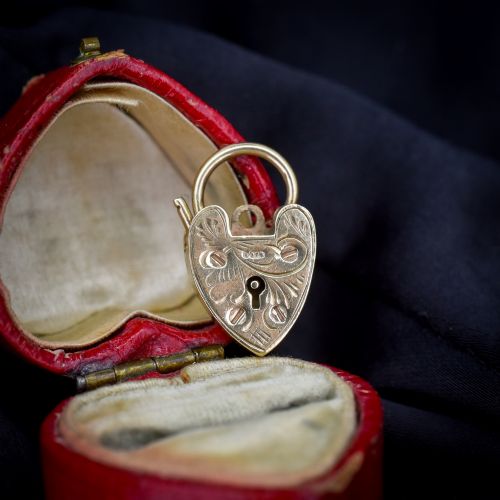
Surface ornamentation involved hand-engraving, chasing, and niello work, transforming plain metal into detailed foliate patterns or geometric designs. Workshops also integrated precious stones such as seed pearls, diamonds, amethysts, rubies, chrysoberyl, and tortoiseshell directly into the face of the padlock.
Structural integrity depended on robust curb or gate links attached to the main body, frequently accompanied by safety chains to prevent loss during wear. Hallmarks stamped into the metal record assay offices such as Birmingham, Chester, and London alongside specific date letters.
Listings demonstrate a strong prevalence of nine-carat rose gold and yellow gold across Victorian and Edwardian curb chain bracelets.
Defining Quality and Craftsmanship
Quality rests in the crispness of the hand-engraving and the structural weight of the metal shell. Finer examples display deep, deliberate chasing rather than shallow machine stamping, and their internal springs retain a crisp, reliable snap.
The presence and integration of gemstones separate standard production from exceptional pieces. Padlocks set with well-matched seed pearls, amethysts, rubies, or diamonds demand superior skill in bezel and collet setting, elevating the object beyond a simple utility clasp.
Preservation of original hallmarks and minimal wear to the hinged shackle influence the integrity of the piece. Padlocks that maintain their factory sharpness and tight mechanical alignment represent the upper tier of surviving examples.
W.H.Wilmot
The Antique Heart Padlock Glossary
- Curb link
- A type of chain formed by interlocking uniform links that lie flat against the skin. This heavy link style provides the standard foundation for most gate and padlock bracelets.
- Gate bracelet
- A linked bracelet constructed from parallel vertical bars connected by small links, mimicking decorative courtyard gates. These pieces almost universally terminate in a heart padlock clasp.
- Chasing
- A metalworking technique where the artisan depresses metal from the front using punches and hammers to create a raised design. This method defines the floral and scrollwork surfaces found on many padlocks.
- Niello
- A black metallic alloy used as an inlay on engraved metal surfaces to highlight contrasting patterns. It appears on specialty pieces to create dark, striking motifs against silver or gold.
- Hallmark
- An official stamp applied by an assay office indicating the purity of the metal, the maker, and the year of manufacture. These small marks provide the definitive date for authenticated items.
Antique Heart Padlock: Frequently Asked Questions
What is an antique heart padlock?
An antique heart padlock is a small, functional fastener shaped like a heart, produced predominantly during the Victorian and Edwardian periods. These objects served primarily as clasps for charm and curb link bracelets.
Over time, many transitioned into standalone pendants or charms. Their design combined mechanical ingenuity with sentimental symbolism.
How do you open an antique heart padlock?
Most antique heart padlocks operate via a spring-loaded shackle that depresses or pivots when pressure is applied to a small internal mechanism or hidden trigger. Users must handle the hinge with care to avoid straining the original spring.
Some variants feature dummy keyholes, while others rely entirely on the tension of the internal metal leaf spring to secure the link.
Were these padlocks used as keys?
Despite their resemblance to functional security locks, these padlocks were designed purely as ornamental jewellery clasps. They required no actual key for daily operation, relying instead on integrated spring mechanisms.
Their primary function was to secure heavy gold charm bracelets around the wrist without accidental release.
How do I date an antique heart padlock?
Dating relies heavily on official hallmarks stamped into the metal, which record specific assay office symbols and date letters corresponding to years like nineteen hundred or nineteen hundred and seven. Stylistic evidence, such as curb link thickness and hand-engraved floral motifs, also points toward the Victorian or Edwardian eras.
Comparing the construction method and accompanying chain types helps confirm the period of manufacture.