

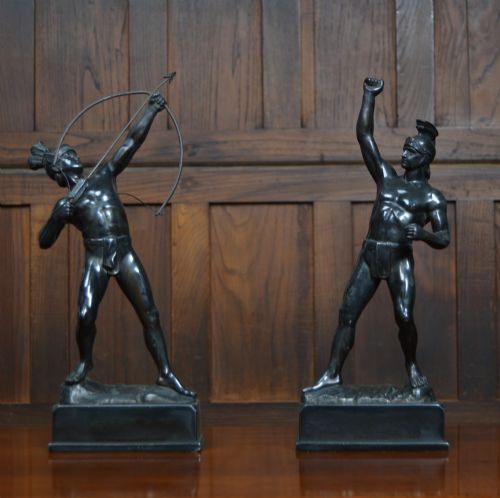


Roman Style Bronze Figure
A roman style bronze figure brings the classical past into a room, offering small-scale interpretations of ancient sculpture through nineteenth-century craftsmanship.
Roman Style Bronze Figure
When you search for a roman style bronze figure, you encounter nineteenth-century interpretations of classical antiquities, often associated with the Grand Tour. These pieces take the form of statuettes, busts, and larger sculptures depicting mythological figures, emperors, and famous statues. You find representations ranging from the Dancing Faun of Pompei to portrait busts of Caesars like Marcus Aurelius and Caracalla.
The selection here includes pairs of figures, statuettes after Renaissance masters such as Michelangelo, and patinated bronzes modelled on classical originals. Alongside true bronze casts, the inventory admits related materials including spelter, zinc alloy, terracotta, and plaster library busts. Most items date from the Victorian era and the late nineteenth century, reflecting nineteenth-century taste for classical revival and neoclassical aesthetics.
How they were made
Foundry workers utilised metal casting techniques to produce these sculptures, frequently employing bronze, brass, or spelter as the primary medium. Makers applied surface treatments to achieve specific visual effects, resulting in patinated bronze, verdigris patina, and green patination that mimic excavated antiquities. Other pieces relied on softer or more accessible materials, utilising plaster, stone, terracotta, and zinc alloy.
Foundries and workshops also produced works after specific models, capturing the stance of figures like Narcissus or gladiators through careful finishing and chasing of the cast metal. Signatures from makers such as Eden Antony Paul Noel or foundries like Barbedienne appear on particular casts, demonstrating the standard of production in nineteenth-century studios.
Roman Style Bronze Figure Retail Price Guide 2026
Typical asking prices for roman style bronze figure among the pieces listed under this phrase on Sellingantiques today, from the lower quarter to the upper quarter. They describe what is for sale here now, not the wider market.
What varies in quality
The choice of material and surface treatment also distinguishes the range. Heavy cast bronze with a sophisticated patination or green patination sits at a different level of craftsmanship compared to lighter spelter or zinc alloy figures finished with simpler metallic paints.
Barbedienne·Eden Antony Paul Noel
The Roman Style Bronze Figure Glossary
- Grand tour
- A traditional trip through Europe undertaken by upper-class young men in the eighteenth and nineteenth centuries to study classical art and architecture. Objects acquired or inspired by these journeys heavily influenced nineteenth-century sculpture production.
- Spelter
- An alloy of zinc and other metals used as a cheaper alternative to bronze in nineteenth-century manufacturing. It accepts patination and plating effectively, though it is softer and lighter than bronze.
- Patina
- A thin layer that develops on the surface of bronze through oxidation or chemical treatment. Makers often applied artificial patinas, including verdigris, to make new casts resemble ancient excavated bronzes.
- Neoclassical
- An artistic movement drawing inspiration from the classical art and culture of ancient Greece and Rome. This style dominated European sculpture and architecture during the eighteenth and nineteenth centuries.
- Bust
- A sculpture representing a person's head, shoulders, and upper chest. Library busts of Roman emperors were popular decorative and educational items in Victorian interiors.
Roman Style Bronze Figure: Frequently Asked Questions
What is a Grand Tour bronze?
A Grand Tour bronze is a nineteenth-century small-scale copy of a famous classical sculpture or ruin, purchased by travellers touring Italy and Europe. These pieces allowed collectors to bring classical antiquity into their homes.
Such bronzes were produced in various sizes to serve as mantelpiece ornaments, desk accessories, or cabinet displays, reflecting the classical education of the period.
How do I tell bronze from spelter?
Bronze is heavier, harder, and colder to the touch than spelter, and it develops a stable, rich patina over time. Spelter is a softer zinc alloy that often shows lighter weight and may reveal grey metal beneath worn spots in the surface finish.
Examining the underside or areas of wear helps determine whether the metal is a solid copper alloy or a softer substitute.
Why are some figures green?
The green colour is a patina, either natural or chemically induced, designed to replicate the appearance of ancient bronzes buried in the earth for centuries. Nineteenth-century makers frequently applied verdigris or green patination to satisfy Victorian taste for authentic-looking antiquities.
This surface treatment protects the metal underneath while giving the sculpture an aged aesthetic.
Who are the figures usually depicting?
The subjects are typically drawn from classical mythology, ancient history, and Renaissance art. Common figures include Roman emperors such as Marcus Aurelius and Augustus, mythological characters like Bacchus and Narcissus, and famous classical statues.
Victorian buyers favoured these subjects for their educational and cultural associations with ancient Rome and Greece.