


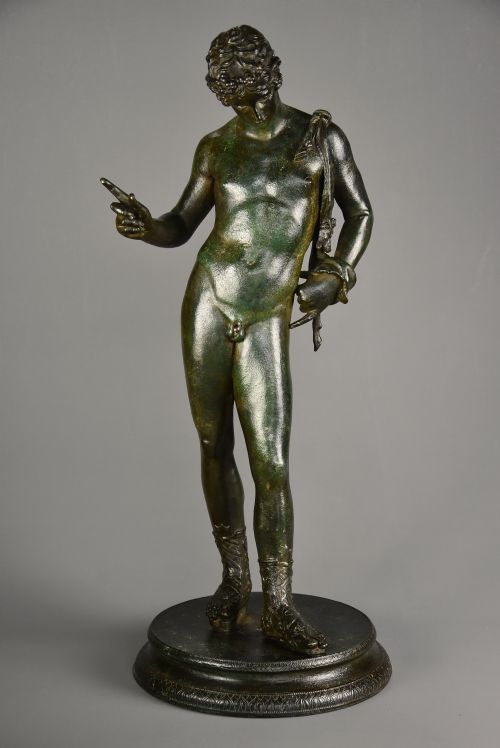
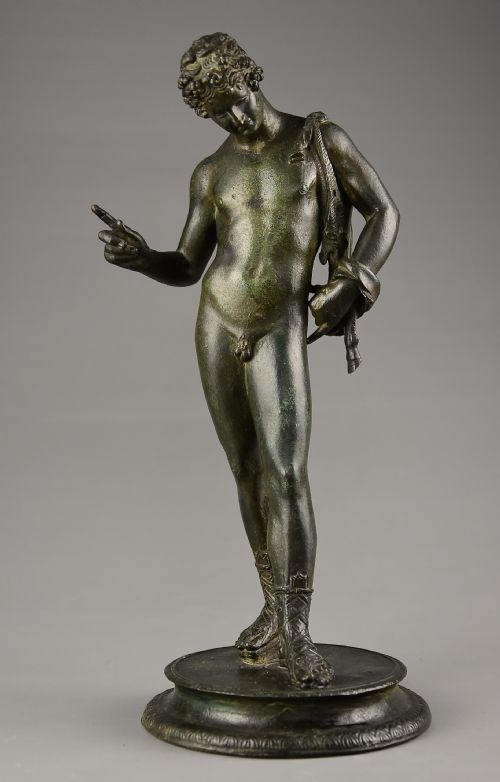


Bronze Statue of Narcissus
A bronze statue of narcissus captures the classic grace of antiquity, bringing refined Neapolitan craftsmanship and grand tour heritage directly into your interior.
Bronze Statue of Narcissus
A bronze statue of narcissus represents the classic mythological youth caught in contemplation, echoing the famous antique discoveries unearthed in Pompeii and Herculaneum. These sculptures typically date from the 19th century and emerge from Italian workshops catering to travellers undertaking the Grand Tour. Most examples stand as patinated bronze figures mounted upon marble or fossil marble bases.
The depictions often draw closely upon ancient Roman originals, with several pieces specifically referencing Neapolitan foundries or local casting traditions. Figures frequently arrive with dark green or varied patination that mimics excavated antiquities. Buyers encounter both smaller cabinet pieces and larger sculptural interpretations across these listings.
How they were made
Foundries utilised traditional bronze casting methods to capture the fluid musculature and posture of the classical figure. Skilled artisans then applied patination, ranging from deep dark tones to rich green finishes, to simulate the appearance of ancient buried metalwork.
The finished metal figures were mounted securely upon heavy bases fashioned from fossil marble or plain marble. This combination added structural stability while enhancing the neoclassical aesthetic expected by collectors of Grand Tour souvenirs.
Bronze Statue of Narcissus Retail Price Guide 2026
Typical asking prices for bronze statue of narcissus among the pieces listed under this phrase on Sellingantiques today, from the lower quarter to the upper quarter. They describe what is for sale here now, not the wider market.
Materials recorded across the inventory include patinated bronze, standard bronze, fossil marble and plain marble.
What varies in quality
The refinement of the casting defines the upper tier of these sculptures, where fine details in the hair, facial expression and musculature remain sharp and distinct. Weaker examples show softening in the modelling, often resulting from worn moulds or hurried production in busy tourist workshops.
The quality and weight of the mounting base also distinguish finer works. Solid fossil marble plinths selected for their natural patterning elevate a bronze statue of narcissus far above simpler mountings.
The Bronze Statue of Narcissus Glossary
- Grand Tour
- A cultural journey undertaken by wealthy young Europeans through France and Italy during the 18th and 19th centuries. Souvenirs such as small bronzes were collected along the way.
- Neoclassical
- An artistic movement drawing inspiration from the classical art and culture of ancient Greece and Rome. This style heavily influences the proportions and subject matter of these figures.
- Patinated Bronze
- Metalwork treated with chemical solutions to produce a specific surface colour or aged finish. Dark green and black patinations are particularly common on these antique figures.
- Fossil Marble
- A natural limestone containing distinct fossil fragments that is polished for use as a decorative base. It provides a heavy, stable foundation for nineteenth-century sculptures.
Bronze Statue of Narcissus: Frequently Asked Questions
What is a grand tour bronze?
A grand tour bronze is a souvenir sculpture purchased by travellers touring historical sites in Italy during the nineteenth century. These pieces frequently copied famous ancient statues discovered in excavations.
Workshops in Naples and Rome specialised in producing these high-quality metal figures for international collectors. They served as both portable memories of travel and displays of classical learning at home.
How do I identify a 19th century bronze?
Nineteenth-century bronzes typically display specific patination techniques, hand-chased surface details, and mounting methods consistent with period foundry practices. The composition of the bronze alloy and the wear patterns on the underside offer further clues to their age.
Base materials such as fossil marble also point directly to nineteenth-century Italian stonemasonry used for grand tour sculpture mounts. Comparing the casting quality with known period examples helps confirm the date.
Where were these sculptures made?
These sculptures were primarily produced in Italian workshops, particularly in Naples and surrounding regions close to major archaeological sites. Local artisans cast them to satisfy the steady demand from foreign travellers.
Some pieces bear direct connections to specific Neapolitan foundries or makers active during the late nineteenth century. Their output supplied the international market with accessible masterpieces after the antique.
How do I care for patinated bronze?
Patinated bronze requires gentle dusting with a soft, dry cloth to prevent the accumulation of dirt on the metal surface. Avoid using harsh chemical cleaners, polishes, or abrasive materials that can strip the historic patination.
Keeping the sculpture away from excessive moisture and direct sunlight helps preserve the stability of both the bronze figure and its marble base.