


Roll Top Writing Table
A roll top writing table conceals private papers behind a curved tambour or cylinder shutter, combining generous surface space with secure compartmentalisation.
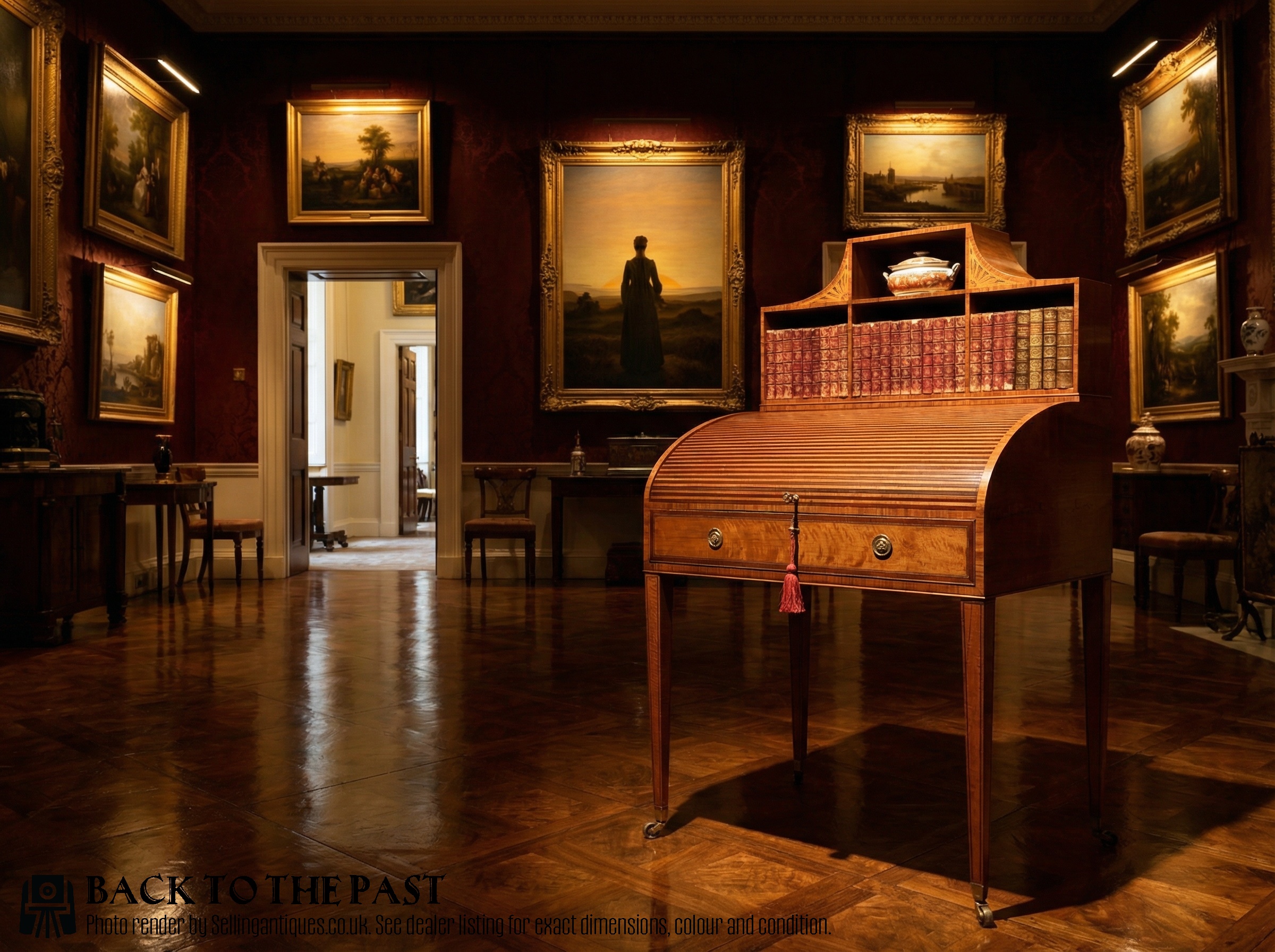
Roll Top Writing Table
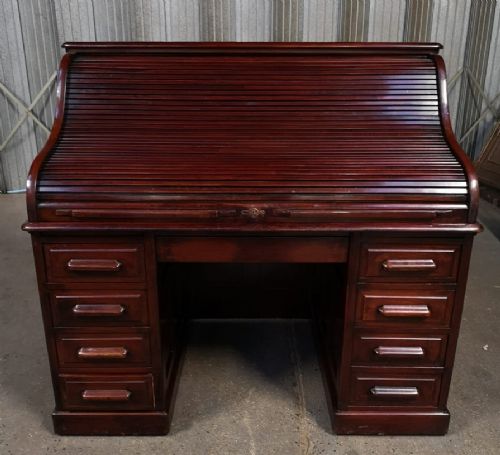
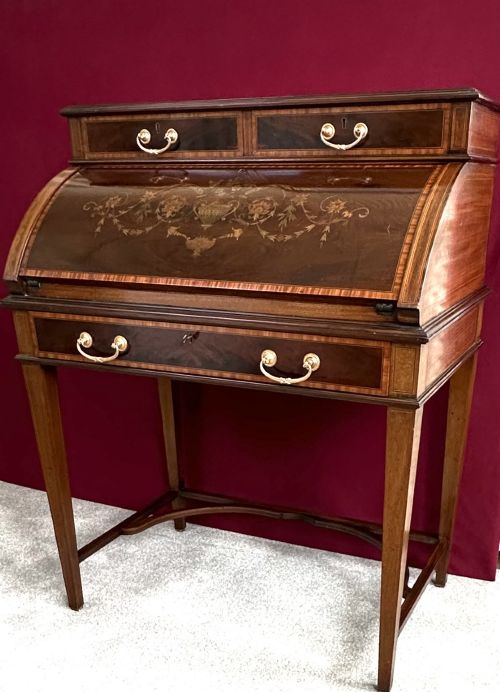
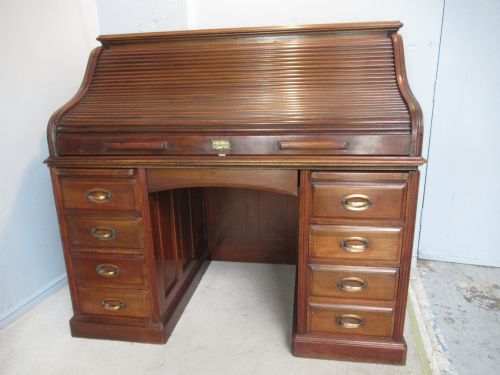
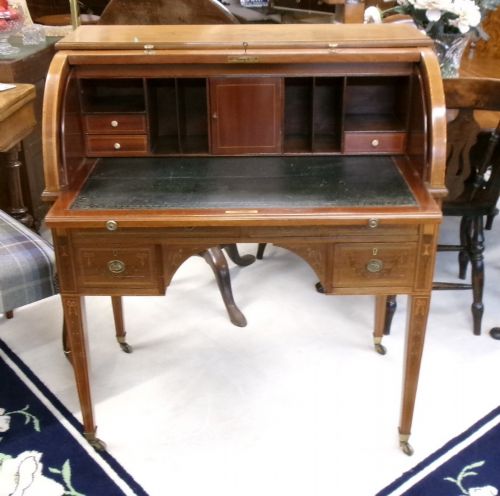
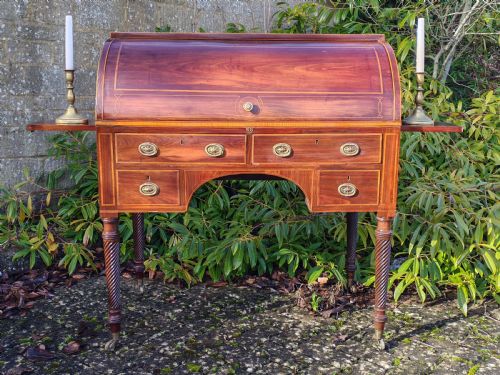
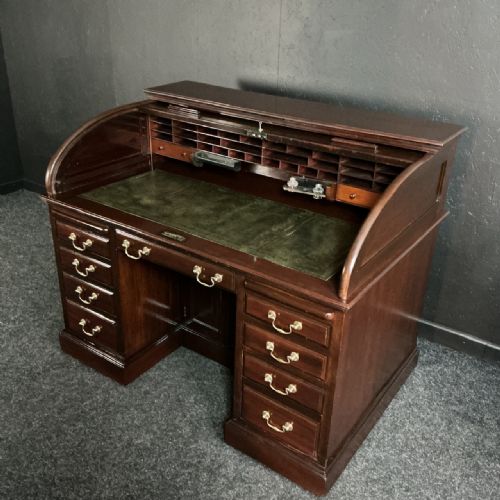
A roll top writing table encloses the working surface beneath a sliding wooden cover, operating as a sophisticated bureau for correspondence and administrative records. These pieces emerge in various forms across the Georgian, Regency, Victorian and Edwardian periods, manifesting in domestic sitting rooms and formal libraries alike. The selection encompasses compact ladies desks alongside substantial pedestal examples built for daily professional use.
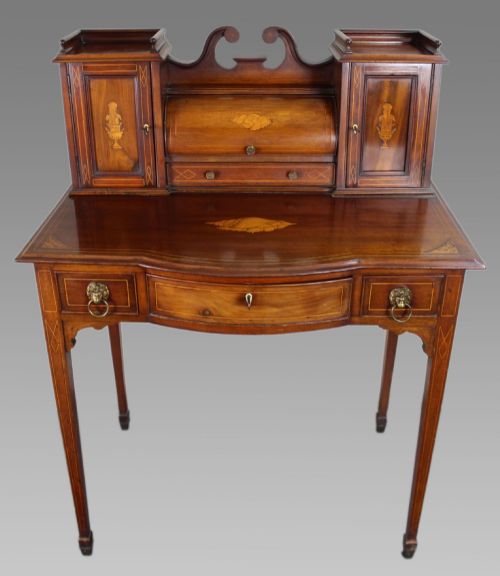
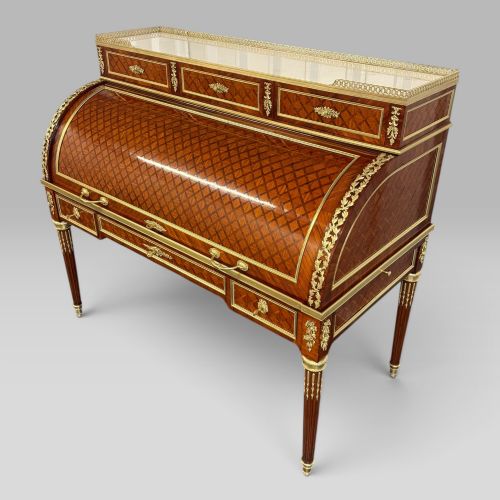
Mahogany predominates among the surviving examples, often enriched with satinwood or partridgewood inlay, while Edwardian pieces frequently utilise oak or walnut. French specimens introduce kingwood and parquetry alongside cast ormolu mounts, reflecting continental cabinet-making traditions. Smaller variations such as the bonheur du jour provide lighter proportions intended for boudoir use.
How they were made
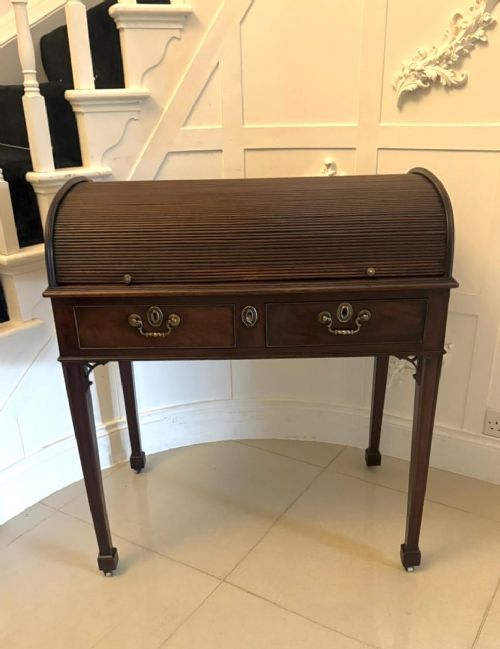
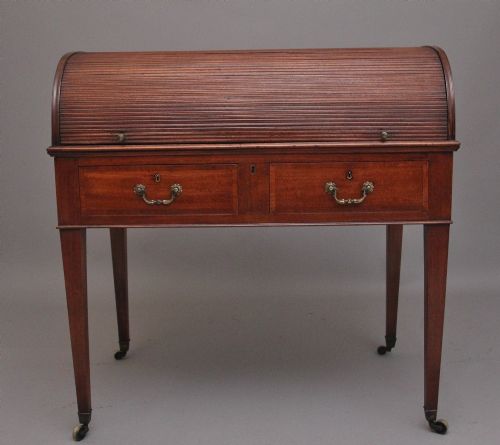
The defining mechanism relies on the tambour shutter, formed from narrow vertical slats of timber glued to a strong linen or canvas backing to allow smooth movement along curved grooves. Cabinet-makers constructed these sliding covers from mahogany, satinwood, oak or walnut, ensuring tight tolerances so the flexible curtain glides without binding.
Internal fittings demand precise joinery, incorporating pigeonholes, small drawers and pull-out writing slides lined with leather. Exterior decoration employs fine wood veneers, ebony inlay and cast brass ring handles, uniting structural integrity with refined decorative surface work.
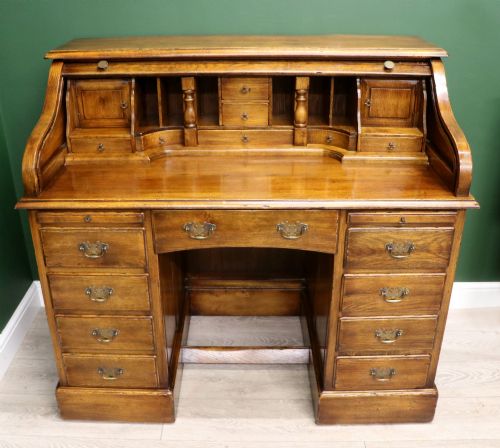
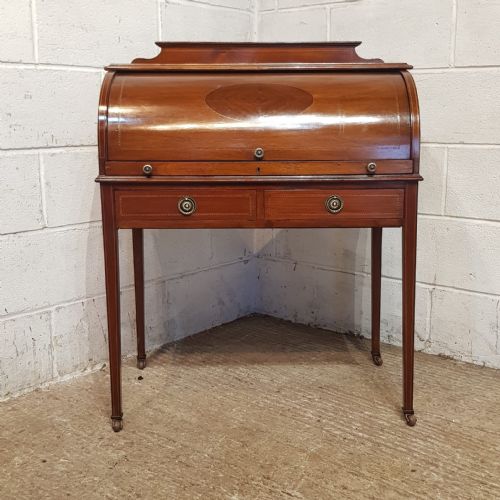
The selection spans compact Edwardian ladies desks up to substantial nineteenth-century pedestal writing tables fitted with leather inserts.
What varies in quality
Construction standards depend heavily on the precision of the tambour tracks and the smoothness of the sliding action, which separates superior joinery from ordinary production. The choice of timber grain, the delicacy of string inlay and the retention of original brass hardware indicate the original maker's investment of time and skill.
Proportion and secondary woods dictate the standing of a piece, with solid mahogany or finely figured satinwood interiors pointing to high-grade workshops. The complexity of the internal arrangement, including secret compartments and well-fitted stationary drawers, distinguishes bespoke commissions from standard commercial output.
John Mclean·Thomas Turner·Ray and Miles
The Roll Top Writing Table Glossary
- Tambour
- A flexible shutter made from narrow strips of wood glued to canvas, allowing a curved lid to slide open along a recessed track. This mechanism conceals the writing surface and internal pigeonholes when closed.
- Cylinder desk
- A writing table featuring a solid curved quarter-circle wooden lid that rolls backwards into the desk body rather than flexing on slats. It provides a smooth continuous wooden surface when shut.
- Bonheur du jour
- A light lady's writing desk originating in mid-eighteenth-century France, usually fitted with a small cabinet or set of shelves upon the upper surface. These delicate tables appear in satinwood and mahogany.
- Pedestal desk
- A heavy writing table supported by two banks of small drawers reaching down to the floor, often paired with a large roll top or cylinder mechanism. They offer substantial storage capacity.
- Parquetry
- Geometric wood mosaic work used for decorative veneering on cabinet fronts and table tops, frequently employing contrasting timbers like kingwood and mahogany.
Roll Top Writing Table: Frequently Asked Questions
How do tambour desks and cylinder desks differ?
A tambour desk employs a flexible shutter built from thin slats of wood attached to fabric, which bends along a grooved track as it opens. A cylinder desk uses a solid curved piece of timber that rotates inside the body of the cabinet.
Both designs serve the same function of hiding the writing surface, but the solid cylinder requires more precise joinery to maintain its smooth circular motion over time.
Where were these desks placed historically?
These tables stood in private libraries, drawing rooms, studies and administrative offices where correspondence required secure organisation out of sight. Compact versions were kept in ladies' boudoirs for letter writing.
Larger pedestal variants occupied professional chambers and estate offices, housing ledgers and confidential documents.
How do I care for the sliding mechanism?
Keep the tambour tracks clean and free from dust by using a dry cloth, avoiding heavy furniture polishes that might gum up the wooden grooves. Maintain a stable indoor humidity to prevent the wood from expanding and causing the flexible shutter to stick.
Operate the roll top gently along its designated path rather than forcing it if seasonal changes cause slight timber movement.
How can I tell a Georgian desk from an Edwardian one?
Georgian examples usually feature denser, heavier mahogany timbers, understated bracket feet, and hand-cut dovetailing inside the small drawers. Their proportions tend to be rigorous and architectural, reflecting classical cabinet-making traditions.
Edwardian pieces often display lighter satinwood or mahogany veneers with machine-made elements, brighter brass mounts, and revival styling such as Sheraton or Louis XVI motifs.