
Rococo Walnut Side Table
A rococo walnut side table brings fluid curves and rich cabinet timbers to a room, offering both decorative presence and a practical surface.
Rococo Walnut Side Table
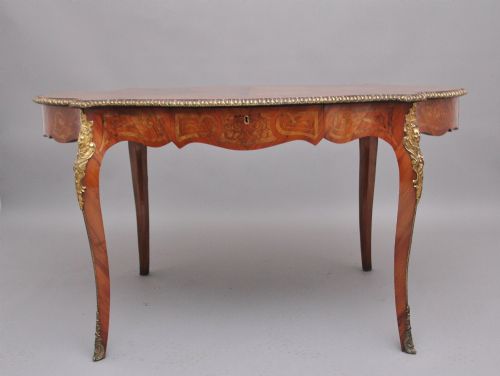
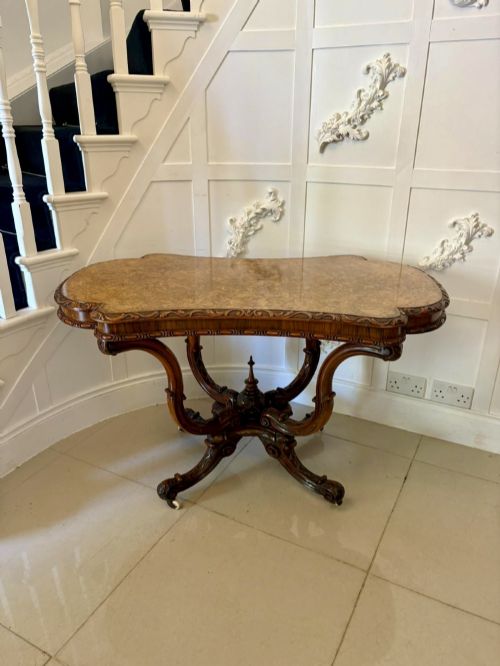
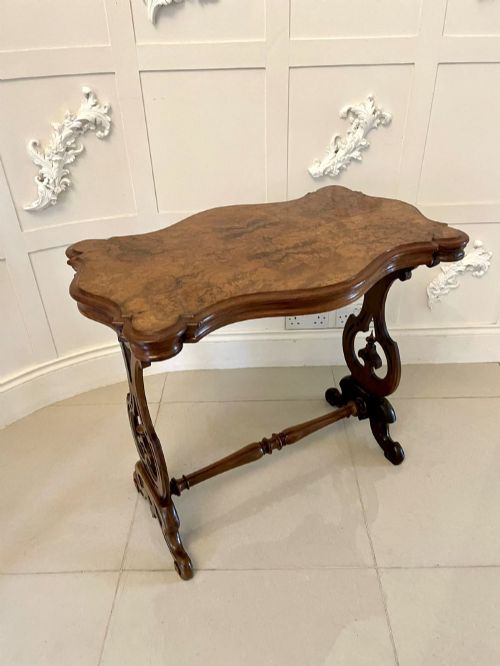
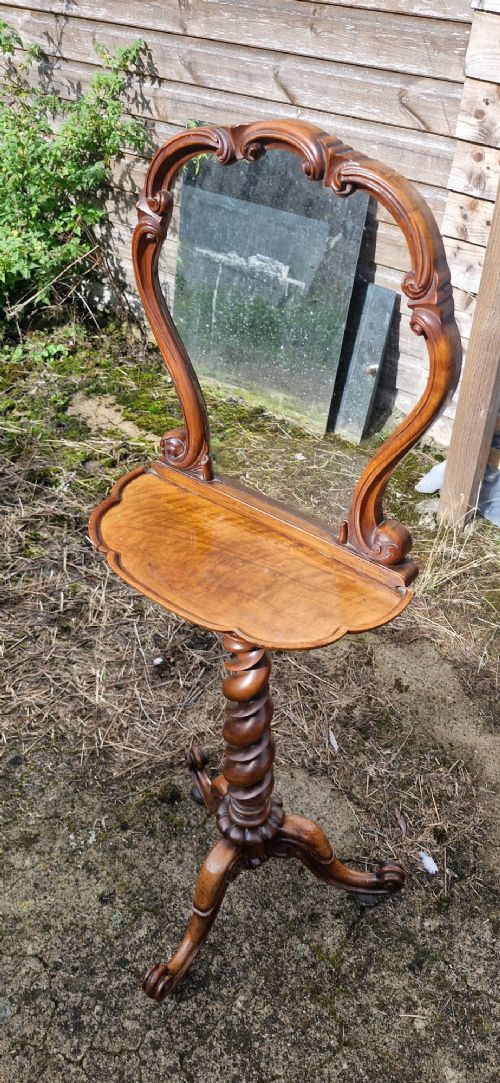
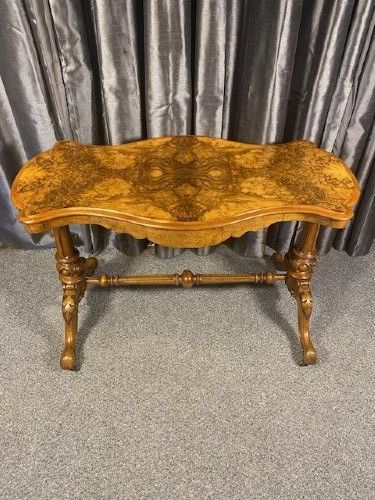
A rococo walnut side table sits within a lineage of serpentine forms and asymmetric ornamentation, drawing heavily on French revivals and Victorian craftsmanship. The pieces available here span console tables, centre tables, and smaller lamp tables, often constructed with shaped tops and cabriole legs.
Most examples date from the nineteenth century through the early twentieth century, showing strong ties to Louis XV and Rococo Revival design vocabularies. Walnut forms the primary structural timber, frequently paired with burr veneers and marquetry inlay.
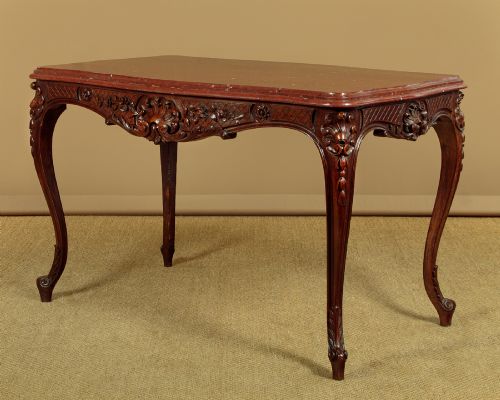
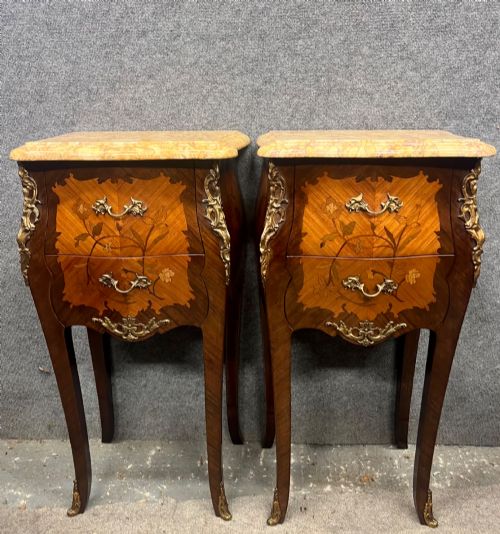
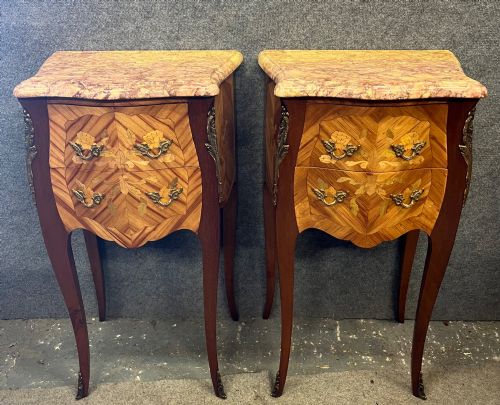
Buyers will encounter various formats, from freestanding centre tables with marble tops to smaller occasional pieces and bedside cabinets. The physical evidence points toward continental workshops as well as British cabinet makers adapting French taste.
Materials and construction
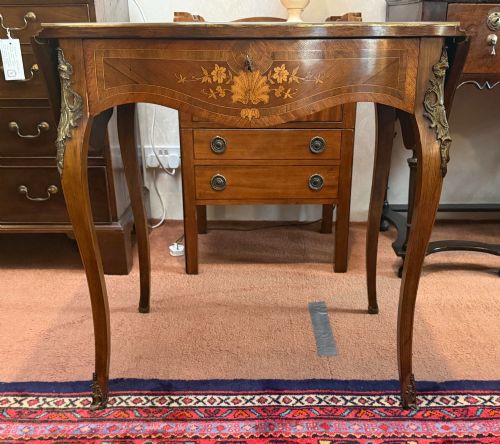
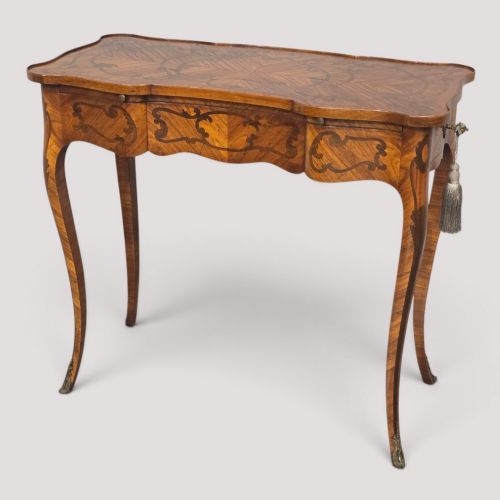
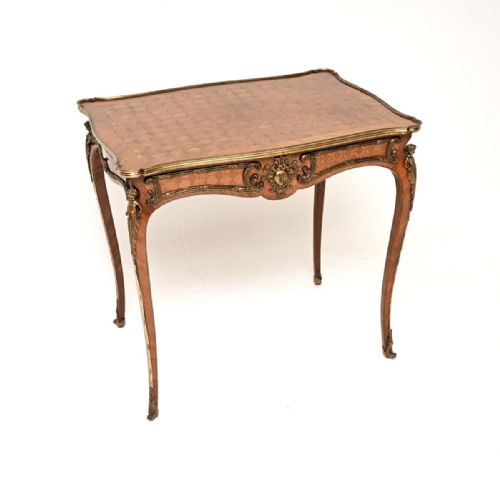
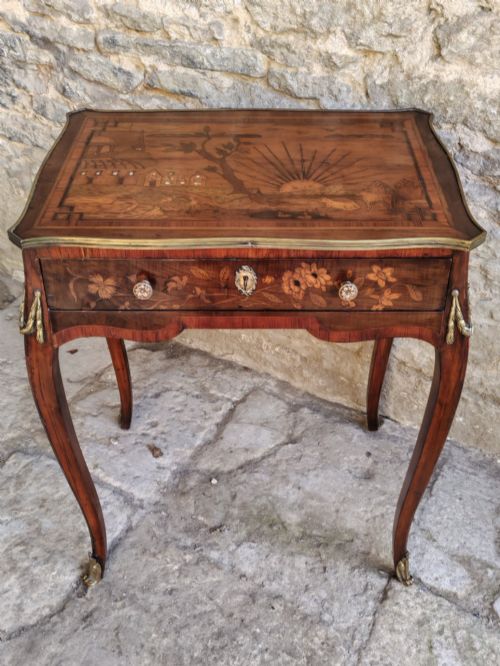
Makers utilised solid walnut and decorative veneers like burr walnut and kingwood over secondary timbers, shaping the wood to achieve the signature undulating curves of the style. Marquetry and parquetry inlay add intricate geometric or floral patterns across table tops and drawer fronts.
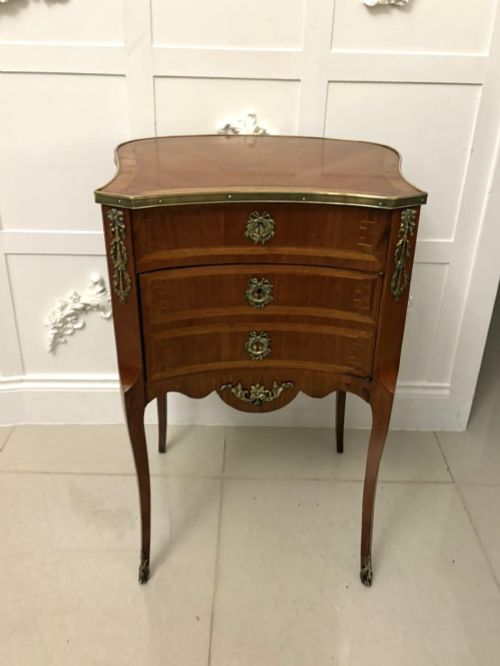
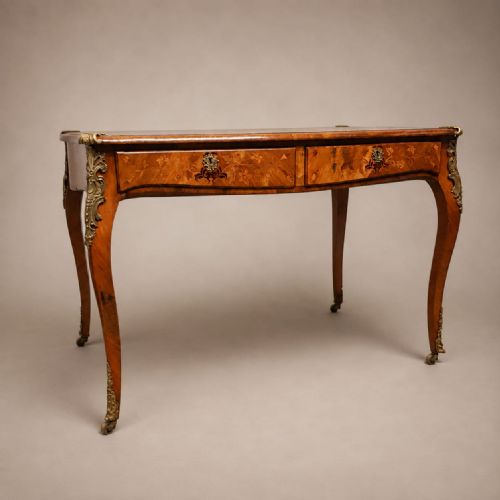
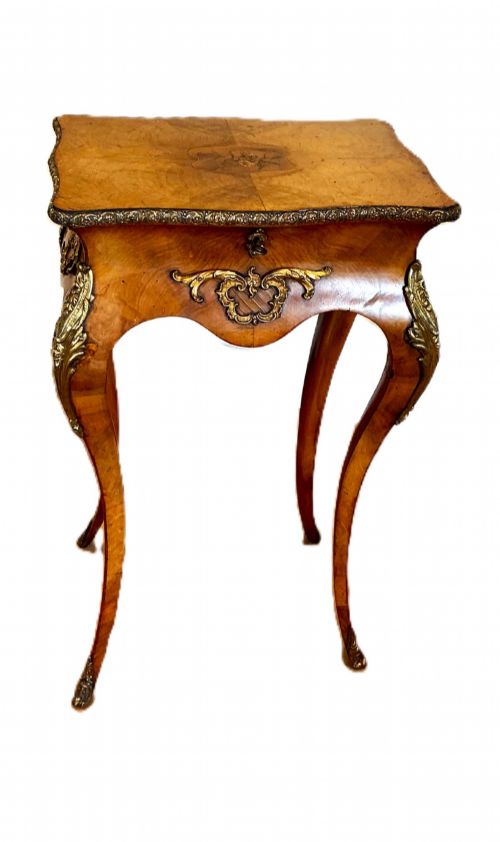
Ormolu and gilt bronze mounts appear frequently, cast and chased to highlight the corners and legs, while inset rouge marble slabs provide durable and weighty surfaces on console and centre tables. Hand-carving defines the structural frames, executing scrollwork and foliage typical of the period.
Some tables double as secret writing desks or games boards, proving that past owners took their leisure as seriously as their decor.
Distinctions in quality
The standard of execution in the carving and veneer work separates ordinary items from superior examples, with finer pieces displaying crisp, deep relief and seamless matching of wood grain. The precision of the marquetry inlay and the weight and chasing of ormolu mounts further indicate the maker's investment of time and skill.
Structural integrity relies on the tightness of joinery in the complex curves characteristic of these tables, alongside the original condition of marble tops and gilt bronze elements. Higher quality is evident in pieces that retain their original mounts, polished surfaces, and stable frames without excessive restoration.
L.Martin of Paris
The Rococo Walnut Side Table Glossary
- Ormolu
- Gilded bronze mounts applied to furniture for decoration. This technique was widely used in French cabinet making to accentuate the contours of tables and cabinets.
- Marquetry
- Decorative veneer work arranged in pictorial or floral patterns. Craftsmen cut thin slices of various coloured woods and fitted them together into a puzzle-like design.
- Cabriole leg
- A furniture leg that curves out and then in, resembling an animal's leg in motion. It typically terminates in a scroll or pad foot.
- Parquetry
- Geometric patterns formed by small pieces of wood veneer. It differs from marquetry by relying on angular shapes like squares, triangles, and diamonds.
- Bureau plat
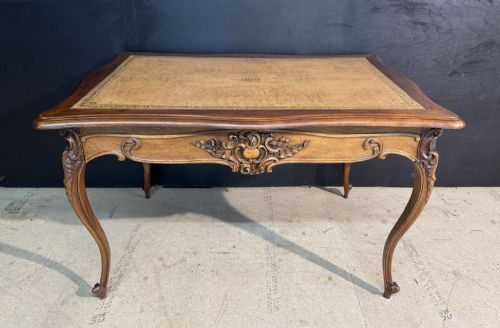
- A flat-topped writing desk, usually freestanding with drawers beneath the surface. These tables often feature leather inserts and elaborate brass or ormolu mounts.
Rococo Walnut Side Table: Frequently Asked Questions
What defines a rococo walnut side table?
A rococo walnut side table is characterised by serpentine lines, asymmetric ornamentation, and cabriole legs rooted in eighteenth-century French design. These pieces utilise walnut timbers, often enhanced by burr veneers or marquetry.
They function as decorative and functional furniture, appearing as console tables, centre tables, and smaller lamp tables across nineteenth- and early twentieth-century periods.
How were marble top tables used?
Marble top tables provided a durable, cool surface suited for serving drinks or displaying decorative objects in formal reception rooms. The heavy stone slab rested directly on the carved wooden frame.
In period interiors, these console or centre tables stood against walls or occupied the middle of a room, often matched with mirrors or decorative lamps.
How do I date a walnut side table?
Dating relies on examining construction methods, timber selection, and stylistic details such as revival motifs and hardware. Nineteenth-century pieces often combine machine-prepared framing with hand-carved details and specific veneer cuts like burr walnut.
Comparing the decorative vocabulary, such as the specific interpretation of Louis XV scrollwork, helps place the object within Victorian or early twentieth-century production eras.
Are marquetry and parquetry the same?
Marquetry and parquetry both involve applying wood veneers to a surface, but they differ in their patterns. Marquetry creates pictorial scenes, scrolls, and floral motifs using diverse wood types.
Parquetry builds strict geometric and repeating patterns using angular wood blocks, creating optical effects across table tops and cabinet doors.
How should I care for a walnut table?
Caring for a antique walnut table involves maintaining stable indoor humidity to protect timber and veneer from splitting. Regular dusting with a soft, dry cloth preserves the polished finish.
Avoiding direct sunlight and placing felt under heavy objects on marble or wooden tops prevents surface damage and fading over time.