


Dutch Walnut Side Table
A dutch walnut side table brings warmth and intricate floral detail into a room, offering a functional surface rooted in centuries of cabinetmaking skill.
Dutch Walnut Side Table
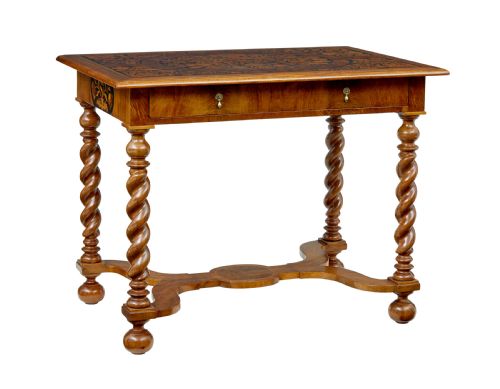
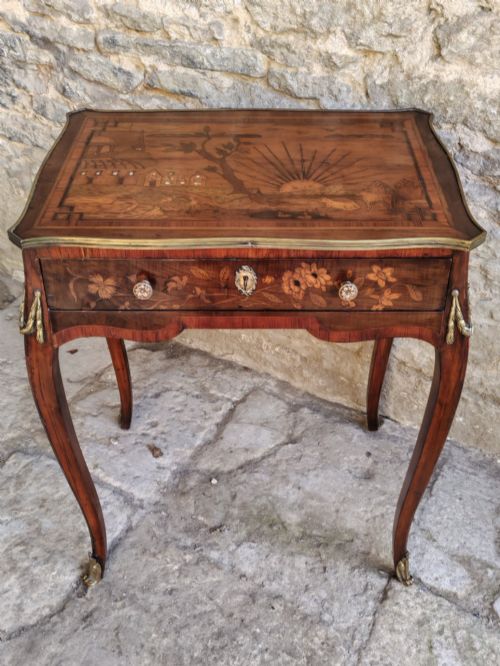
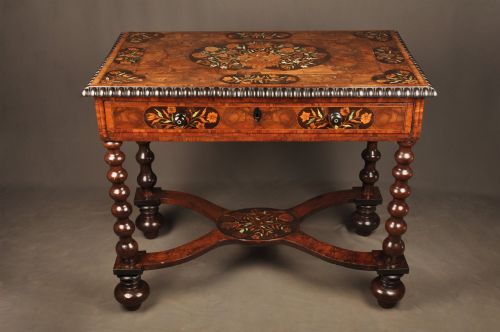
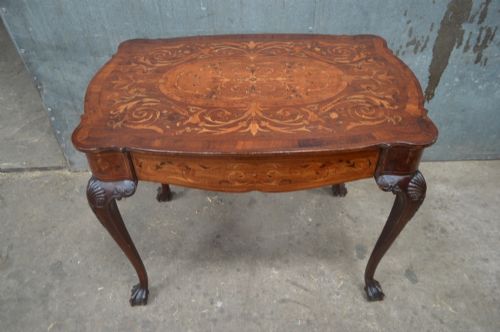
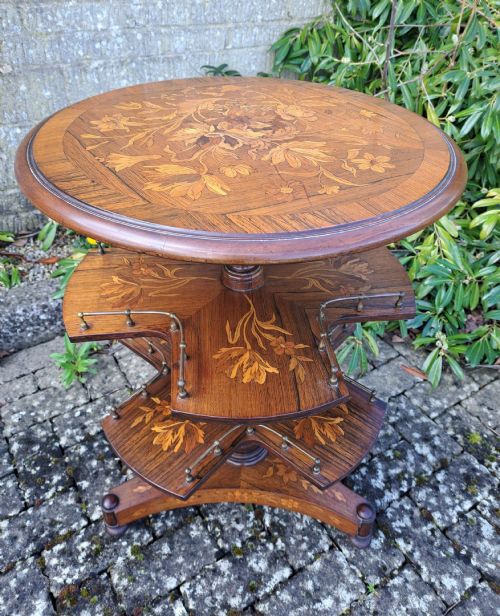
A dutch walnut side table typically presents a sturdy timber frame finished with elaborate inlaid surfaces depicting floral and bird motifs. These forms appear across several historic periods, predominantly spanning the seventeenth, eighteenth, and nineteenth centuries.
The selection here encompasses various related formats alongside traditional side tables, including centre tables, card tables, and lowboys. Walnut serves as the primary timber, often paired with contrasting fruitwoods and lighter woods for detailed inlay work.
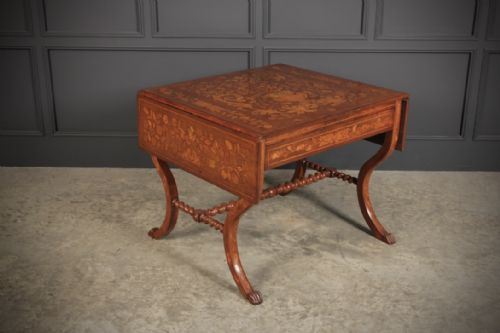
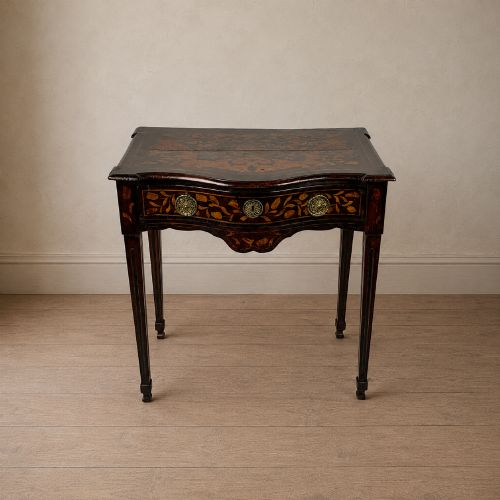
Buyers encounter examples shaped by distinct regional design movements, such as Dutch Baroque, Rococo, and Neoclassical styles. Serpentine fronts and drop-flap mechanisms further diversify the specific silhouette available to collectors.
Materials and construction methods
Cabinetmakers utilised solid walnut and oak for structural carcasses, providing a durable foundation for the more decorative outer layers. Timber selection focused on figured grains and burr patterns to create natural visual depth.
Surface decoration relied on marquetry and parquetry techniques, cutting thin veneers of fruitwood, boxwood, and other contrasting materials into pictorial designs. Craftsmen embedded these floral and geometric patterns directly into the walnut ground.
Additional hardware elements incorporated cast brass for pulls, hinges, and occasional top mounts, while ebonised wood details provided stark borders to frame the lighter inlay work.
Intricate wooden birds peer eternally from floral marquetry branches across centuries of domestic use.
Evaluating craftsmanship and integrity
The standard of a dutch walnut side table rests heavily on the precision of the marquetry cutter and the complexity of the design. Finer pieces display tight, seamless joints within the floral and bird motifs, using a rich variety of contrasting tonalities.
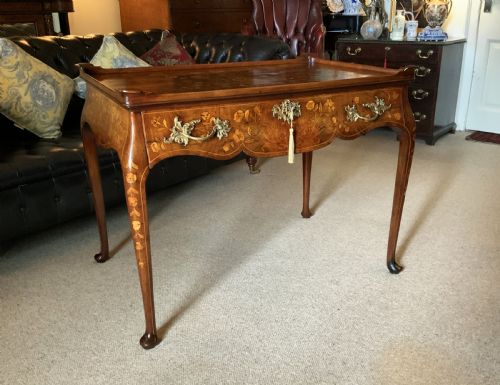
Structural execution also dictates worth, visible in the harmony between the walnut carcass and the applied veneers. Superior examples maintain crisp carving along serpentine edges and cabriole legs without heavy distortion from past interventions.
The Dutch Walnut Side Table Glossary
- Marquetry
- The art of applying thin pieces of wood veneer to a structure to form decorative patterns and pictorial scenes. This technique defines the visual character of many regional walnut tables.
- Parquetry
- A geometric mosaic of wood veneer arranged in repeating patterns such as cubes or stripes. It contrasts with the organic floral designs commonly found on these surfaces.
- Serpentine
- A curved line or edge that undulates inward and outward in a continuous flowing motion. This contour frequently shapes the front aprons of eighteenth-century examples.
- Lowboy
- A small table with one or more drawers, standing on relatively tall legs. Walnut versions function well as compact side tables or writing surfaces.
- Ebonised
- Wood treated with a chemical stain or finish to imitate ebony. Cabinetmakers applied this dark treatment to mouldings and framing elements for dramatic contrast.
Dutch Walnut Side Table: Frequently Asked Questions
How do I clean a walnut surface?
Dust the timber regularly with a soft, dry cloth to prevent particulate buildup on the delicate veneer. Avoid using modern silicone polishes that can degrade historic wax finishes over time.
Maintain a stable indoor humidity level to prevent the walnut and inlaid fruitwoods from shrinking or cracking. Professional wax application once a year helps nourish the grain and preserve the sheen.
Can I use these tables daily?
These pieces served practical domestic purposes originally, meaning they handle normal daily use quite well. Placing coasters or protective mats underneath heavy objects prevents accidental surface rings.
Card tables and drop-flap versions require gentle handling when opening folding leaves or extending support legs. Respecting the age of the historic hinges ensures the mechanisms remain functional.
How can I tell the period?
Early pieces from the seventeenth century often display simpler structural lines with bold walnut grain and geometric parquetry. Eighteenth-century examples lean toward elaborate floral marquetry, serpentine curves, and refined Rococo silhouettes.
Nineteenth-century items frequently revive earlier styles, sometimes utilising machine-cut veneers or heavier timber framing. Examining the secondary woods on the interior carcass helps confirm the manufacturing era.