




Dutch Burr Walnut Desk
A dutch burr walnut desk brings exceptional cabinet-making and striking grain patterns into a room, offering both a practical writing surface and serious visual presence.
Dutch Burr Walnut Desk
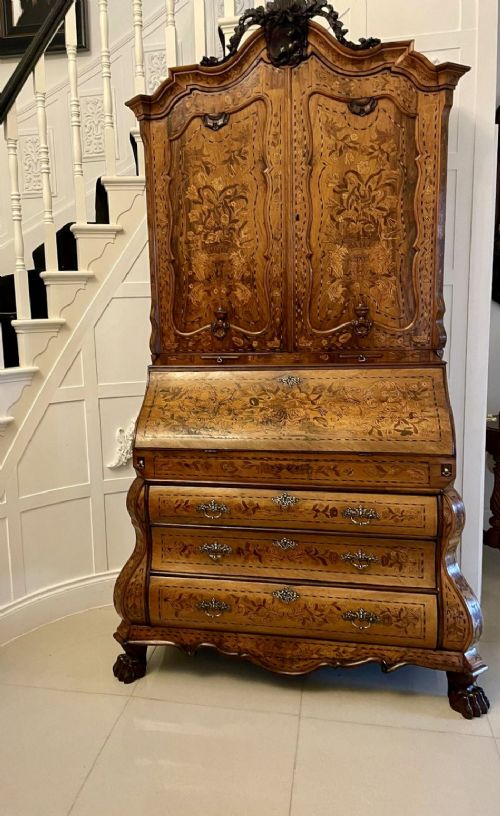
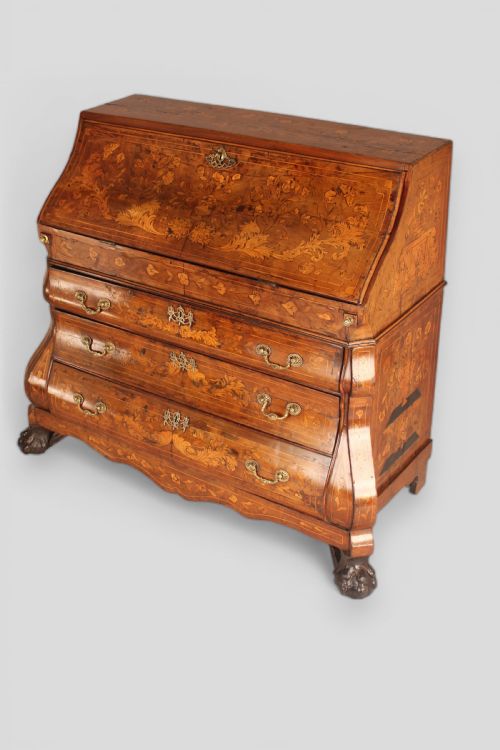
The most common form encountered on this page is the bureau, often featuring a sloping fall-front that opens to reveal internal compartments and drawers. Bureau bookcases and lowboy variations also appear, reflecting the diverse domestic needs of past centuries.
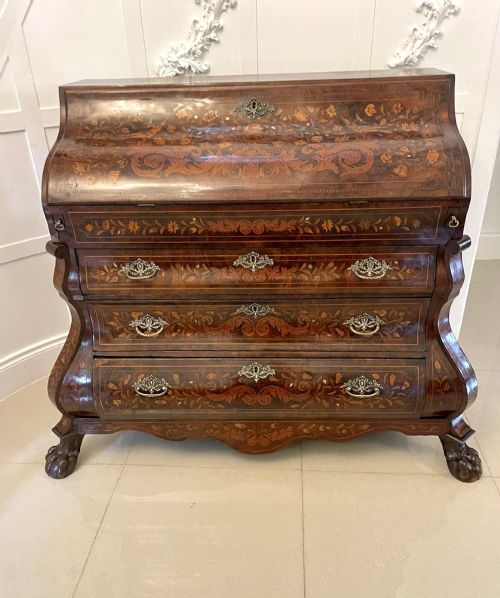
Makers shaped these items within stylistic traditions such as Dutch Baroque, Dutch Rococo, and Georgian designs. Many examples display bombe profiles and elaborate floral marquetry inlay created from fruitwood.
Buyers seeking a dutch burr walnut desk find pieces ranging from compact writing bureaux to towering bureau bookcases. The surviving examples demonstrate the enduring appeal of figured timber and intricate marquetry decoration.
How they were made
Cabinet-makers constructed these items using solid oak and walnut carcases overlaid with decorative burr walnut veneers. The distinct swirling grain of the burr wood created highly figured exterior surfaces across the front and sides.
Marquetry panels incorporated fruitwood inlay to form floral and botanical patterns across the writing slopes and drawer fronts. Craftsmen also utilised brass for handles, escutcheons, and keyhole surrounds to complement the dark tones of the timber.
Bombe shapes required advanced woodworking techniques to achieve the characteristic outward swelling curves of the lower sections. Artisans shaped solid fruitwood and walnut to form the structural curves and decorative mouldings.
Listings feature burr walnut, fruitwood inlay, and brass hardware applied across bureau and lowboy forms dating from the eighteenth and nineteenth centuries.
What varies in quality
The sophistication of the marquetry inlay dictates much of the visual success of a dutch burr walnut desk. Finely executed floral motifs with varied fruitwood tones distinguish superior examples from simpler geometric designs.
The quality of the burr walnut veneer selection impacts the overall depth and movement of the polished surface. Dense, highly figured burr patterns require careful matching across the drawer fronts and fall-front panels.
Structural complexity, particularly the execution of bombe shaping and the interior configuration of drawers and pigeonholes, marks the division between standard cabinet work and exceptional artistry.
The Dutch Burr Walnut Desk Glossary
- Burr walnut
- A veneer sliced from the gnarly growths of walnut trees that produces complex, swirling grain patterns. This highly prized material covers the primary surfaces of these desks.
- Marquetry
- Decorative patterns formed by fitting contrasting pieces of wood veneer into a timber backing. Fruitwood inlay creates the floral details seen on many bureau surfaces.
- Bombe
- A convex, bulging profile that swells outward toward the base of a piece of furniture. This curved form defines the silhouette of numerous eighteenth-century examples.
- Bureau
- A writing cabinet featuring a sloping hinged lid that drops down to form a desk surface. Inside, small drawers and pigeonholes organise writing materials and correspondence.
- Lowboy
- A small table with drawers, functioning as a dressing table or writing surface. These lower forms complement the taller bureau styles.
Dutch Burr Walnut Desk: Frequently Asked Questions
What is a bureau bookcase?
A bureau bookcase combines a sloping writing desk at the base with a glazed or panelled cabinet for storing books above.
This tall form maximises storage space while providing a dedicated writing area within one unified piece of furniture.
How do I care for burr walnut?
Burr walnut requires protection from direct sunlight and dramatic changes in room humidity to prevent the veneer from drying or cracking.
Applying traditional beeswax polish periodically helps maintain the natural sheen and nourishes the historical wood surface.
What is floral marquetry?
Floral marquetry is a decorative technique where artisans cut thin pieces of fruitwood to form botanical designs set into the walnut background.
Craftsmen shaded individual pieces in hot sand to add three-dimensional depth to the petals and leaves before gluing them in place.