


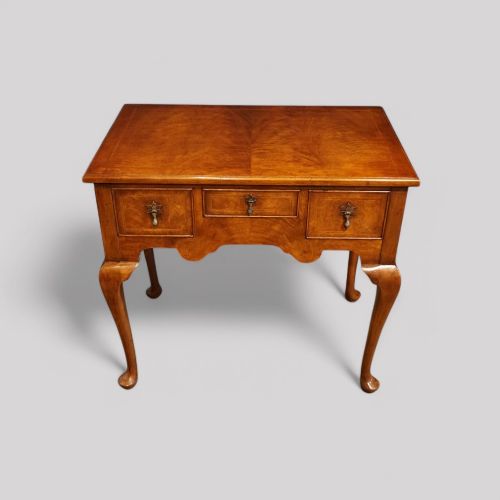

Georgian Style Walnut Lowboy
A georgian style walnut lowboy brings the compact elegance of eighteenth-century proportion and warm timber grain into modern rooms.
Georgian Style Walnut Lowboy
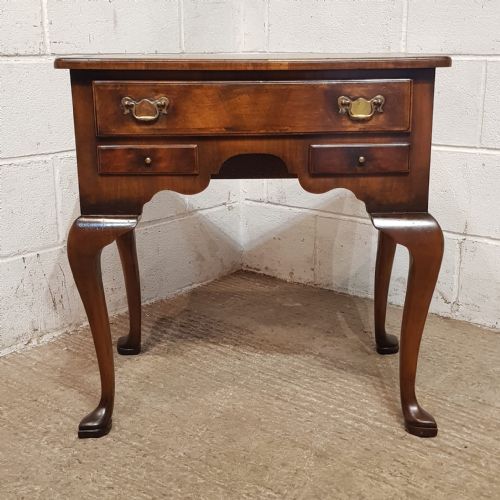
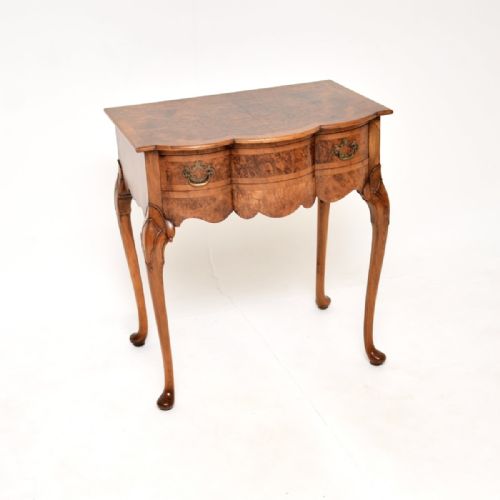
A georgian style walnut lowboy is a small side table or dressing table typically fitted with two or three drawers beneath a flat top. The form draws heavily from eighteenth-century origins and later revivals spanning the Edwardian era into the early twentieth century.
Most examples encountered on this page date from the twentieth-century revival periods, particularly around nineteen twenty and nineteen thirty, alongside genuine eighteenth-century and nineteenth-century pieces. Makers often adopted Queen Anne Revival or George II design vocabulary, incorporating cabriole legs and shaped aprons.
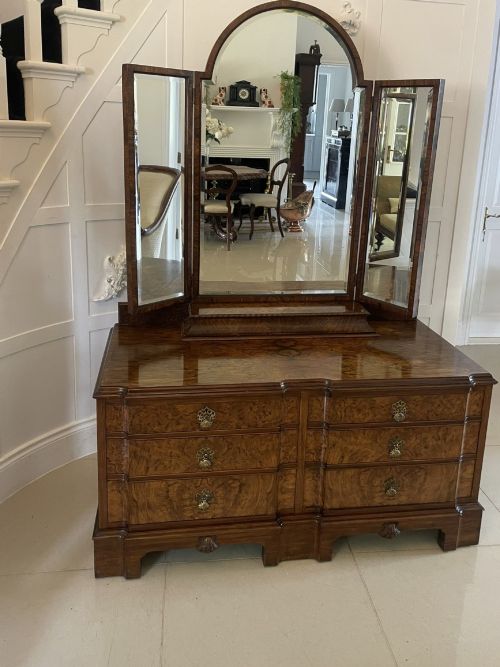
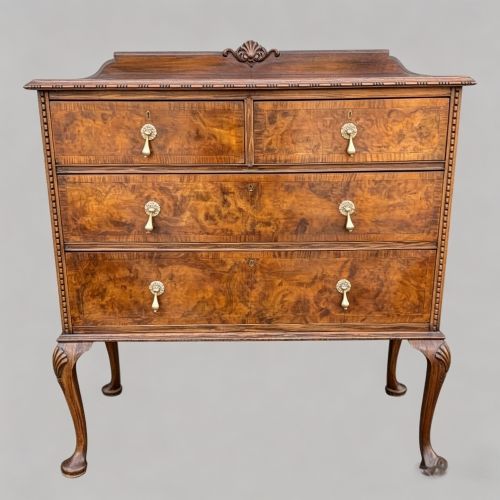
Beyond dedicated lowboys, buyers frequently encounter related forms such as side tables, console tables, and small chests of drawers sharing the same timber and stylistic lineage. These variations provide similar low-profile storage and display surfaces suitable for halls and living spaces.
Assessing Quality and Craftsmanship
Quality in these tables rests upon the selection of timber veneers and the crispness of the carving on the cabriole legs. Finer pieces display book-matched burr walnut across the top surface, creating a symmetrical pattern that demonstrates greater skill in veneer work.
Proportion and structural integrity also separate standard production from superior examples. Well-made pieces maintain balanced proportions between the frieze drawers and the slender legs, ensuring both visual harmony and stable daily use.
Several lowboys include hidden drawers tucked discreetly beneath the moulded top, designed for keeping small valuables safely out of sight.
The Georgian Style Walnut Lowboy Glossary
- Lowboy
- A small table with drawers, standing on four legs, commonly used as a dressing table or side table in the eighteenth century and later revivals.
- Burr Walnut
- Timber taken from the warted growth on a walnut tree, highly prized by cabinetmakers for its swirling, decorative grain patterns.
- Cabriole Leg
- A furniture leg that bends outward in a convex curve and tapers inward in a concave curve, ending in a pad or hoof foot.
- Feather Banding
- A decorative inlay technique using small pieces of veneer arranged in a herringbone pattern around the perimeter of a drawer or top.
- Queen Anne Style
- A design movement characterised by curved lines, cabriole legs, and understated elegance, originating in the early eighteenth century and revived later.
Georgian Style Walnut Lowboy: Frequently Asked Questions
What is a lowboy used for today?
These tables function well as compact side tables in living rooms, elegant hall tables for small entryways, or traditional dressing tables in bedrooms.
Their shallow depth allows them to fit into narrow spaces where standard desks or large cabinets would obstruct movement.
How do I tell an 18th-century lowboy from a revival piece?
Examination of the secondary woods inside the drawers, tool marks, and the method of timber seasoning usually reveals the age of the piece.
Revival pieces from the twentieth century often display machine-cut dovetails and modern adhesives, whereas older examples show hand-cut joinery and natural wear patterns.
What maintenance does walnut furniture require?
Walnut benefits from occasional treatment with appropriate furniture wax to nourish the timber and maintain a soft sheen.
Keep these tables away from direct heat sources and strong sunlight to prevent the walnut veneer from drying out or fading over time.
Are all walnut lowboys made of solid wood?
Most examples utilise a stable secondary timber for the carcase and drawer linings, overlaid with decorative walnut or burr walnut veneers.
This technique prevented warping on large flat surfaces while allowing cabinetmakers to display striking grain patterns on the exterior.