
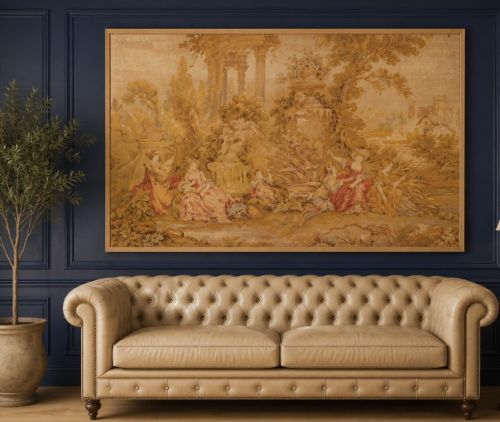

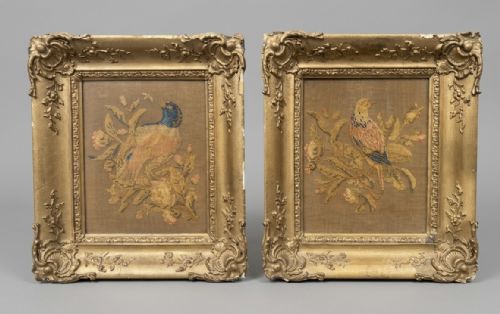


Rococo Style Tapestry
These rococo style tapestry pieces bring rich textile artistry and ornate frames into a room, offering the decorative flair collectors seek.
Rococo Style Tapestry
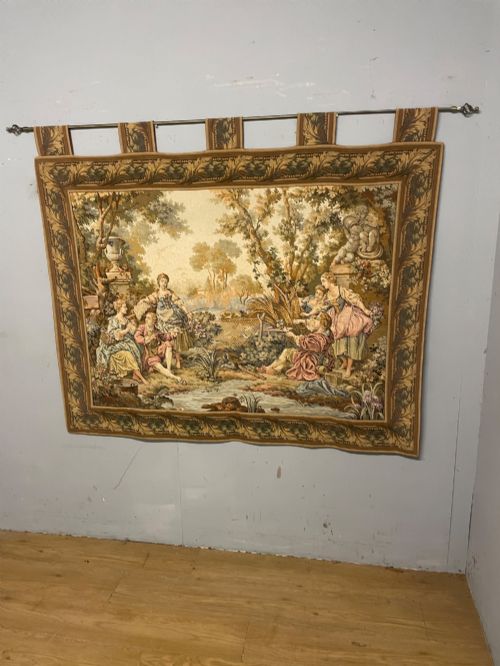
When searching for rococo style tapestry items, buyers encounter a diverse selection of textiles and seating within the evidence. The inventory spans wall tapestries, framed artwork, open armchairs, settees, footstools, and area rugs.
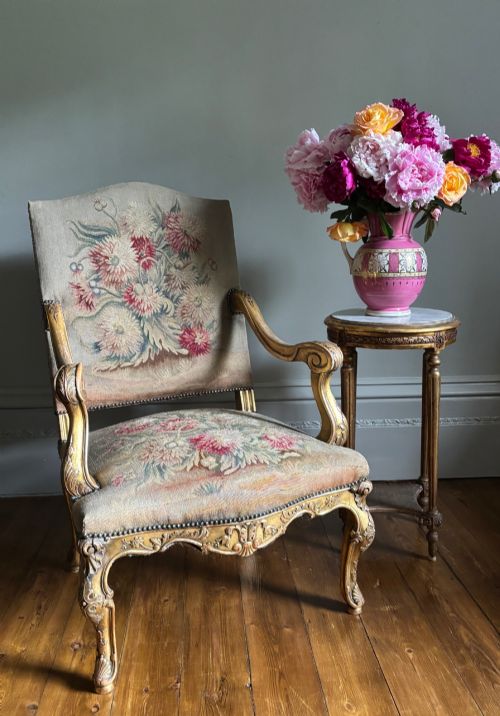
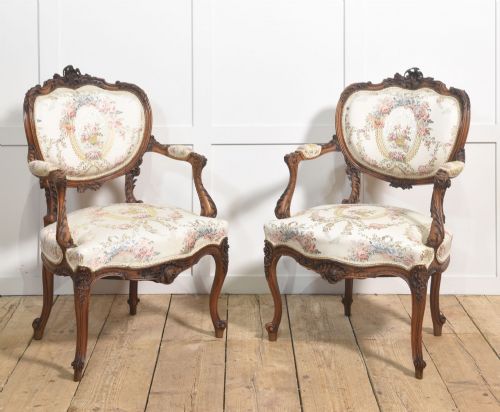
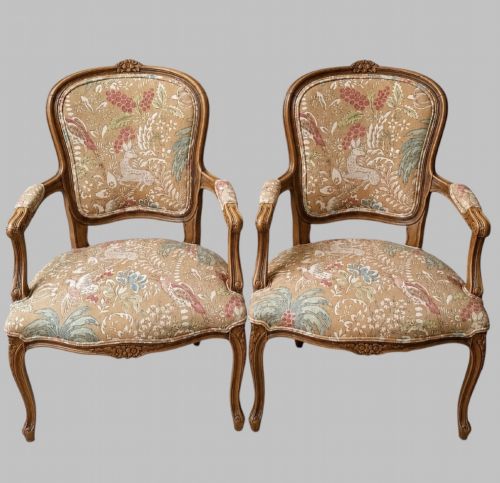
The most frequent pieces met on this page are nineteenth-century armchairs upholstered in tapestry, alongside wall panels and large carpets. These items reflect French and Italian influences, from Victorian revivals to Regence interpretations.
How they were made
The materials recorded in the evidence combine textiles with structural frames. Wool, cotton, and tapestry upholstery form the soft components, while giltwood, walnut, carved wood, gesso, and rosewood build the frames and furniture.
Craftsmen shaped these materials through weaving, carving, and needlework. Artisans built wooden armatures and applied gilding or paint, pairing them with detailed woven or embroidered textile panels.
Materials recorded in this selection include wool, cotton, giltwood, walnut, gesso, and rosewood.
What varies in quality
The standard of a piece depends on the depth of the carving and the intricacy of the textile work. Elaborate giltwood frames and fine needlework or Aubusson weaving separate finer examples from simpler ones.
Design execution also dictates distinction. Cohesive styles such as French Rococo Revival or Venetian Rococo show stronger adherence to period aesthetics than basic interpretations.
The Rococo Style Tapestry Glossary
- Aubusson
- A historic French town known for producing woven tapestries and carpets. Pieces from this origin often feature floral designs and pastoral scenes.
- Giltwood
- Wood that has been treated with a thin layer of gold leaf or gold paint. It provides a bright, reflective finish on chair frames and wall art.
- Needlework
- Stitched decoration created on a canvas or fabric ground using yarn or thread. It appears on period armchairs and framed panels.
- Regence Style
- A transitional design period preceding full rococo, noted for curved lines and restrained ornamentation. It bridges heavier baroque forms and lighter rococo styles.
- Tapestry Upholstery
- Woven fabric applied to seating frames as a covering. It combines structural furniture with textile art.
Rococo Style Tapestry: Frequently Asked Questions
How do I clean a tapestry panel?
Vacuum gently using a low suction setting with a mesh guard to protect the fibres. Avoid harsh chemical cleaners and direct moisture.
Professional textile conservation is recommended for older or fragile woven panels to prevent damage to the threads.
Are these chairs suitable for daily use?
Many of these seating pieces are sturdy enough for regular sitting when handled with care. Walnut and giltwood frames provide solid structural support.
Consider the delicacy of the upholstery when placing them in high traffic areas of the home.
Where were Aubusson carpets made?
Aubusson carpets were produced in the central region of France. These woven floor coverings gained renown for their detailed floral and architectural motifs.
They complement traditional and eclectic interiors by adding texture and historical pattern.
What is the difference between revival styles?
Revival pieces emulate the aesthetics of earlier centuries, such as eighteenth-century designs reinterpreted during the nineteenth or early twentieth century. Makers drew upon historical motifs while utilising contemporary workshop practices.
Comparing carved details and wood types helps distinguish original period items from later revival pieces.