





Large Framed Tapestry Art
Large framed tapestry art brings historical textile work and painted linen directly to your walls, offering grand scale and rich texture.
Large Framed Tapestry Art
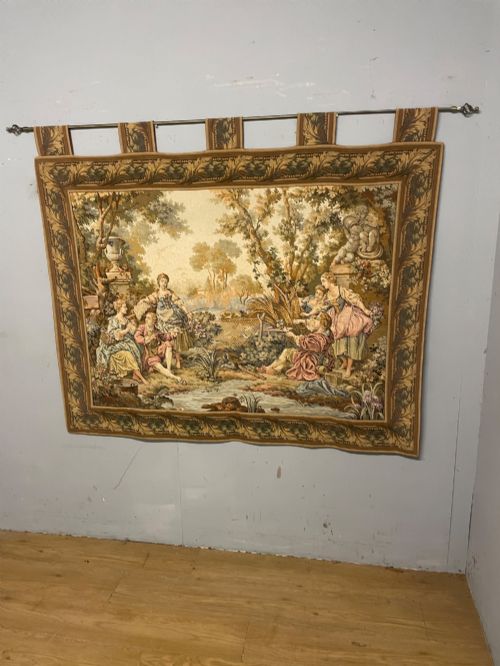
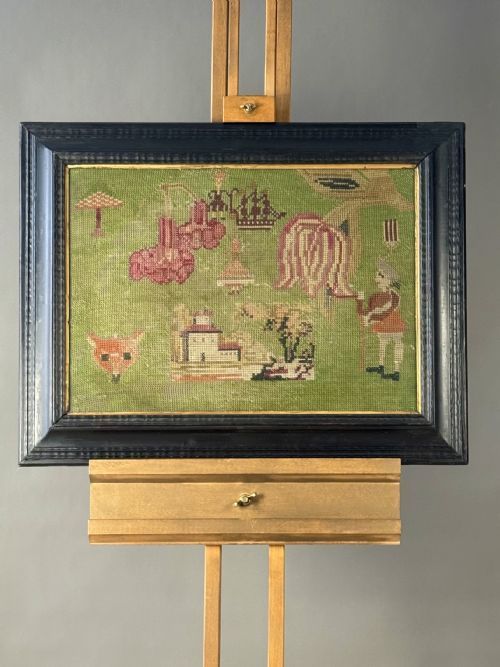
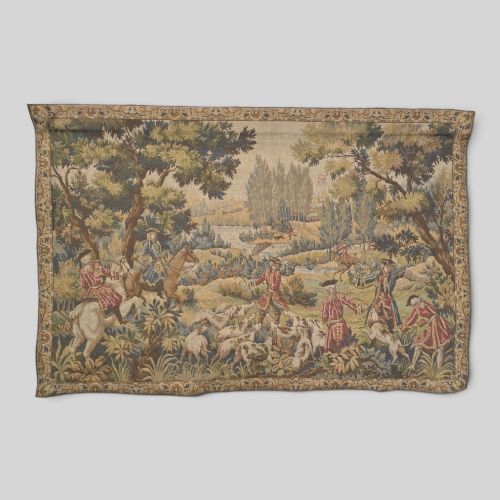
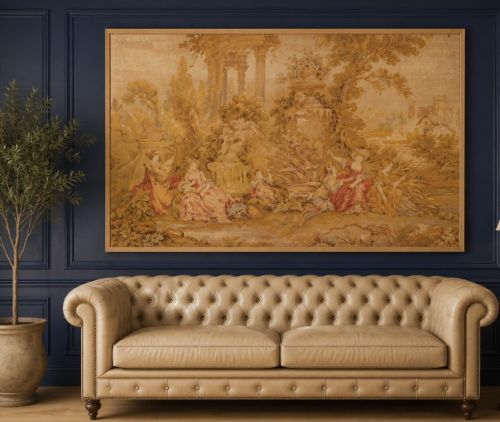
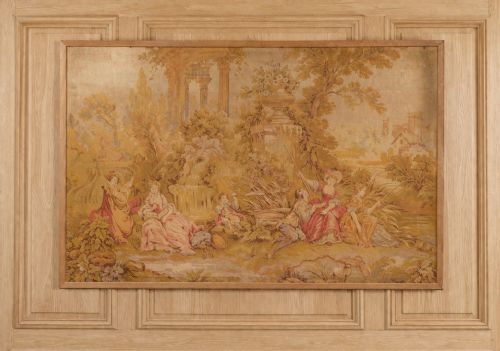
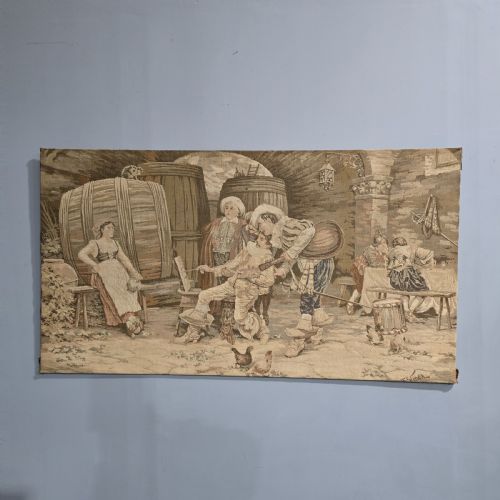
When you search for large framed tapestry art, you are looking at substantial wall hangings and textile pieces enclosed within protective or decorative frames. The selection on this page ranges from eighteenth-century French woven panels and needlework samplers to nineteenth-century Berlin woolwork pictures and twentieth-century Asian wall hangings.
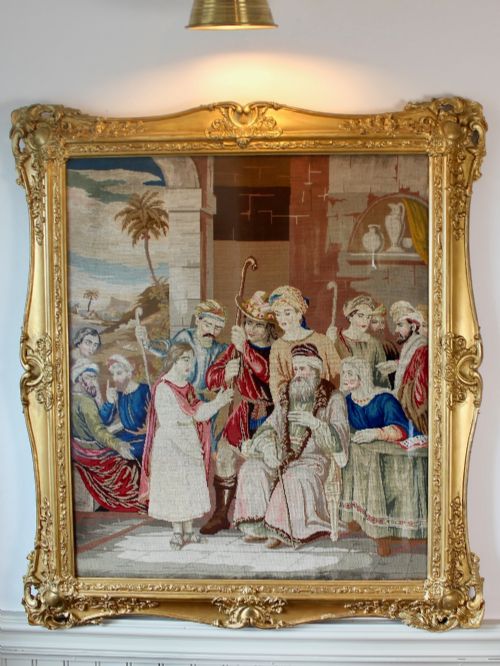
The most common versions you will meet here include large French framed tapestry panels and Victorian woolwork pictures set behind glass in wooden or giltwood frames. These objects combine textile craftsmanship with substantial framing to create commanding focal points for interior spaces.
How these pieces were made
The creation of these works relies on textile techniques such as weaving, needlework, and painting on textile surfaces like wool, silk, canvas, cotton, and linen. Artisans stitched intricate pictorial scenes using wool and silk threads, often rendering detailed figurative subjects like classical narratives or traditional deities.
Framing is an integral part of the construction, utilising woods such as walnut and heavy giltwood alongside glass to protect the delicate textiles within. These mounts provide structural support while enhancing the visual presence of the woven or stitched artwork.
Materials recorded across the selection include wool, silk, canvas, cotton, linen, wood, walnut, giltwood, and glass.
What varies in quality
Quality in large framed tapestry art rests upon the fineness of the textile work and the complexity of the pictorial composition. Pieces featuring intricate needlework or sophisticated weaving techniques demonstrate superior craftsmanship compared to simpler decorative textile hangings.
The material integrity of the frame also defines the overall standard, with heavy giltwood and solid walnut surrounds offering a more substantial finish than lighter wooden alternatives. Preservation of the textile fibres and clarity of the original pigments or dyed threads further distinguish the upper tier of works.
The Large Framed Tapestry Art Glossary
- Berlin woolwork
- A type of counted-thread embroidery popular during the nineteenth century, often worked in wool on canvas from a printed and painted grid pattern.
- Giltwood
- Wood that has been coated with a thin layer of gold leaf or gilt paint, frequently utilised for ornate nineteenth-century picture frames.
- Needlework
- Any craft decorative stitching executed with a needle on a textile ground, encompassing historical samplers and pictorial wall panels.
- Kamasan
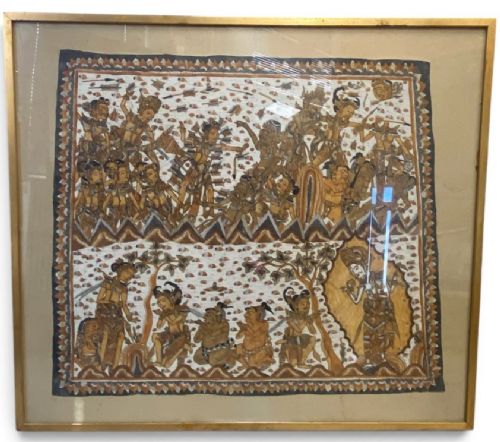
- A traditional painting style originating from Bali, typically executed on textile depicting narrative scenes of warriors and deities in distinct registers.
Large Framed Tapestry Art: Frequently Asked Questions
What is large framed tapestry art?
Large framed tapestry art encompasses woven wall panels, needlework pictures, and textile paintings set inside protective wooden or giltwood frames. These substantial pieces originate from various periods including the eighteenth and nineteenth centuries.
Such works serve as primary wall decorations, combining historical textile techniques with decorative framing to suit grand interior spaces.
How do I care for framed textiles?
Framed textiles require placement away from direct sunlight to prevent the fading of wool, silk, and cotton threads. Maintaining a stable indoor environment protects the delicate fibres and the wooden frames from humidity changes.
Glass fronts on pieces like Berlin woolwork pictures help shield the delicate stitching from dust and atmospheric pollutants.
How are different periods identified?
Periods are identified through a combination of the textile technique, framing style, and thematic content. Eighteenth-century pieces often feature French woven tapestry panels or needlework samplers, whereas Victorian examples frequently showcase Berlin woolwork.
Twentieth-century works on this page include Asian wall hangings and signed textiles mounted on board.
What materials were used?
These works utilise a base of textile materials such as wool, silk, canvas, cotton, and linen to form the pictorial surface. The surrounding structures employ wood, walnut, giltwood, and protective glass.
Different traditions combine these materials in distinct ways, from European woven wool panels to Balinese textile paintings.