
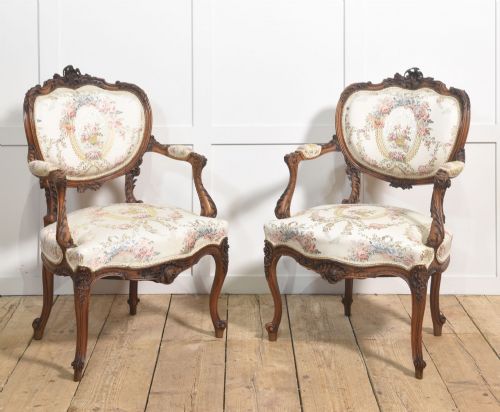


Walnut Framed Tapestry
These walnut framed tapestry pieces combine rich dark timbers with intricate textile art, offering a functional seat or decorative wall piece with period charm.
Walnut Framed Tapestry
A walnut framed tapestry search delivers a diverse range of seating and wall art, spanning armchairs, stools, firescreens, and needlework pictures. These items draw heavily from Victorian and nineteenth-century production, alongside earlier eighteenth-century examples.
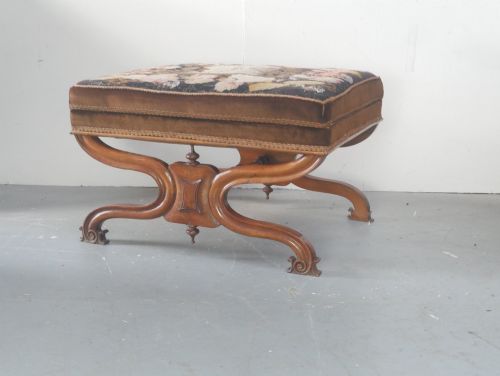
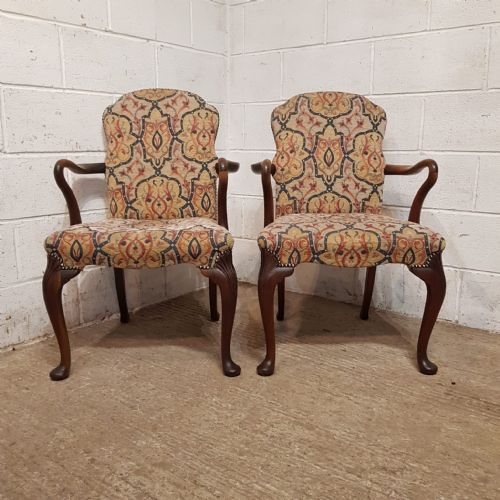
The most common forms encountered on this page are Victorian armchairs, nursing chairs, and footstools, frequently paired with intricate wool needlepoint or petit point upholstery.
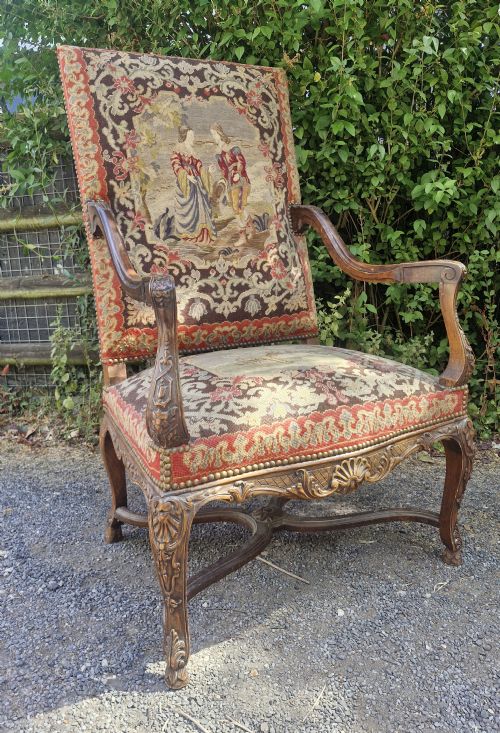
Stylistic influences range widely across French Chateau, Renaissance Revival, and Louis XV styles, giving buyers numerous regional variations to consider for their interiors.
How they were made
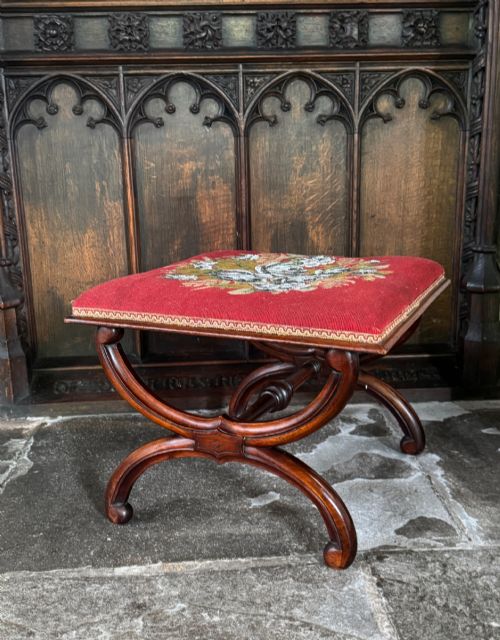
The structural framework relies predominantly on carved walnut, sometimes supplemented by beech or brass details, shaped into elaborate curves or rectilinear X-frames. Artisans formed the timber using traditional joinery and carved ornamentation suited to the prevailing revival styles of the period.
Textiles form the primary surface treatment, utilising wool, velvet, and tapestry fabric worked in needlepoint or petit point stitches. These hand-stitched panels depict courtly scenes, floral motifs, or geometric patterns stretched tightly over padded seats and vertical screens.
Hunting dog heads peer out from carved wooden frames on nineteenth-century window seats, keeping silent watch over the room.
What varies in quality
Quality rests significantly in the execution of the wood carving and the density of the textile work. Pieces featuring deeply sculpted walnut frames and tight, finely detailed petit point needlework sit at the higher end of the spectrum.
The overall harmony between the textile design and the proportions of the walnut frame determines the visual success of each piece. Finer examples display rigorous attention to detail in both the joinery of the chair and the pictorial clarity of the tapestry.
The Walnut Framed Tapestry Glossary
- Petit point
- A needlepoint embroidery technique executed on fine single-mesh canvas using small stitches to achieve high pictorial detail. It allows makers to create intricate facial expressions and shaded backgrounds on chair seats and firescreens.
- X-frame
- A structural furniture base formed by intersecting diagonal timbers that resemble the letter X. This form appears frequently on Victorian stools and window seats.
- Firescreen
- A vertical panel mounted on a stand, designed to block radiant heat from a fireplace while displaying decorative needlework. These items often showcase elaborate tapestry scenes framed in carved walnut.
- Fauteuil
- An open-armed upholstered armchair with exposed wooden armrests and legs, originating in French design. These chairs often incorporate Louis XV or Rococo revival styling.
Walnut Framed Tapestry: Frequently Asked Questions
How do I clean the tapestry upholstery?
Surface dust can be removed gently using a soft brush attachment on a low suction vacuum. Professional textile conservators should handle deeper cleaning to avoid damaging the historical wool threads.
Water and standard household detergents must be avoided entirely, as moisture can cause shrinkage or bleeding in antique textile dyes.
Are these chairs suitable for daily use?
Most nineteenth-century armchairs and stools remain sturdy enough for regular seating when the underlying frame is sound. Buyers should consider the internal webbing and padding condition before heavy daily use.
Lighter pieces, such as decorative nursing chairs or X-frame window seats, function best in low-traffic areas to preserve their antique textiles.
What is the difference between needlepoint and tapestry?
Needlepoint is stitched by hand onto a pre-existing open-weave canvas mesh using wool or silk yarn. True tapestry is woven on a loom as an integrated fabric structure.
Many pieces described as tapestry in nineteenth-century contexts are actually hand-worked needlepoint or petit point embroidery.
How do I identify a Victorian walnut piece?
Victorian walnut furniture typically displays a rich, dark grain with a warm brown or reddish tone. Carved details on these frames often reflect revival aesthetics like Gothic, Renaissance, or Rococo styles.
Examining the underside or joinery often reveals period construction methods, such as hand-cut screws and traditional mortise and tenon joints.