
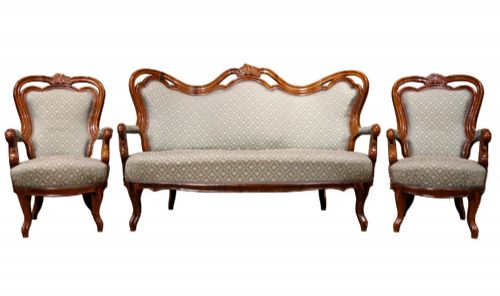


Rococo Style Settee
A rococo style settee brings asymmetric curves and exuberant carved woodwork into a room, offering both decorative presence and deep-seated comfort.
Rococo Style Settee
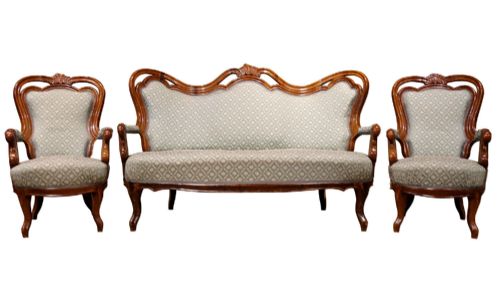
A rococo style settee draws upon eighteenth-century French design principles, translating flowing organic motifs and serpentine frames into seating for the salon or drawing room. You encounter pieces spanning the nineteenth century alongside revival interpretations from the early twentieth century, taking the form of couches, canapés, and salon suites.
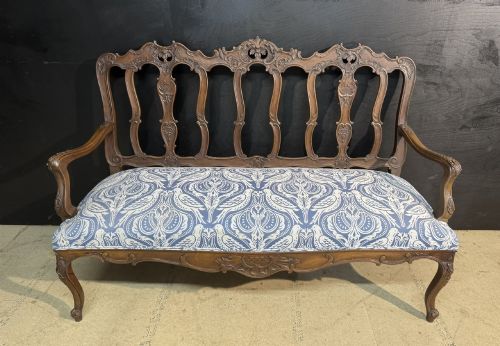
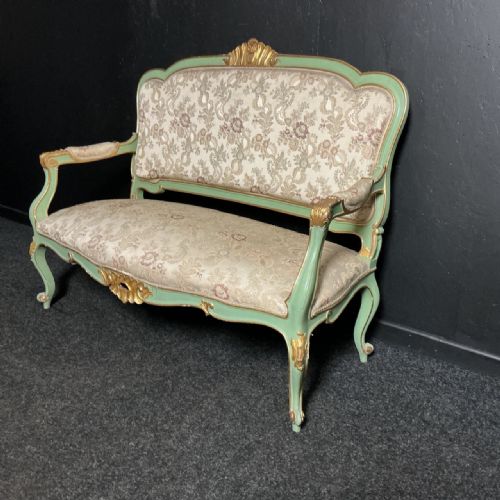
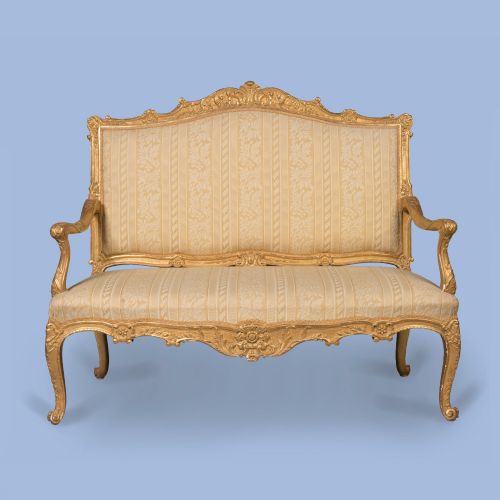
Most examples rely on walnut or giltwood frames, shaped with scrolled arms, cabriole legs, and elaborate crest rails carved with floral and shell details. Whether you examine a small two-seat sofa or a larger three-piece salon suite, the emphasis rests on fluid movement and harmonious proportions rather than rigid symmetry.
Materials and construction methods
Makers shaped solid timber - predominantly walnut, mahogany, and rosewood - by hand, carving intricate C-scrolls and foliage directly into the structural frame. Giltwood surfaces received layers of gesso and gold leaf, creating a brilliant reflective finish characteristic of formal French taste.
Upholstery techniques combined traditional stuffing with textiles such as silk, velvet, and cane panels inset into wooden frames. Frames were joined using sturdy mortise and tenon joints to support the weight of the elaborate carved woodwork above.
Some nineteenth-century makers tucked secret carved flowers beneath the armrests where only the sitter's fingertips might wander.
Distinguishing quality in craftsmanship
The distinction between ordinary and exceptional work lies in the depth and sharpness of the carved ornamentation. Superior pieces display crisply undercut foliage, smooth flowing lines, and a natural integration of decorative motifs into the structural frame.
Material selection and gilding technique dictate the upper tier of the market. High-grade giltwood shows meticulous application of leaf over smooth gesso, while finer walnut frames exhibit rich grain patterns and robust joinery that withstands centuries of use.
The Rococo Style Settee Glossary
- Canapé
- An upholstered sofa or settee, typically with a decorative wooden frame in the French taste. It provides formal seating for multiple persons.
- Cabriole leg
- A furniture leg that curves outward and then tapers inward, ending in a pad or scroll foot. This shape mimics the natural bend of an animal limb.
- Giltwood
- Timber coated with gold leaf or metallic powder applied over a prepared gesso base. It creates a luminous, luxurious surface finish.
- Bergere
- An enclosed upholstered armchair or sofa with wooden framing and upholstered sides. It offers a deeper and more enclosed seat than open-arm variants.
- Cane
- Woven rattan or plant material used for seat panels or backrests. It provides lightweight flexibility and texture.
Rococo Style Settee: Frequently Asked Questions
Where should I place a rococo style settee?
These pieces suit formal living rooms, large hallways, or bedrooms where their decorative frames can be appreciated from multiple angles. Pair them with neutral walls to let the carved woodwork and gilding stand out.
Ensure the piece sits away from direct sunlight to protect delicate textiles like silk and velvet. Generous floor space allows the curved silhouette and cabriole legs to command the room properly.
How do I identify a revival piece?
Nineteenth-century revival pieces often display machine-assisted elements combined with hand carving, alongside denser secondary woods hidden beneath the frame. Examining the joinery and the ageing of the timber reveals whether a piece dates to the original eighteenth century or a later revival.
French and English makers produced prolific interpretations during the Victorian era and into the early twentieth century. These later items emulate the Louis XV taste closely but carry the structural characteristics and tool marks of Victorian workshops.
Can I reupholster an antique settee?
Reupholstering is common and often necessary to restore structural support and refresh worn textiles. Choose fabrics that respect the historical period, such as damask, silk brocade, or traditional velvet.
Consult a professional restorer who understands traditional webbing, spring-tying, and stuffing methods. Preserving the integrity of the wooden frame during the process ensures the piece retains its character and stability.
How do I care for giltwood frames?
Dust giltwood surfaces gently with a soft, dry brush to prevent accumulation in the carved recesses. Avoid liquid cleaners, polishes, or damp cloths, which can lift the delicate gold leaf and gesso.
Keep the settee away from rapid temperature changes and moisture sources. Stable indoor humidity prevents the underlying timber from expanding and cracking the gilded surface.