


Rococo Style Sconces
Rococo style sconces bring dramatic curves and candlelit warmth to a room, offering an ornate focal point derived from historic European interiors.
Rococo Style Sconces
Buyers seeking rococo style sconces encounter a range of wall lights, girandoles, and candle-carrying brackets rooted in nineteenth and early twentieth century revivals. These decorative fixtures illuminate spaces through multi-branched arms designed to hold candles or electric bulbs against reflective surfaces.
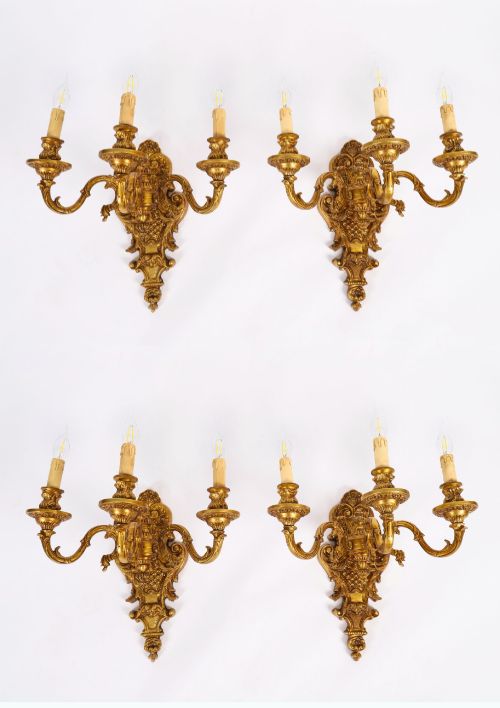
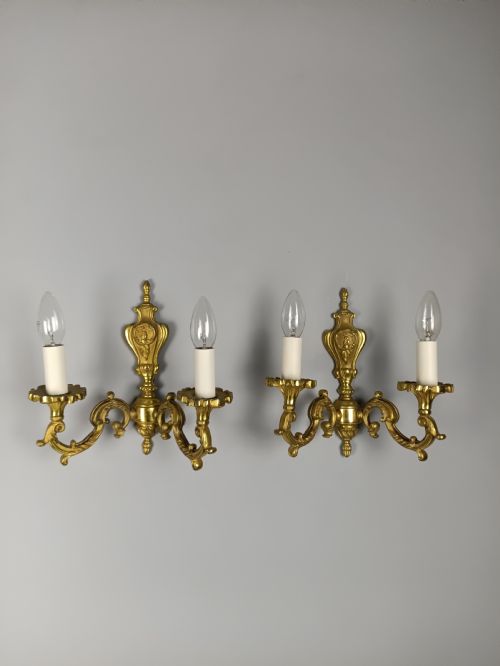
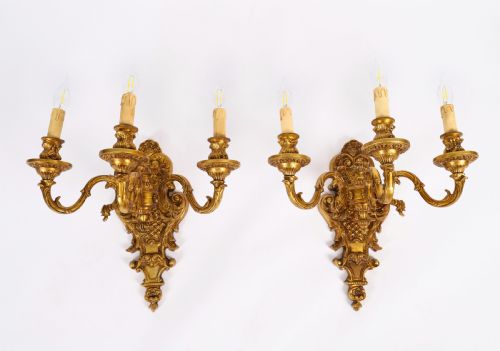
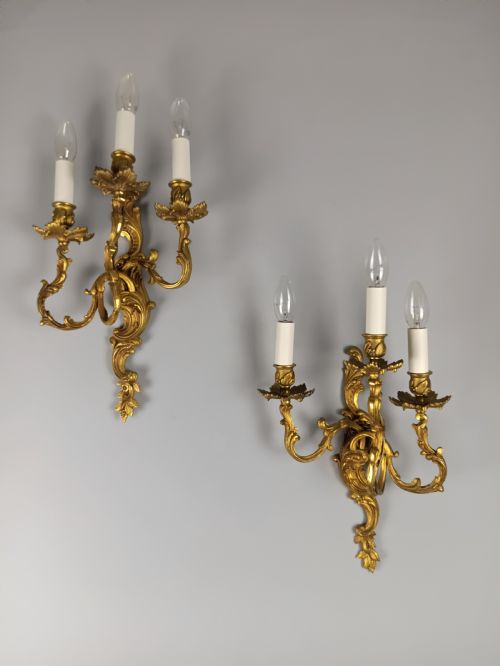
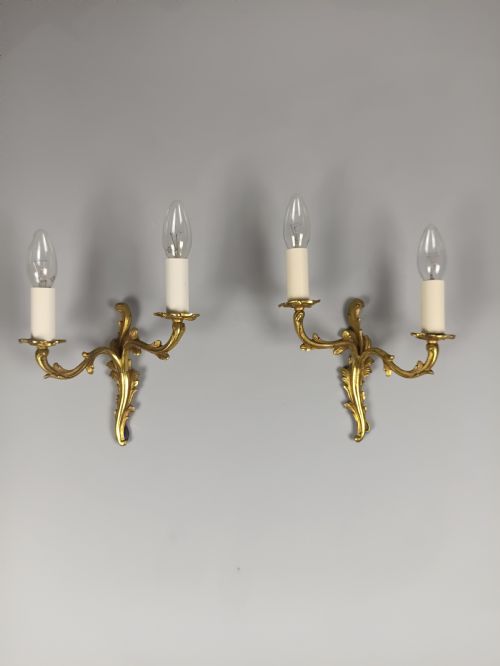
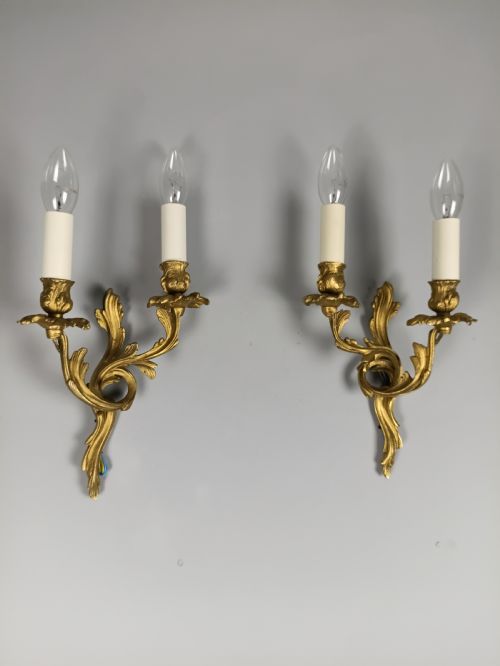
The selection on this page relies heavily on French and Italian interpretations from the nineteenth century up through the nineteen-thirties. Pieces frequently manifest as pairs of twin or triple arm wall lights featuring elaborate scrolling foliage.
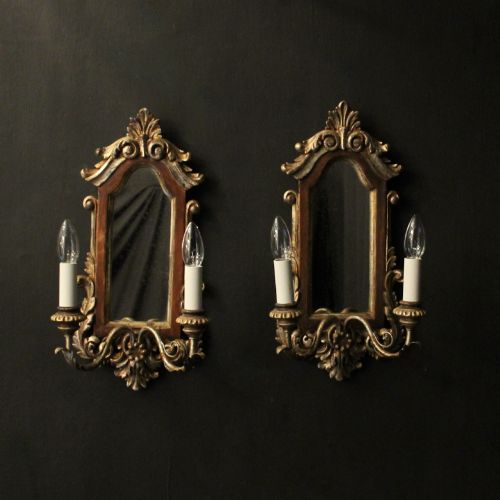
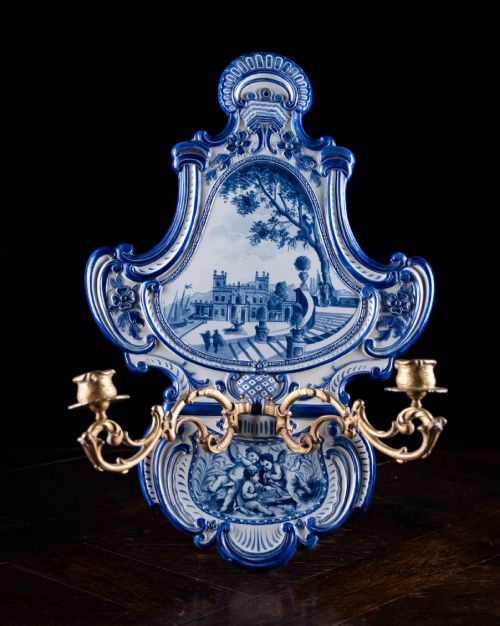
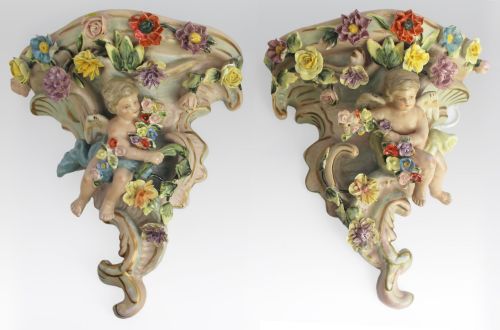
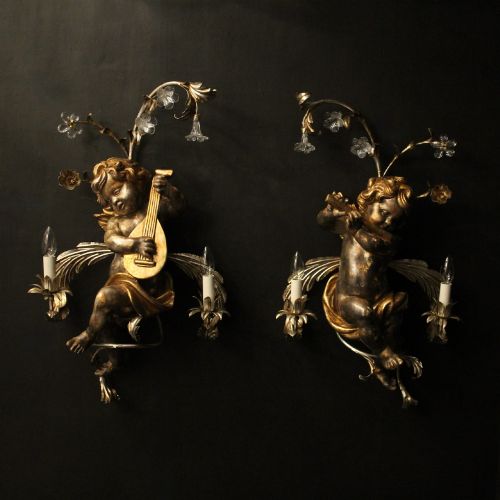
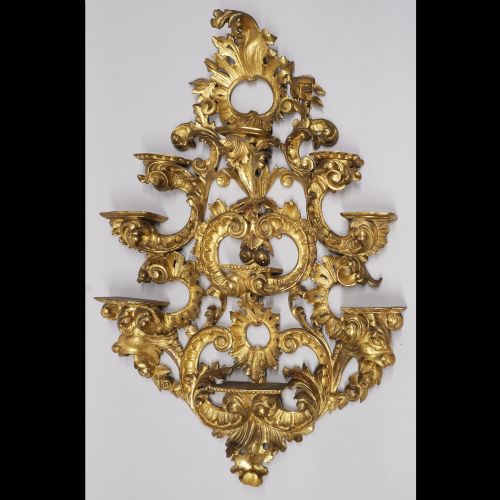
Alongside standard wall lights, the inventory includes mirrored girandoles, carved giltwood brackets, and porcelain-adorned corbels. These supplementary forms share the asymmetrical, flowing cartouches and ornamental motifs typical of the aesthetic.
Materials and Construction
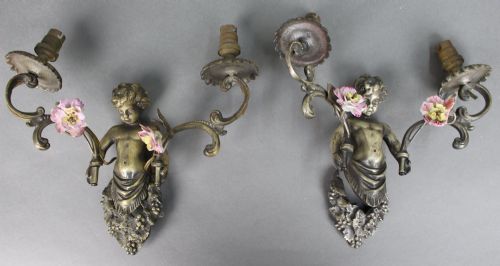
Makers shaped these fixtures from cast metals such as brass, bronze, and ormolu, often applying a rich layer of gilding over the base material. Giltwood and carved gesso provide a lighter wooden alternative for wall brackets and mirrors.
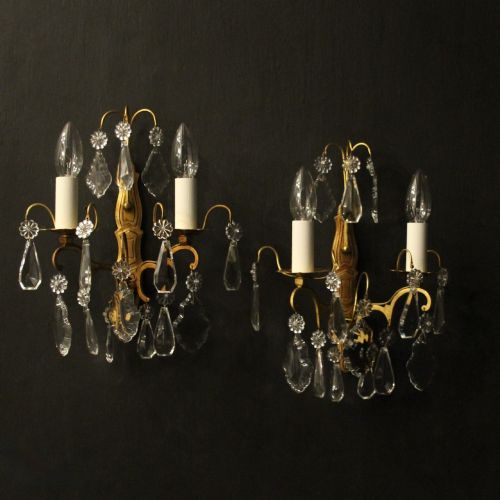
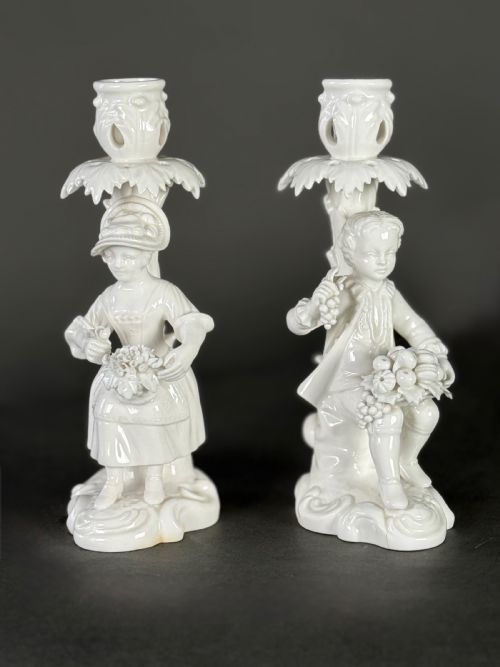
Porcelain elements, including hand-painted floral details and figural cherubs, integrate directly into the metal armature. Glass and crystal components frequently dangle from the arms or form the body of mirrored sconces to enhance light reflection.
Materials recur across cast ormolu, carved giltwood, hard paste porcelain, and pressed brass.
Assessing Quality and Craft
Quality rests in the crispness of the casting and the depth of the hand-carved detail across wood and gesso surfaces. Superior examples display sharply defined acanthus leaves and fluid scrolls without muddy edges.
The integration of mixed media dictates the distinction between standard production and finer studio output. Well-executed pieces combine undamaged porcelain flowers, intact mercury glass or crystal drops, and substantial bronze mounts that hold rigid over decades of wall mounting.
Villeroy and Boch·Meissen·Derby
The Rococo Style Sconces Glossary
- Ormolu
- Gilded bronze used extensively for decorative mounts and decorative hardware. It provides a warm metallic sheen that resists tarnishing over time.
- Girandole
- A decorative wall mirror fitted with candle branches attached to the frame. The reflective glass multiplies the light cast by the flames.
- Giltwood
- Timber carved and coated with a thin layer of gold leaf. This technique was favoured for ornate mirrors and wall brackets.
- Corbel
- A structural or decorative bracket projecting from a wall to support a weight. In this context, they often take the form of winged cherubs or scrolling foliage.
- Blanc de Chine
- White porcelain produced in China, highly prized by European factories that imitated its smooth glaze on figurines and decorative vessels.
Rococo Style Sconces: Frequently Asked Questions
Can these antique sconces take modern bulbs?
Many antique wall lights have been adapted over the years to accept standard modern electrical wiring and low-wattage LED candelabra bulbs. Qualified electricians can usually rewire older brass and bronze arms safely.
Candle tubes should be checked for secure fitting before installation to ensure they sit flush over the bulb holders.
How do I clean gilt bronze and ormolu?
Dust bronze and ormolu surfaces gently with a soft, dry microfibre cloth to remove accumulated debris. Avoid using harsh chemical polishes that can strip away the historic fire-gilding.
Stubborn grime in recessed crevices responds best to a soft-bristled artist brush used without liquid cleaners.
What distinguishes Rococo Revival from original 18th-century pieces?
Revival pieces date from the nineteenth and early twentieth centuries, copying the asymmetrical scrolls and shell motifs of earlier eras with industrial casting techniques. They utilise machine-prepared brass and standardised screw threads alongside hand-chased details.
Examining the backplates, screw types, and patination helps distinguish these later interpretations from eighteenth-century originals.