
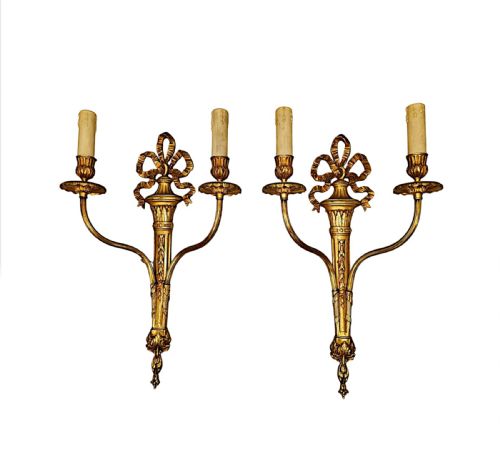
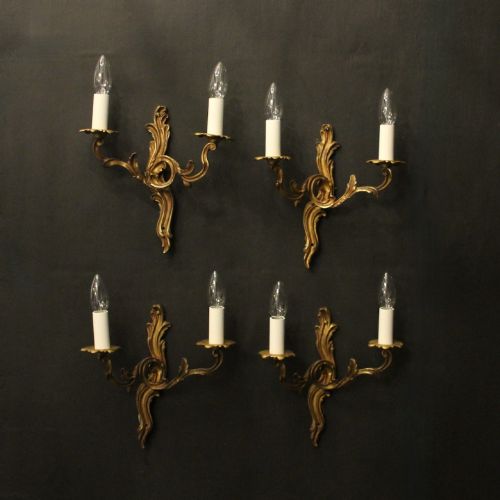
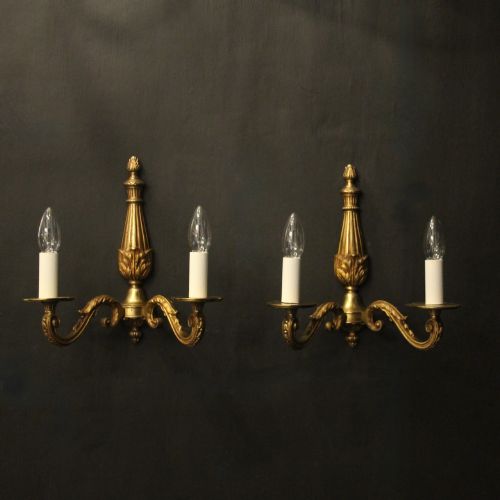
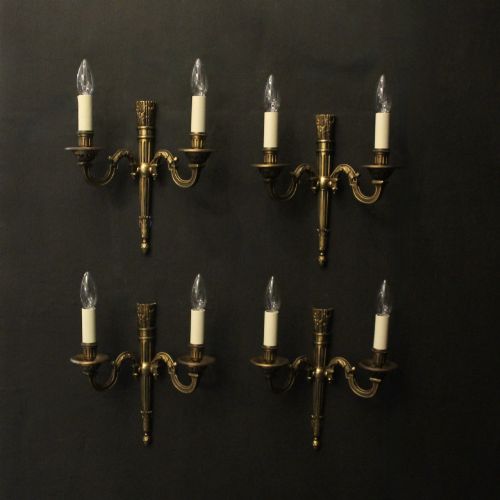
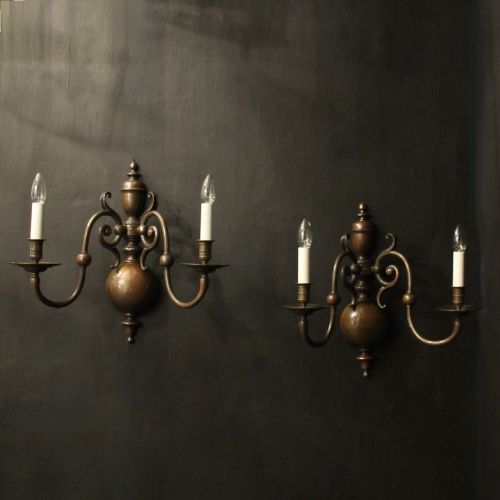
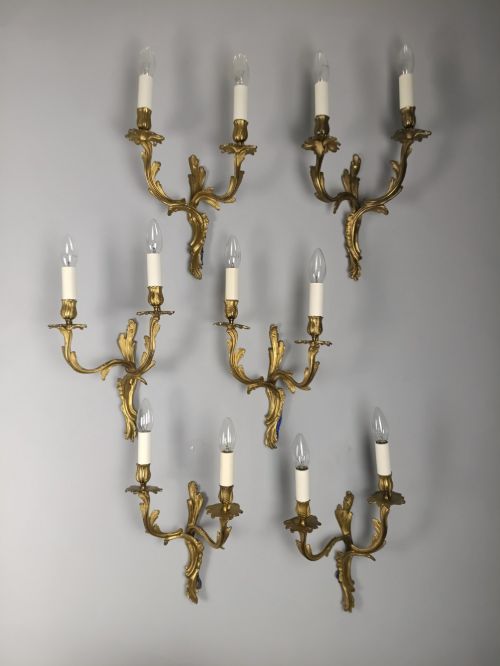
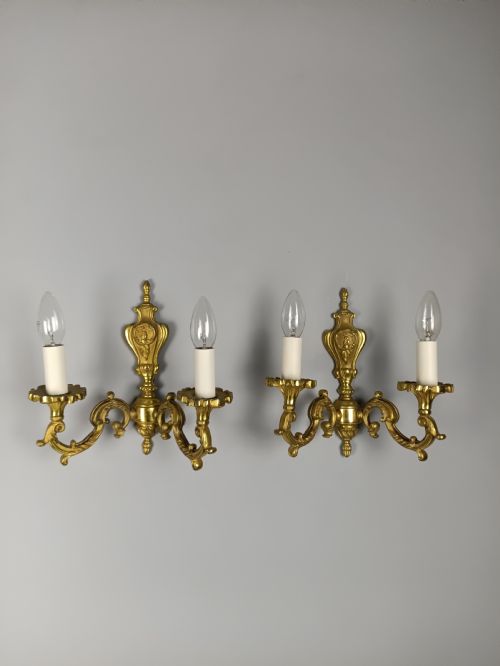
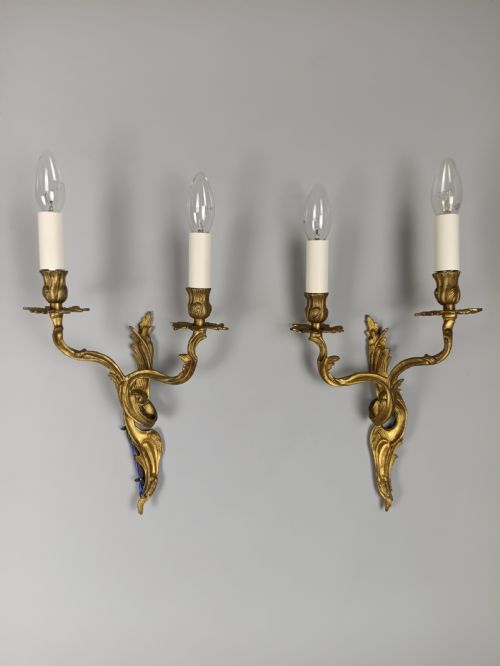
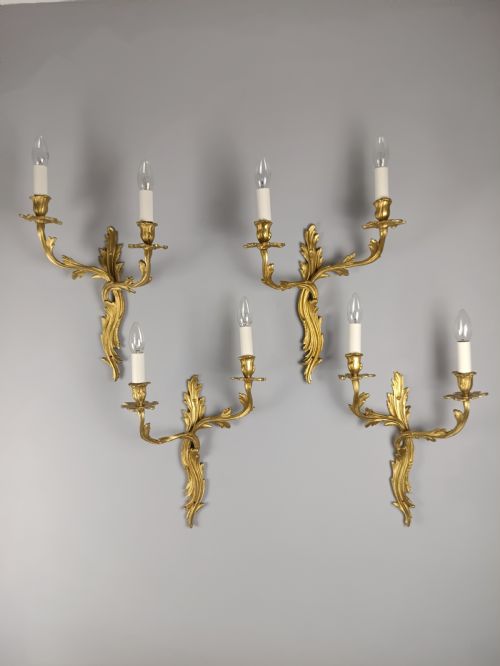
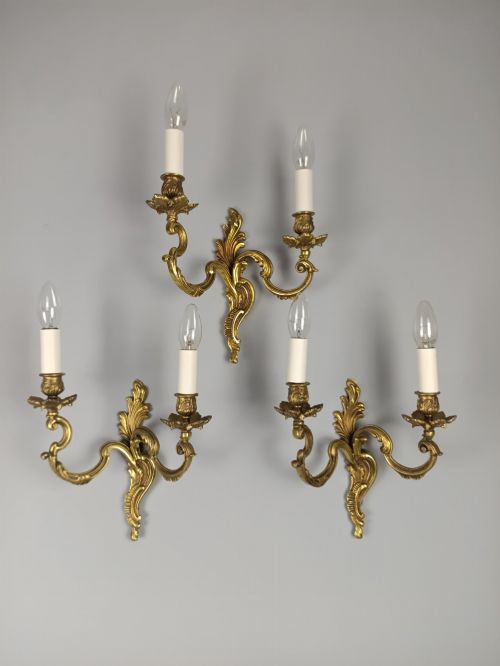
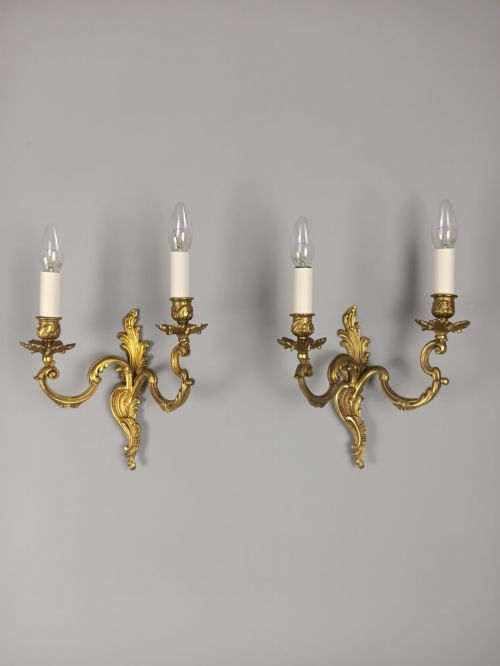
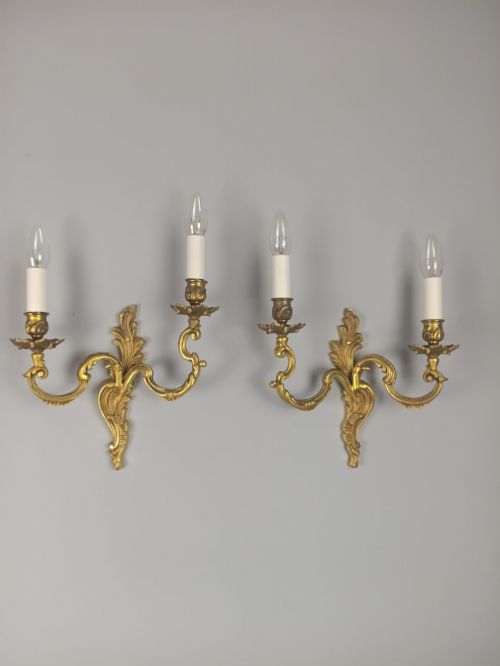
Bronze Twin Arm Sconce
A bronze twin arm sconce brings functional warmth to a wall, projecting light from twin candle or bulb branches.
Bronze Twin Arm Sconce
A bronze twin arm sconce is a wall-mounted light fixture designed to hold two candles or electric bulbs on branching arms. When you search for this phrase, you encounter wall lights spanning from the nineteenth century through the 1930s.
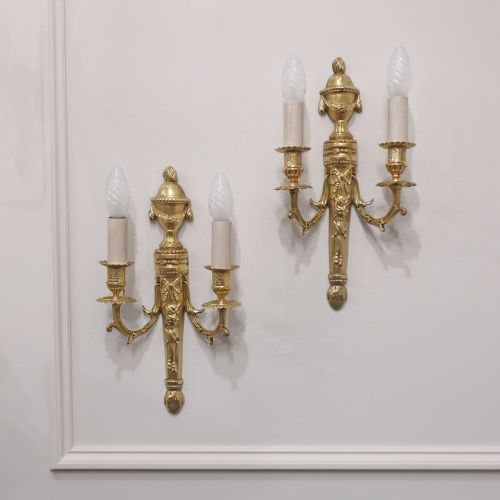
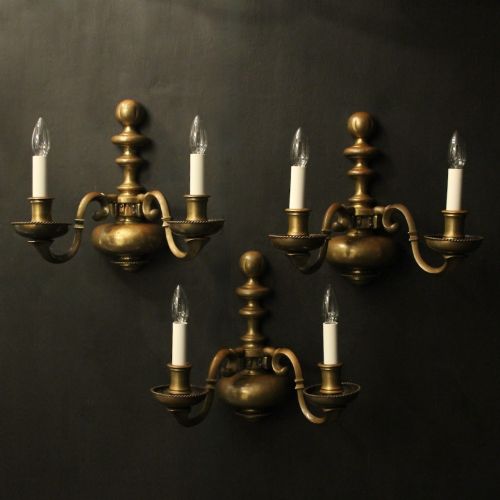
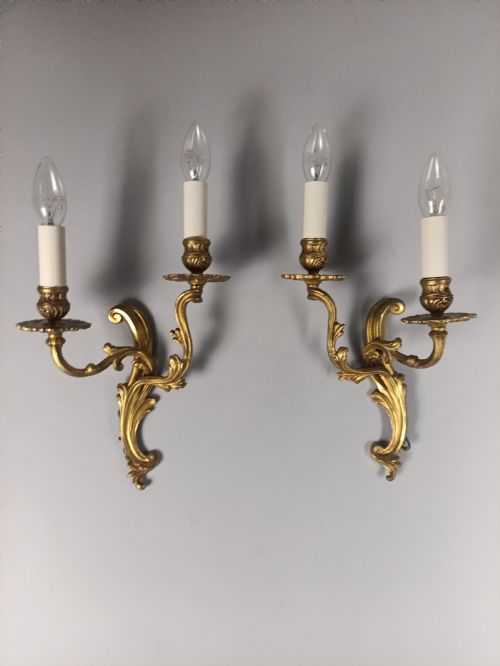
The pieces on this page lean heavily toward French origins, with frequent examples in styles like Rococo, Empire, and Louis XVI. English, Flemish, and Italian variants also appear, alongside simpler nineteenth-century bronze and brass castings.
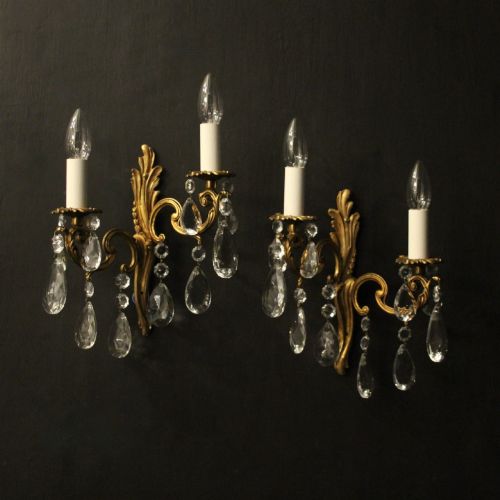
Most entries take the form of pairs or larger sets rather than isolated singles, often decorated with cast foliage, scrolls, or classical motifs. They function as both accent lighting and decorative wall furniture.
Materials and Construction
Foundry workers cast these pieces in bronze, brass, or ormolu, applying gilding or silvering to the metal surface for a lustrous finish. Some models incorporate crystal drops or panels to refract the illumination.
The manufacturing process relies on traditional metal casting to create the intricate backplates and curving twin arms characteristic of the period. Artisans then chased the surface details by hand before applying fire gilding or surface plating.
Listings feature periods spanning from the nineteenth-century Victorian era through the Edwardian period and up to the 1930s.
Markers of Quality
Quality rests in the crispness of the cast ornamentation and the depth of the hand-chasing on the bronze surface. Superior examples exhibit sharply defined foliage, smooth joints, and substantial metal weight rather than hollow lightness.
The retention and quality of the original gilding or ormolu also separate standard production from finer pieces. Wear that reveals the warm base metal evenly adds character, whereas poor secondary plating obscures the underlying detail.
Casier
The Bronze Twin Arm Sconce Glossary
- Ormolu
- Finely chopped gold amalgamated with mercury and applied to a bronze base, then heated to drive off the mercury. This technique creates a durable, golden finish seen on high-end French wall lights.
- Rococo
- An eighteenth-century design style characterised by asymmetrical scrolls, shell motifs, and naturalistic curves. Revivals of this aesthetic appear frequently in nineteenth-century and 1930s castings.
- Empire
- A neoclassical style drawing on ancient Roman, Greek, and Egyptian motifs such as wreaths, urns, and strict symmetry. This aesthetic dominated French decorative arts during the early nineteenth century.
- Louis XVI
- A restrained classical style featuring straight lines, urns, ribbons, and acanthus leaves. It represents a direct reaction against the flowing asymmetry of earlier Rococo designs.
- Sconce
- A wall-mounted lighting fixture designed to project illumination into a room using candles or electric equivalents. The term covers both single-arm holders and multi-armed wall brackets.
Bronze Twin Arm Sconce: Frequently Asked Questions
How are these sconces mounted?
Most wall sconces feature a secure backplate with pre-drilled screw holes designed to anchor directly into wall studs or solid masonry. Heavier cast bronze models require sturdy wall anchors to support their substantial weight safely.
Electric conversions typically require professional wiring through the backplate to connect directly into standard household wall circuits.
Were these originally for candles?
Many older pieces were built exclusively to hold wax candles before households adopted gas and electric lighting. Subsequent rewiring has converted numerous examples for modern bulb use while preserving the original metalwork.
Unconverted pieces still retain their original drip pans and candle tubes, designed to catch melting wax beneath the flame.
How do I date a sconce?
Dating relies on stylistic clues, casting techniques, and material composition typical of specific manufacturing eras. Victorian and Edwardian pieces often show distinct regional casting traits compared to French output from the 1920s and 1930s.
Backplate construction, screw types, and mounting hardware also offer reliable clues to the age of the fixture.
Can I clean the bronze?
Dusting with a soft, dry cloth preserves the aged surface and prevents the buildup of grime in recessed crevices. Avoid abrasive metal polishes, which can strip away original gilding or ormolu finishes.
Gentle cleaning maintains the natural patina accumulated over decades of display.