
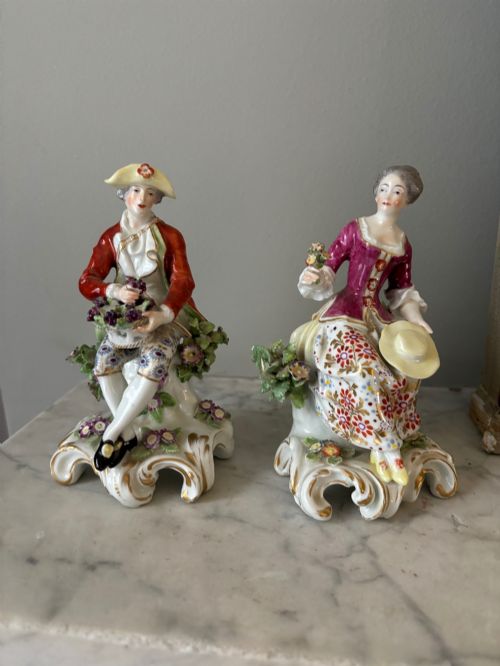


Rococo Style Porcelain Figurine
These rococo style porcelain figurine examples bring 18th-century exuberance to a room through theatrical poses and delicate floral details.
Rococo Style Porcelain Figurine
When searching for a rococo style porcelain figurine, a buyer encounters sculptural works depicting pastoral figures, musicians, cherubs and romantic couples. These pieces span the eighteenth, nineteenth and early twentieth centuries, drawing heavily on French and German models.
The most common examples on this page are nineteenth-century interpretations and revivals, including Paris porcelain pieces and works from factories such as Samson and Meissen. Makers often looked to earlier Derby and Chelsea designs, producing pairs of gardeners, shepherds and allegorical figures.
Forms extend beyond standalone figures to incorporate figural groups, sweetmeat dishes, candlesticks and centrepiece vases. Pastoral scenes and playful putti dominate the selection, reflecting the ornate, asymmetrical tastes of the movement.
How They Were Made
Potters utilised hard-paste porcelain and biscuit porcelain, shaping the clay in moulds before hand-finishing intricate details such as lace, clothing folds and applied flowers. Artisans then applied enamel colours and gilding, using gold leaf and gold gilt to highlight rococo scrolls and garment edges.
Many nineteenth-century French and German workshops employed specialised painting techniques to mimic earlier Meissen or Chelsea aesthetics. Firing kilns set the hand-painted enamels, while delicate elements like bocage foliage required careful placement by hand before the final glaze.
Nineteenth-century potters frequently sculpted elaborate porcelain sheep with textured wool made from tiny applied clay loops.
What Varies in Quality
Quality rests in the crispness of the modelling and the precision of the hand-painting on faces, fingers and garments. Finer examples display subtle facial expressions and carefully modelled extremities, whereas simpler pieces show softer details from worn or secondary moulds.
The complexity of the composition also separates tiers of production, seen in multi-figure groups with elaborate floral backdrops compared to single static figures. The application of enamel and gilding contributes further distinction, with superior pieces maintaining clean brushwork and well-defined metallic highlights.
Edme Samson·Meissen·Volkstedt·KPM·Minton·Ernst Bohne Söhne·Vion et Baury·Helena Wolfsohn·Carl Thieme·Sitzendorf·Royal Capodimonte
The Rococo Style Porcelain Figurine Glossary
- Hard-paste porcelain
- A durable ceramic paste composed of kaolin and petuntse, fired at high temperatures to produce a dense, vitrified body. This material forms the base for many European figures.
- Bocage
- An applied background of leaves, branches and flowers surrounding a figure. This technique provides a leafy arbour effect common in English and continental porcelain.
- Biscuit porcelain
- Unglazed porcelain fired once to produce a matte, white surface resembling marble. Sculptors favoured this finish for capturing fine anatomical detail.
- Sweetmeat figure
- A small porcelain dish or container held by a figure, designed for holding small confectioneries or nuts at a table. These functional figures often appear in pairs.
- Gilding
- The application of gold leaf or gold paint to ceramic surfaces. It accentuates the scrollwork and decorative borders characteristic of revival styles.
Rococo Style Porcelain Figurine: Frequently Asked Questions
What is a rococo style porcelain figurine?
These decorative sculptures portray pastoral scenes, musicians, and mythological figures in playful, dynamic poses. They draw inspiration from the ornate and asymmetrical artistic trends of the eighteenth century.
Most examples available today date from the nineteenth century, when French and German factories revived earlier manufacturing traditions. They serve primarily as decorative mantel or table ornaments.
How do I identify a reproduction?
Many nineteenth-century pieces deliberately imitated eighteenth-century factories like Chelsea or Derby, sometimes incorporating historical factory marks. Examining the painting style, paste composition, and wear helps determine the actual period of manufacture.
Reference books and maker mark guides assist in separating original eighteenth-century output from later continental revivals and Paris copies.
Where should I display porcelain figures?
Display these delicate objects inside enclosed cabinets or on stable shelves away from direct sunlight and heavy foot traffic. Protection from bumps prevents damage to protruding fingers, lace work, and applied floral elements.
Good interior lighting enhances the hand-painted enamels and gold gilding without exposing the ceramic body to environmental hazards.
How do I clean antique porcelain?
Dust these figures gently with a soft, dry brush to remove surface particles without disturbing fragile areas like applied petals or lace. Avoid using chemical cleaners or soaking pieces in water, especially if they feature delicate enamel or gold leaf.
Professional restoration is recommended for unstable or broken sections rather than attempting home repairs with modern adhesives.