


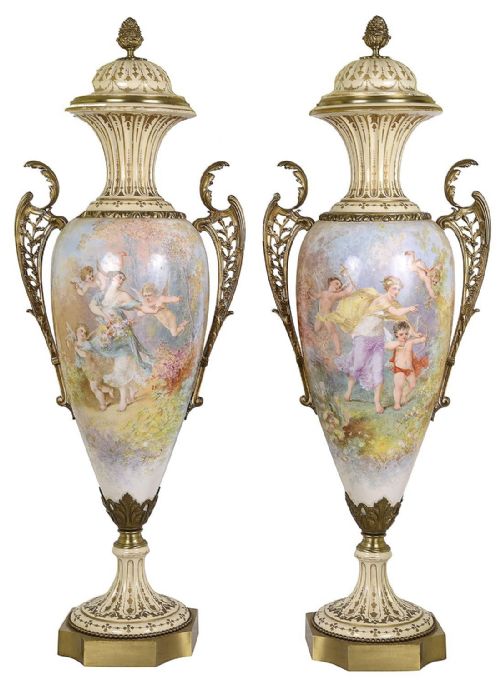


Rococo Style Lidded Urn
These rococo style lidded urn pieces bring exuberant nineteenth-century decorative presence to a room through curved porcelain forms and intricate mounts.
Rococo Style Lidded Urn
A rococo style lidded urn is a decorative vessel combining nineteenth-century porcelain manufacture with curving French revival aesthetics. Buyers searching this phrase encounter lidded vases, ginger jars, and potpourri urns decorated with painted scenes and vibrant grounds.
The objects appearing on this page span the nineteenth century, specifically from the 1880s and 1890s. They take the form of pairs or large standalone vases, often styled after earlier Sevres or Dresden models.
Most examples originate from major continental porcelain centres and decorative workshops of the period. Their forms emphasise asymmetrical scrollwork, domed lids, and generous proportions designed for prominent display.
How They Were Made
The foundation of each piece is fired porcelain, shaped into bulbous bodies and fitted with matching lids. Manufacturers applied cobalt blue and pink ground colours before hand-painting figurative panels, notably Watteau scenes.
Metal mounts in ormolu, gilt bronze, and gilt metal frame the porcelain bodies. Artisans applied gold leaf and gilding to accentuate the swirling scrollwork characteristic of the revival style.
Rococo Style Lidded Urn Retail Price Guide 2026
Typical asking prices for rococo style lidded urn among the pieces listed under this phrase on Sellingantiques today, from the lower quarter to the upper quarter. They describe what is for sale here now, not the wider market.
Several urns feature perforated lids designed to let potpourri breathe sweet scents across Victorian parlours.
What Varies in Quality
The refinement of the hand-painted figural scenes and the crispness of the porcelain moulding define the upper tier of these pieces. Softer details in the transfer work or simpler monochrome grounds generally mark standard production.
The weight and finish of the metal mounts also distinguish the work, with finely chased ormolu and heavy gilding appearing on the most ambitious pieces. Lighter gilt metal fittings and simpler gilding indicate more commercial factory output.
Helena Wolfsohn Dresden·Sitzendorf Porcelain
The Rococo Style Lidded Urn Glossary
- Ormolu
- Gilded bronze applied as mounts and decorative trim on nineteenth-century porcelain vessels. This technique creates a rich metallic contrast against the coloured porcelain body.
- Potpourri
- A pierced lidded vase designed to hold scented dried plant material. The perforations in the ceramic allow fragrance to circulate while concealing the contents.
- Ginger jar
- A high-shouldered storage jar fitted with a domed lid. Nineteenth-century European makers adopted this East Asian shape and reinterpreted it with rococo painted decoration.
- AR Mark
- A monogram used by continental porcelain decorators referencing Augustus Rex. It frequently appears on nineteenth-century pieces produced in the Dresden style.
Rococo Style Lidded Urn: Frequently Asked Questions
What were lidded urns used for?
These decorative vessels served primarily as mantel ornaments and focal points in nineteenth-century drawing rooms. Their presence signalled taste and affluence through elaborate craftsmanship.
Some variations, such as potpourri jars, held scented botanicals to freshen interior spaces. Primarily, however, they functioned as static art objects rather than utilitarian storage containers.
How do I date a porcelain urn?
Dating relies heavily on factory marks, the composition of the ceramic body, and the style of the hand-painted decoration. Nineteenth-century pieces often display specific blue underglaze ciphers or decorator monograms.
Comparing the mount style helps narrow the period. Cast ormolu details and specific colour grounds typical of the 1880s and 1890s provide reliable chronological markers.
Where should I display an urn?
Large lidded vases require stable, prominent surfaces such as sideboards, pedestals, or wide mantelpieces where their height and painted panels remain visible. Pair arrangements look best balanced symmetrically.
Consider lighting levels in the room to catch the metallic highlights of the gilding and bronze mounts. Placing them away from heavy foot traffic protects delicate handles and lids.
Are Sevres style urns French?
Not necessarily, despite the name referencing the famous French royal manufactory. Many pieces bearing Sevres style characteristics were actually produced in German porcelain centres during the late nineteenth century.
German workshops adopted the aesthetic, colour palettes, and painted subject matter of eighteenth-century French porcelain. These revival pieces pay homage to earlier designs rather than originating in France.