





Rococo Style Center Table
A rococo style centre table brings fluid movement and ornamental brilliance to a room, drawing the eye with curved lines and rich surface details.
Rococo Style Center Table
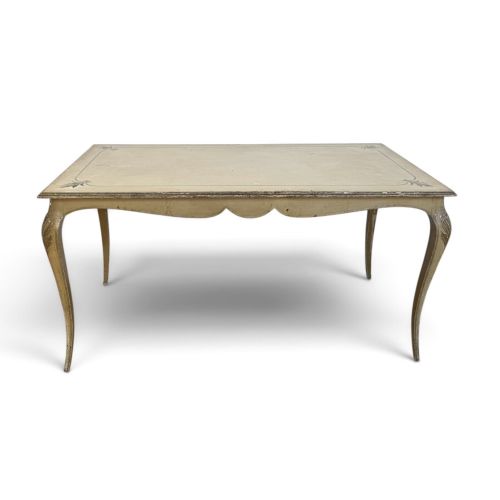
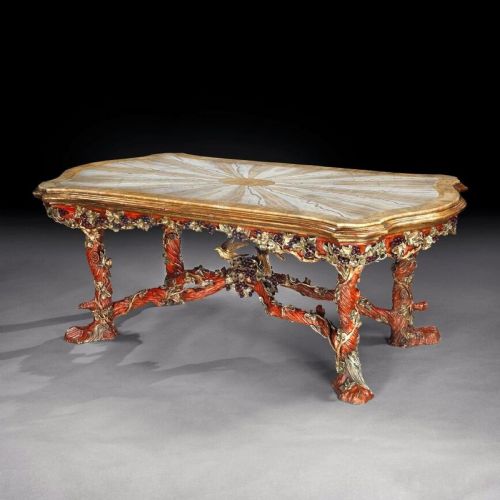
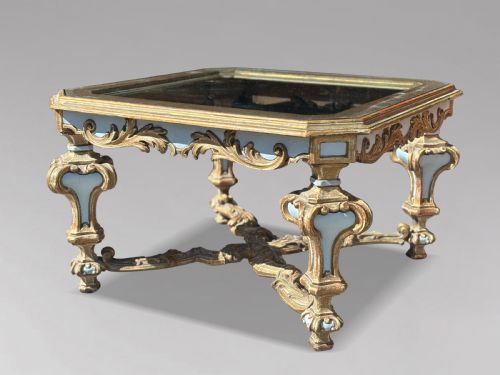
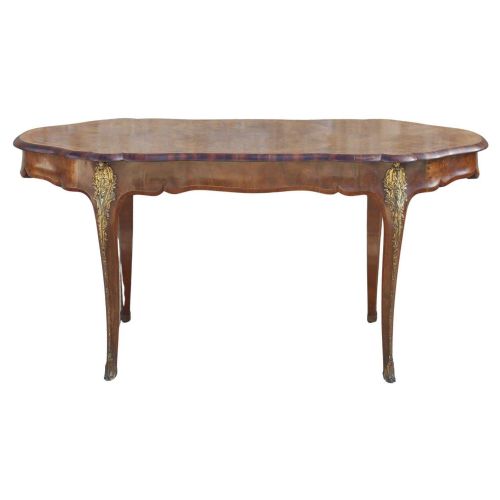
A rococo style centre table is defined by its serpentine contours, cabriole legs, and elaborate carved ornamentation derived from mid-eighteenth-century French design. You will encounter these pieces largely across nineteenth-century revivals, alongside iterations from the early twentieth century.
Forms span freestanding centre tables designed to occupy the middle of a room, alongside related low coffee tables, occasional tables, and occasional writing desks. The primary origins represented are French and Italian workshops, capturing the dramatic flair of the style.
Materials and construction
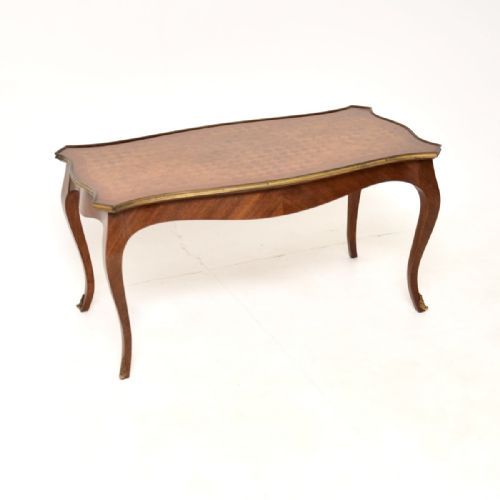
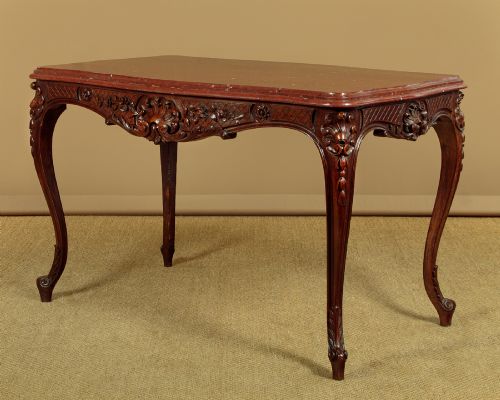
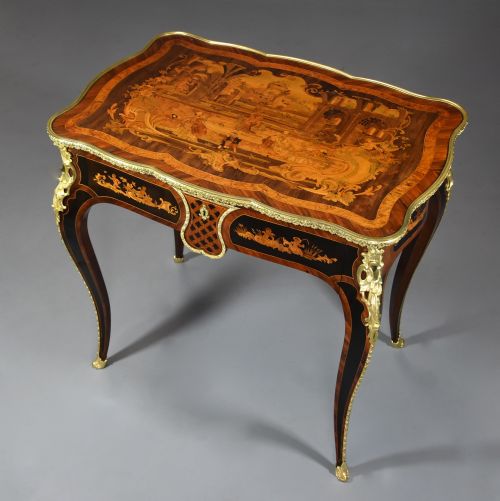
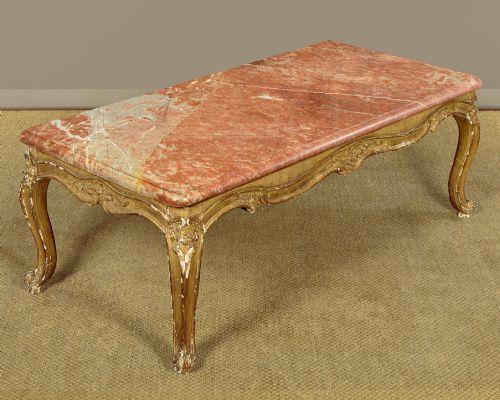
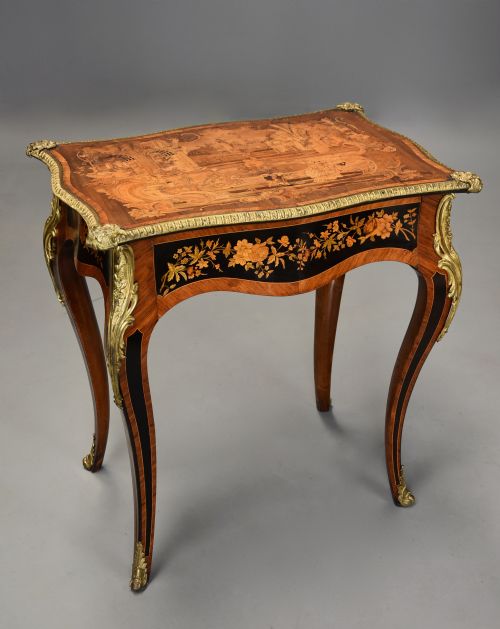
Cabinetmakers utilised dense hardwoods such as walnut, kingwood, satinwood, and burr walnut as the structural base for intricate marquetry and parquetry patterns. Tops are frequently inset with marble, onyx, or rouge marble, adding weight and a cool tactile surface to the wooden frames.
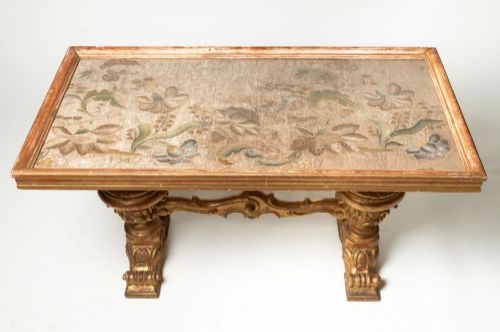
Giltwood, ormolu, and gilt-bronze mounts decorate the corners and aprons, secured with careful casting and chiselling. Carved details utilise polychrome finishes and gold leaf to accentuate the asymmetrical scrolls typical of the revival period.
Italian and French stylistic influences dominate the offerings, showcasing both inlaid marquetry and carved giltwood.
Assessing quality and execution
Quality rests in the crispness of the wood carving and the precision of the marquetry inlay, where finer examples display seamless botanical or geometric patterns across the timber. The integration of cast ormolu mounts shows superior craftsmanship when the bronze sits flush against the curved contours without gaps.
The choice of stone tops and the density of the underlying walnut or kingwood dictate the substantial feel of the table. Pieces signed by notable makers or exhibiting meticulous hand-chiselled gilt mounts elevate the standard above standard commercial workshop output.
Amleto Bertoni·Eugene Clauss·Zwiener Jansen Sucesseur
The Rococo Style Center Table Glossary
- Ormolu
- Gilded bronze mounts applied to furniture edges and legs. This technique provides a metallic contrast to dark woods like walnut and kingwood.
- Marquetry
- Decorative patterns formed by fitted veneers of various tinted woods. Artisans arrange these thin sheets to create floral or geometric table tops.
- Cabriole leg
- A furniture leg that curves outward at the knee and tapers inward toward the foot. It forms a staple element of Louis XV and revival furniture.
- Guéridon
- A small occasional table supported by a central pillar or three legs. These tables frequently feature round marble tops and gilt-bronze mounts.
- Parquetry
- Geometric wood inlay resembling a mosaic pattern. This technique decorates table surfaces using contrasting timber grains.
Rococo Style Center Table: Frequently Asked Questions
Where should I place a centre table?
A centre table works best positioned in the middle of a room, allowing people to walk around it and view the inlaid top from all angles. It serves as a natural focal point beneath a central light fixture.
Alternatively, smaller versions function effectively as lamp tables or wine tables against a perimeter wall. Their finished backs ensure they maintain their decorative appeal from any perspective.
How do I care for the marble top?
Marble tops require gentle cleaning with a damp cloth and mild soap to preserve the polish and prevent staining from acidic liquids. Avoid harsh chemical cleaners that can etch the stone surface.
Using coasters and placemats protects the polished marble from rings and scratches during everyday use. Periodically applying a specialised stone wax maintains the natural sheen.
What is the difference between a centre table and a coffee table?
Centre tables stand at standard table height and were historically designed to sit in the middle of nineteenth-century reception rooms to hold lamps or decorative objects. Coffee tables are lower in height and proportioned for use alongside seating furniture.
Many pieces listed under these terms share similar revival styles and marquetry techniques, with height being the primary distinction between the two forms.
How do I identify a revival piece?
Revival pieces display construction methods, timber selections, and hardware typical of the nineteenth or early twentieth century rather than the eighteenth century. Makers during the later periods frequently reinterpreted earlier French styles with distinct regional flourishes.
Examining the underside of the table, the drawer linings, and the fixing screws helps determine the actual period of manufacture.