



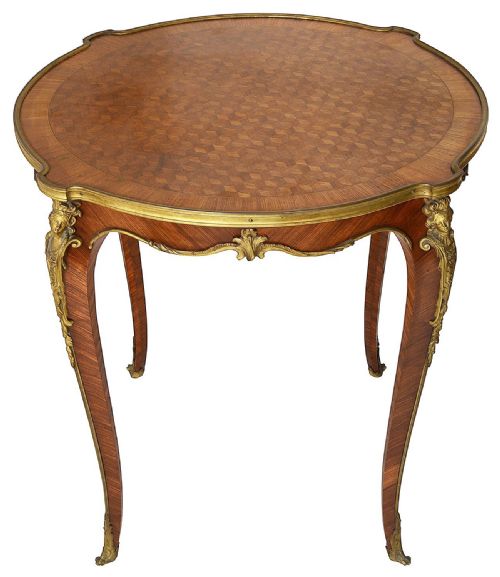


Gilded Bronze Accent Table
A gilded bronze accent table brings unmistakable French weight and metallic warmth into a room, catching the light across refined salon surfaces.
Gilded Bronze Accent Table
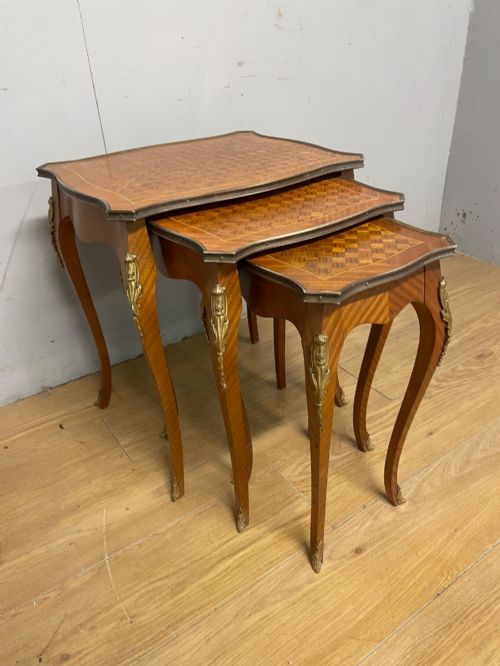
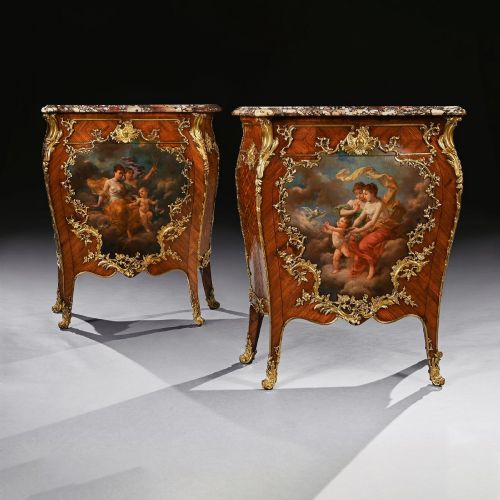
A gilded bronze accent table covers a range of small nineteenth-century and early twentieth-century furnishings designed to sit within formal interiors, spanning French Rococo Revival, Neoclassical, and Napoleon III styles. Buyers browsing this selection encounter side tables, occasional pieces, marble top lamp tables, and gueridons alongside related mounted commodes and table lamps.
The objects stem predominantly from nineteenth-century workshops, incorporating Regency, 1850, 1860, and 1900 periods, with occasional mid-twentieth-century pieces also appearing. Most examples rely on French aesthetic vocabularies, referencing Louis XVI forms or Empire motifs through heavy metal mounts and patinated details.
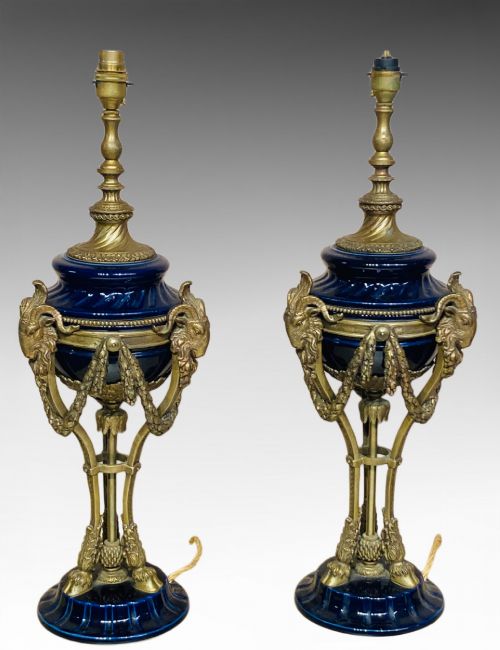
Forms vary from tray top side tables and parquetry-inlaid gueridons to monumental lamp bases, uniting domestic utility with elaborate cast metal decoration. The category blurs the line between functional furniture and decorative lighting, reflecting the diverse output of period cabinetmakers and bronze-founders.
Materials and construction
Maker workshops built these pieces using dense hardwoods such as mahogany and kingwood, frequently enhanced by decorative parquetry inlay, fabric panels, or lacquer work. Surfaces often receive inset marble tops that add substantial weight and a cool, smooth texture to the upper tier.
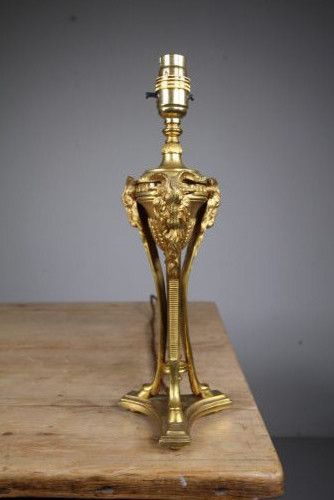
Cast ormolu and gilt bronze components provide the signature metallic enrichment, fastened to the wooden carcases with precision. Artisans employed patinated bronze, brass, and porcelain elements alongside carved rams heads, cherubs, and classical mounts to articulate the design.
Cast bronze cherubs and rams heads peer out from beneath marble table tops.
Assessing craftsmanship
Quality rests in the crispness of the bronze casting and the depth of the gilding, where sharp chisel work distinguishes superior mounts from softer, commercial iterations. The integration between the metal hardware and the underlying wood or marble structure reveals the ambition of the original workshop.
Attribution to documented makers or specific stylistic followers elevates certain pieces, as seen in works linked to Zwiener or Jansen Sucesseur. Material selection, such as figured kingwood veneers and substantial marble slabs, further separates standard production from exceptional salon furniture.
Zwiener Jansen Sucesseur, Paris·Zwiener
The Gilded Bronze Accent Table Glossary
- Ormolu
- Gilded brass or bronze applied to furniture mounts, clock cases, and decorative objects. This technique involves coating a metal base with a gold amalgam and heating it to leave a rich, durable gold surface.
- Gueridon
- A small French occasional table or stand, often round and supported by a central column or multiple legs. Originating in the seventeenth century, these pieces frequently feature elaborate mounts and inlaid tops.
- Parquetry
- Geometric wood inlaywork arranged in repeating patterns across a table top or cabinet door. Craftsmen utilise contrasting timber grains to create complex visual textures.
- Vernis Martin
- A type of decorative lacquer finish developed in eighteenth-century France to imitate Asian lacquer. It employs multiple layers of resin varnish to achieve a translucent, polished sheen.
- Neoclassical
- A style drawing inspiration from the classical art and architecture of ancient Greece and Rome. It emphasises symmetry, straight lines, and restrained classical ornamentation.
Gilded Bronze Accent Table: Frequently Asked Questions
What is a gueridon table?
A gueridon is a small circular occasional table designed for domestic display or lighting support. These pieces often feature decorative inlays and prominent metal mounts.
Originating as candle stands, they evolved into versatile accent furniture positioned beside seating or in the centre of a room.
How do I identify Napoleon III style?
Napoleon III furniture embraces eclectic nineteenth-century historicism, drawing heavily on earlier French royal aesthetics like Louis XVI and Rococo Revival. Look for exuberant gilt-bronze mounts, rich veneers, and inset marble tops.
This aesthetic prioritized opulent display and complex surface ornamentation suited to lavishly decorated period interiors.
Where were these tables used?
These tables served primarily in formal nineteenth-century salons, drawing rooms, and boudoirs as decorative surfaces for lamps and small objects. Their compact footprints allowed them to occupy corners or sit beside upholstery.
Today, they function as bedside surfaces, lamp tables, or decorative accents in traditional and contemporary homes alike.
What is ormolu?
Ormolu refers to gilded bronze or brass used for decorative mounts on furniture and lighting fixtures. The technique produces a bright metallic gold appearance that contrasts with dark hardwoods.
Period pieces display hand-chased surface details that catch the ambient light within a room.