



Rococo Silver Salver
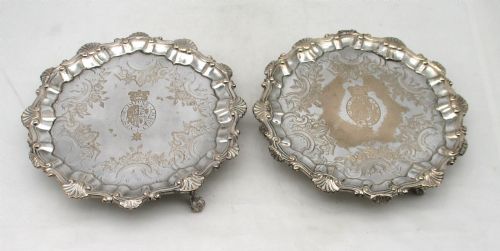
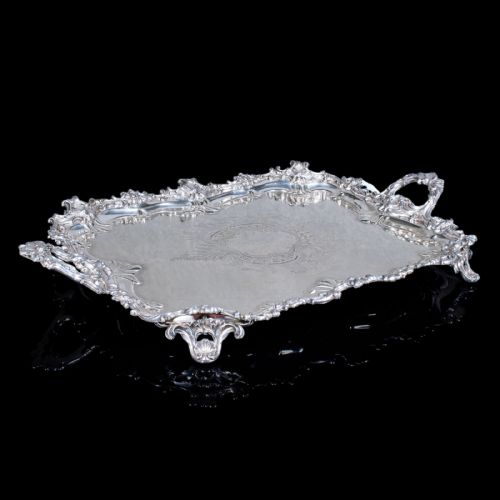
These rococo silver salver examples bring ornate 18th Century and Victorian craftsmanship to tea service and display.
Rococo Silver Salver
A rococo silver salver serves as an ornate serving platter, card tray, or afternoon tea centrepiece. These vessels appear in forms spanning the Georgian, Victorian, and 19th Century periods, often reflecting Rococo Revival and Irish Georgian styles.
The objects listed here include solid silver and various plated forms, ranging from smaller card trays to large presentation trays and serving platters. Makers and periods stretch from the 18th Century through to the 1880s, offering diverse examples of British and Irish metalwork.
How they were made
Makers shaped these items using solid silver, sterling silver, or base metals coated in silver plate, Old Sheffield plate, and Sheffield plate. Copper also appears beneath plating layers in older pieces, revealing the underlying armature of Old Sheffield manufacture.
Surface ornamentation relies on chased, engraved, and applied decorative techniques to achieve the characteristic rococo borders, vine motifs, and figural masks seen across Georgian and Victorian output.
Rococo Silver Salver Retail Price Guide 2026
Typical asking prices for rococo silver salver among the pieces listed under this phrase on Sellingantiques today, from the lower quarter to the upper quarter. They describe what is for sale here now, not the wider market.
Materials span sterling silver, silver plate, Old Sheffield plate, copper, and nickel silver across multiple centuries.
What varies in quality
The distinction between standard production and superior craftsmanship rests in the depth and clarity of the chased decoration, alongside the weight of the silver or the integrity of the plating layer. Heavier gauge metal and crisper figural mask or border details elevate an example above basic utility.
Makers such as Charles Boyton, Padley Parkin, or the partnership of Thomas Hannam and Richard Mills introduce documented provenance that shapes the standing of a piece within the broader range of surviving silver and plated work.
Padley Parkin·Charles Boyton·Thomas Hannam And Richard Mills·William Eaton
The Rococo Silver Salver Glossary
- Salver
- A flat tray, typically with feet, used for serving food or drinks. These silver examples often feature raised rims with rococo scrollwork.
- Old Sheffield Plate
- A material made by fusing a thin sheet of silver to a thicker copper base. This technique was widely utilised before modern electroplating.
- Rococo Revival
- A 19th Century design movement reviving the asymmetrical scrolls, shells, and naturalistic motifs of the 18th Century. It dominates the decorative borders of Victorian trays.
- Card Tray
- A small salver historically used in hallways for visitors to leave calling cards. They share the same decorative borders as larger serving trays.
Rococo Silver Salver: Frequently Asked Questions
What is a rococo silver salver?
A rococo silver salver is an ornate flat serving tray characterised by asymmetrical scrollwork, shell motifs, and naturalistic ornamentation. These pieces date across the Georgian and Victorian eras.
They function as display trays, card trays, or tea service platters, combining decorative metalwork with practical utility.
How do I clean an antique salver?
Cleaning requires gentle care suited to the specific metal surface, particularly when dealing with plated items like Old Sheffield plate where the base copper might show through excessive rubbing.
Silver polish should be used sparingly on solid pieces to preserve crisp chasing and engraved details around the borders.
What is the difference between solid silver and silver plate?
Solid silver objects consist entirely of precious metal throughout their structure, whereas plated items apply a thin layer of silver over copper, nickel silver, or other base metals.
Old Sheffield plate uses a mechanical fusion method, whereas later Victorian items often employ electroplating techniques.
How can I tell the period of a tray?
Dating relies on hallmarks for solid silver pieces, which indicate the assay office and year of manufacture. Stylistic shifts between Georgian restraint and heavy Victorian Rococo Revival also help determine age.
Construction methods, such as visible copper seams on older plated wares, provide further clues to the decade of creation.