
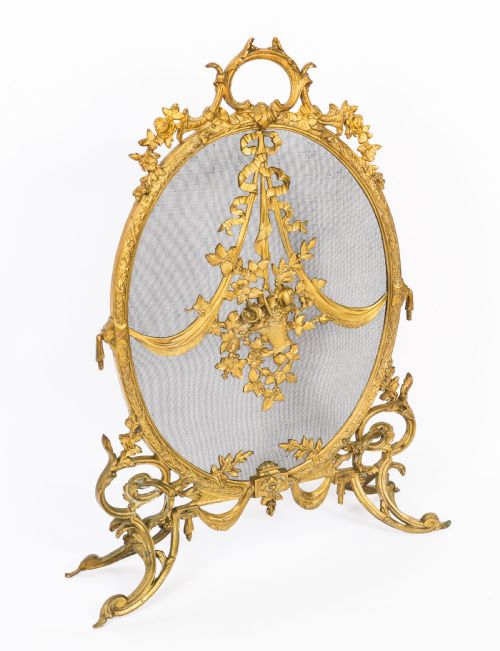


Rococo Revival Screen
These rococo revival screen pieces bring the flourish of nineteenth-century French and Victorian interiors into a room while shielding a hearth.
Rococo Revival Screen
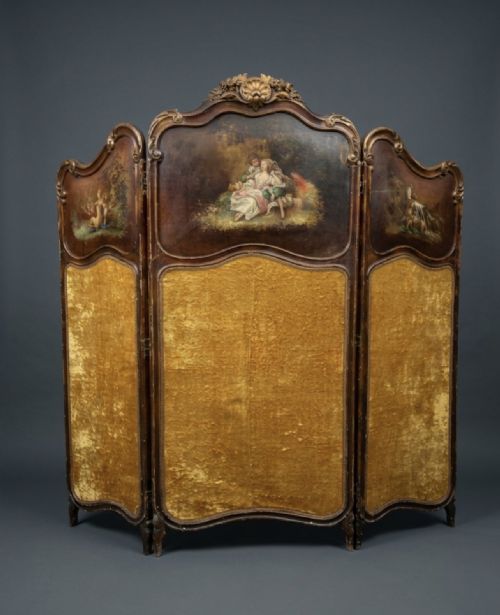
A rococo revival screen generally takes the form of a fire screen, modesty screen or folding room divider designed to manage heat and draft in period rooms. These furnishings appear most frequently as nineteenth-century pieces spanning the Victorian and Edwardian eras, reflecting French revival tastes.
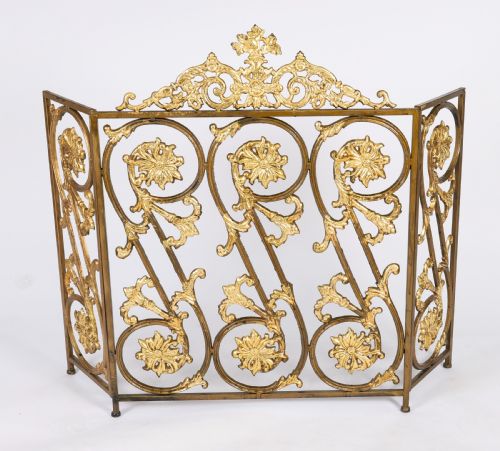
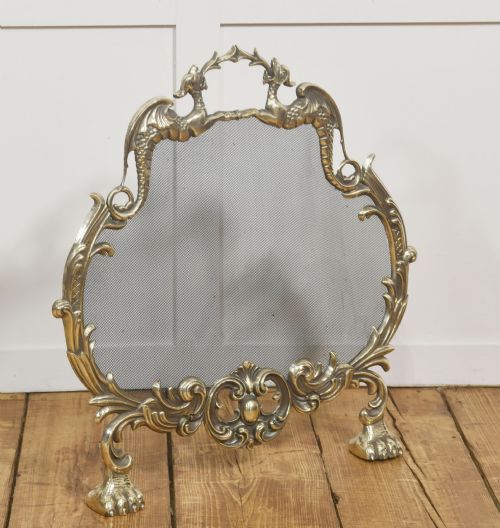
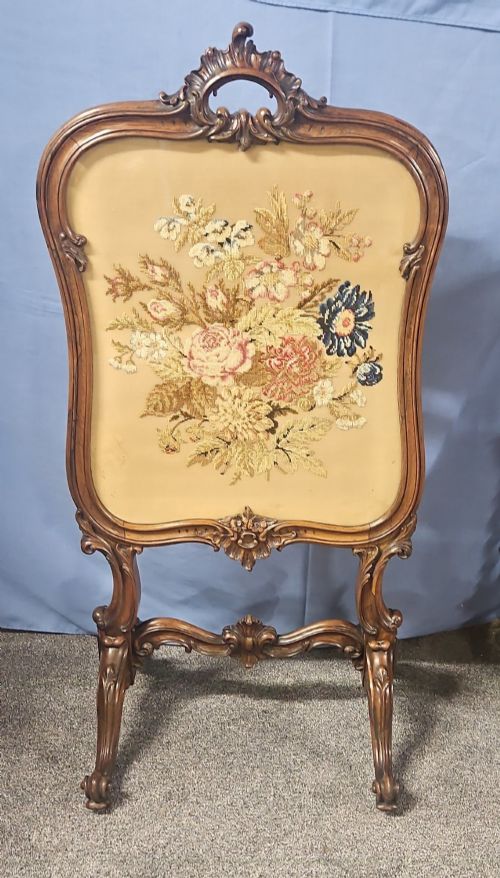
The standard configuration involves a decorative frame of brass, giltwood, walnut, rosewood or carved oak supporting a central panel of wire mesh, embroidered textile, needlepoint tapestry or painted canvas. Folding screens and pole screens also emerge within this grouping, serving as both room dividers and fireplace accessories.
How they were made
Metalsmiths worked in brass and gilt bronze to cast openwork frames featuring characteristic asymmetric scrolls and shell motifs. These were often fitted with fine wire mesh to catch stray embers while maintaining visibility of the fire.
Cabinetmakers shaped dense hardwoods such as walnut, rosewood, oak and giltwood for the standing frames, while craftspeople executed detailed hand-woven wool tapestry, embroidery and needlepoint panels depicting pastoral and floral subjects.
The materials in these listings span brass, wire mesh, walnut, wool, giltwood, textile, tapestry, and canvas across the nineteenth and early twentieth centuries.
What varies in quality
Distinctions in quality arise from the depth and crispness of the carving in wood frames or the precision of the casting in brass and bronze. Pieces produced by noted makers display superior handling of the characteristic rococo asymmetry and scrollwork.
The integrity and execution of the central panel heavily influence the character of the piece, with hand-woven needlepoint tapestries and hand-painted canvases representing a higher grade of craftsmanship than simpler textile inserts.
Paul Sormani
The Rococo Revival Screen Glossary
- Fire screen
- A decorative barrier placed in front of an unused fireplace to conceal the grate or block drafts. These items are frequently mounted on feet or a tripod base.
- Pole screen
- An adjustable screen mounted on a vertical wooden pole with a tripod base, allowing the panel to be slid up and down to deflect hearth heat from a person's face.
- Needlepoint
- A type of canvas work embroidery executed with wool yarn, commonly seen forming the pictorial panels of nineteenth-century screens. It provides durable surface texture.
- Giltwood
- Timber that has been coated with a thin layer of gold leaf. This finish was widely employed during the Victorian and revival periods to catch candle and fire light.
- Wire mesh
- A woven metal grid fitted into brass frames. It served a practical purpose in fireplace accessories by permitting radiant heat to pass while containing sparks.
Rococo Revival Screen: Frequently Asked Questions
What is a rococo revival screen used for?
These pieces were primarily designed as fireplace accessories to shield occupants from the intense heat of an open coal or wood fire. They also functioned as decorative room dividers or modesty screens in nineteenth-century sitting rooms.
Today, they serve mainly as decorative focal points in period interiors, placed before empty hearths or utilised to segment larger living spaces.
How do I date a fire screen?
Dating relies on examining the construction methods of the frame, the materials utilised, and the style of any textile panels. Nineteenth-century examples often feature machine-drawn brass or dense hardwoods combined with hand-worked needlepoint.
Makers' stamps, cast bronze signatures, and period screw types further help narrow down the decade of production between the Victorian and Edwardian eras.
Are these screens fragile?
While the structural wooden or brass frames are generally robust, the antique textile panels require careful handling. Wool tapestries, needlepoint, and painted canvas are susceptible to fading from direct sunlight and damage from moisture or insects.
Positioning the screen away from direct sunlight and damp environments preserves the integrity of both the fabric and the gilt finishes.