


Carved Walnut Screen
A carved walnut screen brings warmth and texture to a room, offering both decorative beauty and practical division.
Carved Walnut Screen
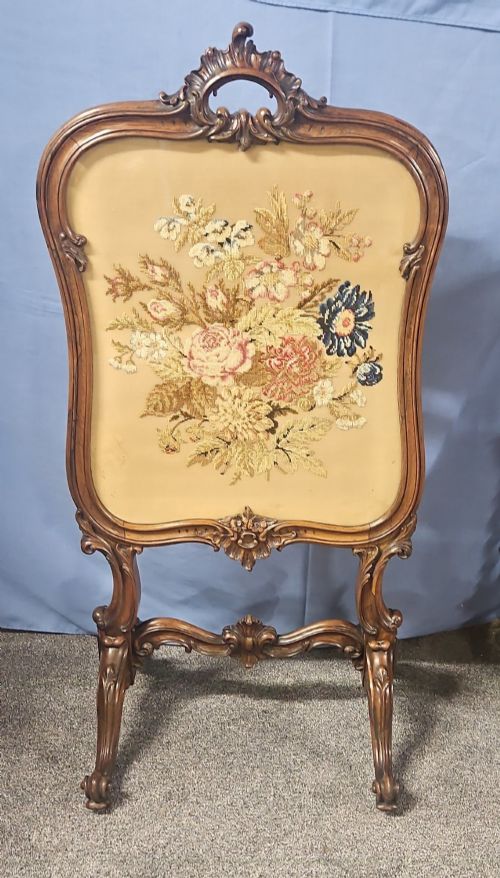
When you search for a carved walnut screen, you encounter objects designed to manage heat, drafts, or sightlines in a domestic interior. The selection on this page is dominated by nineteenth century Victorian and French pieces, ranging from single glazed or needlework panels to multi-fold room dividers.
Most examples function either as firescreens placed before an unlit hearth or as larger folding screens and privacy screens. Forms vary from simple pole screens to substantial three and four-fold barriers incorporating textiles, glass, and carved timber frames.
Materials and construction
The primary structural material across these listings is walnut, frequently carved with Rococo Revival flourishes, baronial motifs, or Art Nouveau lines. Frames are occasionally augmented with parcel gilt or bronze mounts.
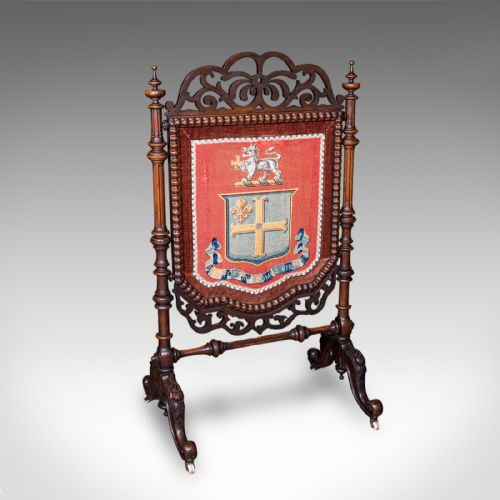
Insets consist of woolwork, needlepoint, and hand-woven tapestries, alongside etched glass, textile panels, and embroidered armorials.
Some screens feature adjustable doors or sliding mechanisms, proving that Victorians took blocking a draft very seriously indeed.
What separates the best examples
Quality rests upon the crispness of the timber carving and the complexity of the frame construction, such as multi-fold hinges and adjustable doors. Solid walnut construction outranks lesser timbers, and substantial height adds presence.
The artistic merit of the insets dictates overall standing. Finely worked needlepoint, pastoral tapestry scenes, and etched glass elevate a piece far above standard utilitarian versions.
The Carved Walnut Screen Glossary
- Pole screen
- A small vertical panel mounted on a slender freestanding wooden pole that adjusts in height to block radiant heat from a fireplace. It sits on a decorative tripod or weighted base.
- Needlepoint
- A form of canvas work embroidery executed with wool or silk yarn, frequently deployed for the central decorative panels of nineteenth century firescreens.
- Rococo Revival
- A mid-nineteenth century design style characterised by asymmetrical scrollwork, floral motifs, and curved organic shapes applied heavily to walnut furniture.
- Armorial
- A design featuring a heraldic coat of arms, sometimes embroidered onto panels to denote family lineage and status.
Carved Walnut Screen: Frequently Asked Questions
What is a carved walnut screen used for?
These pieces served historically to shield occupants from the intense heat of an open coal fire or to divide large rooms and create private corners. Today, they function primarily as decorative interior partitions and visual focal points.
Smaller pole screens and firescreens sit neatly before hearths, while taller folding variants manage light and space in a modern living area.
How do I identify a Victorian carved walnut screen?
Victorian examples typically display rich walnut frames with heavy carving, often adopting Rococo Revival scrolls or floral patterns. They frequently incorporate hand-stitched woolwork, tapestries, or needlepoint panels.
Examining the construction methods, such as traditional joinery and period textiles, helps distinguish nineteenth-century examples from later reproductions.
Are French and English screens different?
French screens from this group often lean towards lighter, more decorative styles such as French Rococo Revival or Art Nouveau, sometimes featuring multiple folding panels with pastoral scenes or glass inserts.
English variants tend to favour traditional firescreen formats, including pole screens and heavy woolwork tapestry panels set into solid carved walnut frames.
How do I care for antique needlework panels?
Needlework and tapestry panels require protection from direct sunlight to prevent the wool and silk threads from fading and becoming brittle. Regular gentle dusting with a soft brush keeps the textile fibres clean.
Keeping the walnut frame nourished with appropriate furniture wax maintains the timber without affecting the surrounding fabric.