



Rococo Revival Hearth Guard
A rococo revival hearth guard shields a room from sudden fireplace heat with curving brass and rich woven panels.

Rococo Revival Hearth Guard
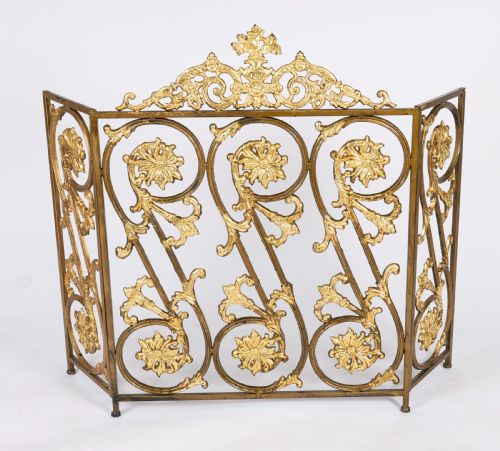
A rococo revival hearth guard takes the form of a standing screen placed before a fireplace when the fire is unlit or burning low. These pieces protect a room from radiant heat and stray sparks while dressing the fireplace during warmer months.
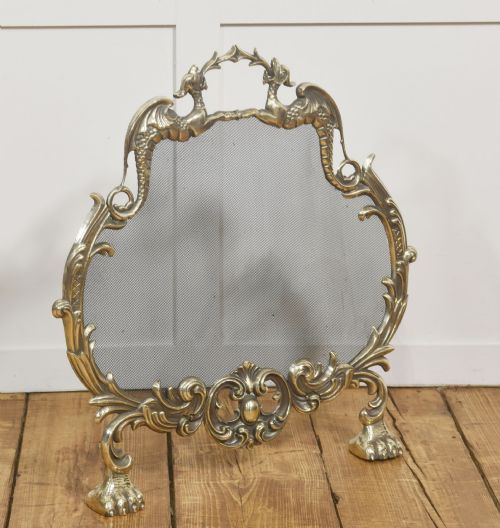
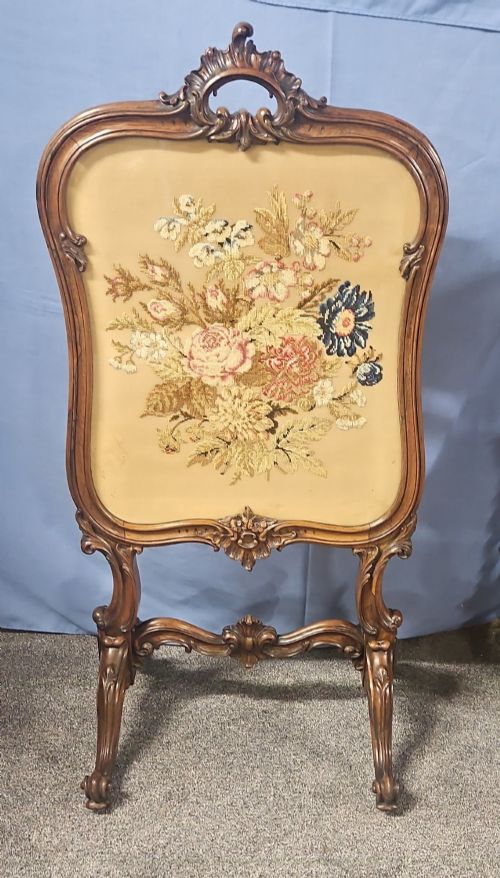
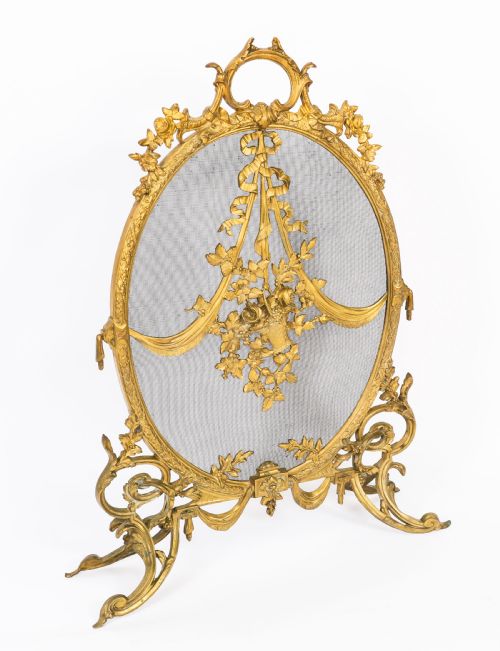
You are most likely to meet French and Victorian examples from the nineteenth century, including designs described as Louis XIV revival, Louis XV style, and Victorian rococo revival. They appear as brass or gilt bronze frames fitted with wire mesh, or carved wooden frames housing figural tapestry and wool panels.
Materials and construction
Metal versions utilise cast and pierced brass or gilt bronze to achieve sweeping asymmetrical curves, often incorporating wire mesh or dolphin motifs within the openwork frame. Walnut and oak provide the timber structures for heavier carved screens.
Textile panels rely on wool and tapestry work, mounted inside carved wooden or metal surrounds to add colour and texture to the domestic interior.
Rococo Revival Hearth Guard Retail Price Guide 2026
Typical asking prices for rococo revival hearth guard among the pieces listed under this phrase on Sellingantiques today, from the lower quarter to the upper quarter. They describe what is for sale here now, not the wider market.
Listings feature items spanning the 19th century, incorporating brass, wire mesh, walnut, wool, tapestry, glass, oak, and gilt brass.
Judging quality
Quality rests on the crispness of the cast metal ornamentation and the depth of the timber carving. Fluid, organic scrollwork and finely detailed motifs separate superior examples from simpler production.
The integration of materials also defines the standard, such as the tightness of wire mesh weaving or the complexity and condition of the figural tapestry panels held within the frame.
The Rococo Revival Hearth Guard Glossary
- Hearth guard
- A protective screen placed in front of a fireplace to manage heat and sparks. It also serves a decorative purpose when the hearth is not in use.
- Rococo Revival
- A nineteenth-century design movement that revives the flamboyant, asymmetrical scrolls and shell motifs of the eighteenth-century French style.
- Wire mesh
- A woven metal grid fitted into fire screen frames to contain embers while maintaining visibility of the fire. It forms a durable barrier against stray sparks.
- Tapestry panel
- A heavy textile woven with pictorial or geometric designs, frequently mounted centrally within wooden or metal fire screen frames.
Rococo Revival Hearth Guard: Frequently Asked Questions
What is a hearth guard used for?
A hearth guard stands before the fireplace opening to block intense radiant heat and catch stray sparks from settling on the floor.
Beyond safety, these screens conceal an empty grate during warmer months and introduce decorative metalwork or textiles to the room.
How do I date a brass fire screen?
Dating relies on examining the casting techniques, fasteners, and stylistic indicators present in the metalwork and frame construction.
Nineteenth-century examples often display heavy cast brass with specific revival motifs characteristic of Victorian or French design periods.
Where should I place a fire screen?
Place the screen directly in front of the fireplace opening, ensuring it is stable on the hearth floor.
Position it to frame the hearth when the fire is unlit, or keep it nearby to use as a functional barrier during burning.
What styles are common in these screens?
Common styles include French rococo revival, Louis XIV revival, and Victorian interpretations featuring elaborate scrolling ornamentation.
These designs draw on historical European aesthetics, prioritising ornate metal casting and carved wood frames.