


Rococo Porcelain Bowl
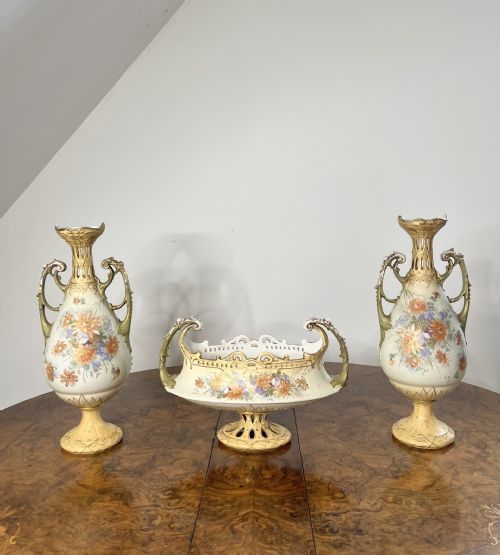
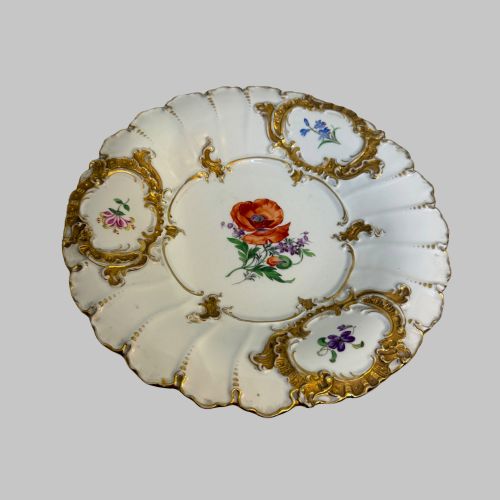
These rococo porcelain bowl selections bring together ornamental dishes and centrepieces shaped by spirited 18th-century curves and later Victorian revivals.
Rococo Porcelain Bowl
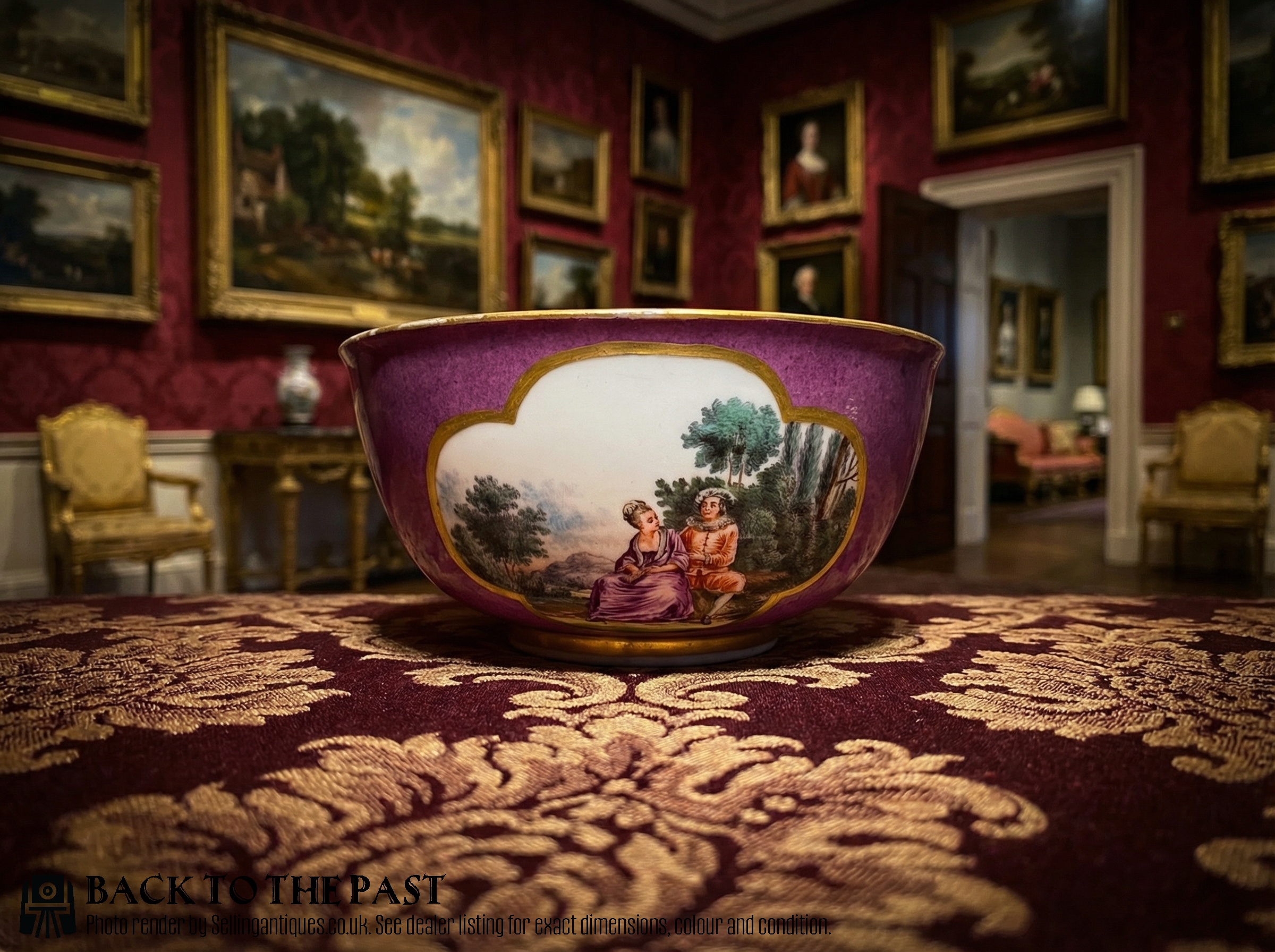
A rococo porcelain bowl encompasses decorative dishes, sweetmeat baskets, and grand centrepieces fashioned across the Georgian, Victorian, and early 20th-century periods.
The selections on this page range from 18th-century Georgian originals by factories such as Chelsea and Meissen to 19th-century revival pieces from continental potteries.
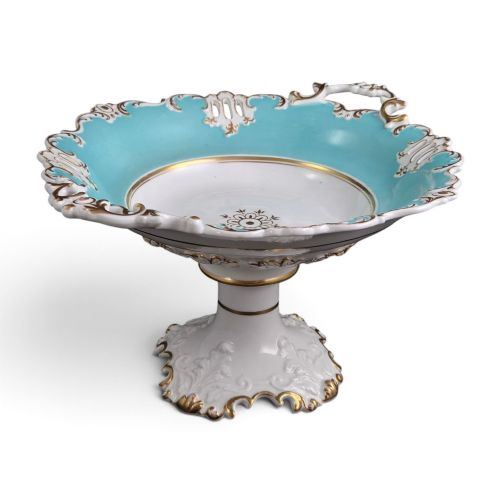
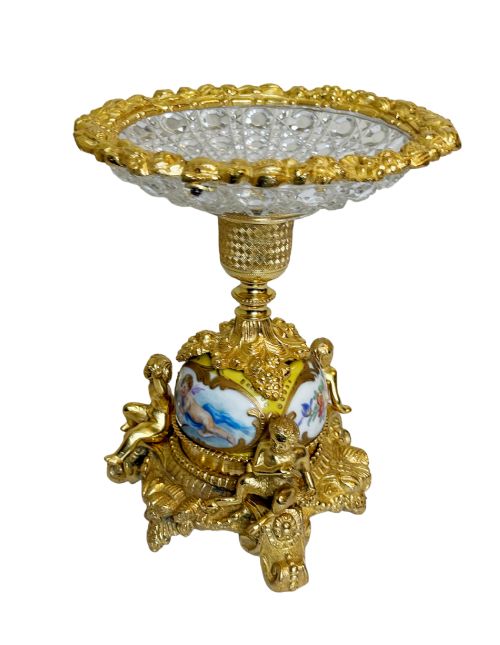
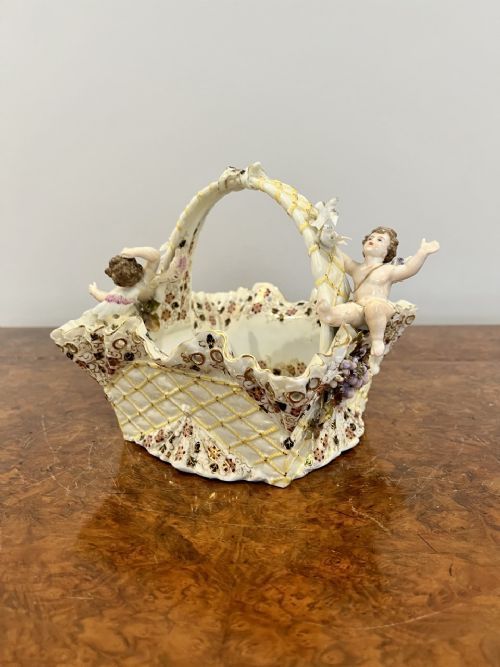
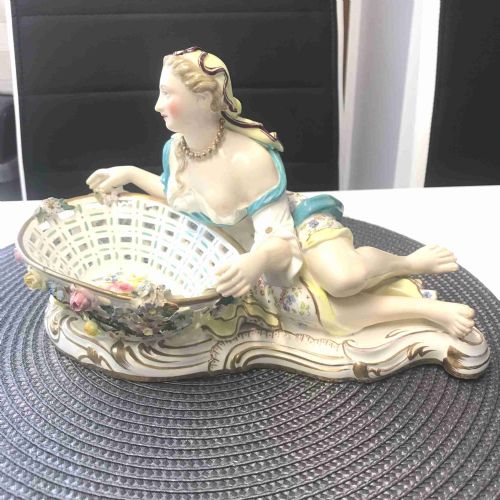
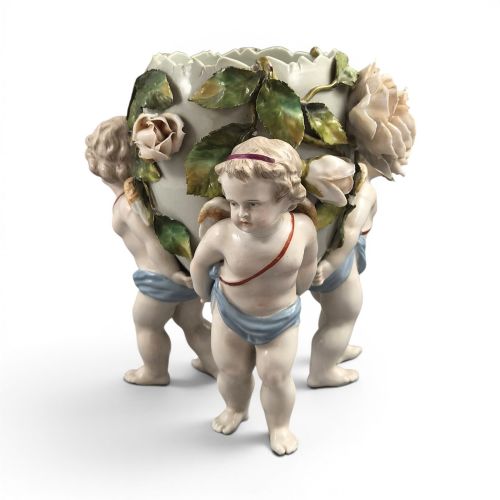
Forms span from openwork porcelain baskets and shaped tazzas to elaborately modelled centrepieces supported by cherubs and gilt bronze mounts.
How They Were Made
Makers utilised hard-paste and bone china bodies, shaped into asymmetrical scrolling contours characteristic of the style.
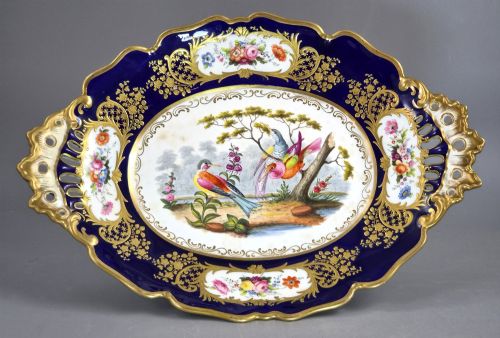
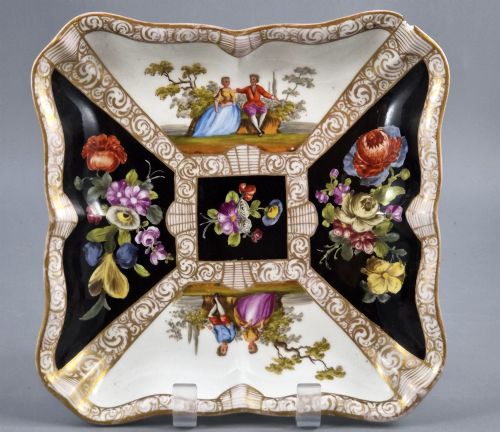
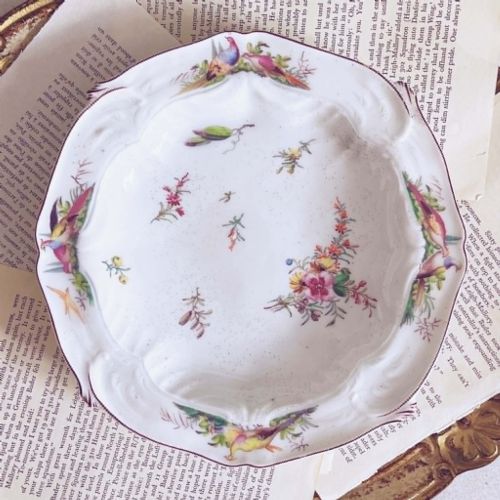
Surfaces received hand-painted polychrome bird and floral motifs, accented with gold leaf, enamel highlights, and heavy gilding.
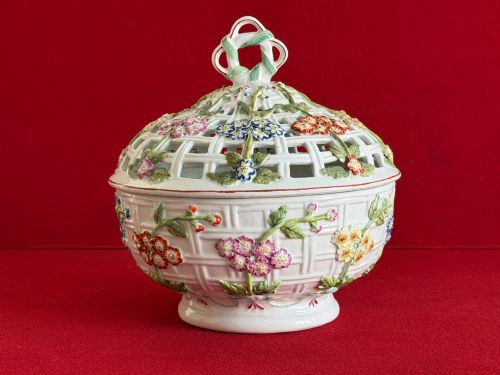
Complex centrepieces often combined moulded ceramic sections with gilt bronze hardware, cut crystal, and applied porcelain floral details.
Object forms include tazzas, soup dishes, potpourri lidded bowls, and elaborate fruit centrepieces supported by cherubs.
What Varies in Quality
Execution of hand-painted details separates ordinary production wares from pieces decorated with delicate Watteau scenes or intricate polychrome birds.
Plasticity and relief modelling in figural elements, such as cherubs and applied floral garlands, determine the sculptural ambition of a piece.
Coalport·Derby·Meissen·Chelsea·Royal Vienna·Mintons·Dresden·Paul Müller Selb·R.Wehsner·Royal Worcester·Volkstedt·Samson
The Rococo Porcelain Bowl Glossary
- Centrepiece
- A large ornamental vessel placed in the middle of a table for display or service. These often incorporate pedestals, figures, or openwork baskets.
- Tazza
- A shallow bowl or dish mounted on a stem and foot. This form elevates the display of fruit or sweetmeats.
- Sweetmeat dish
- A small vessel designed for confectioneries and sweet treats. They frequently appear in shaped or basket-woven porcelain forms.
- Hard-paste porcelain
- A durable ceramic composition fired at high temperatures using kaolin and petuntse. It forms the basis of many continental European tablewares.
- Gilding
- The application of gold leaf or gold paint to ceramic surfaces. It highlights moulded scrolls and rims.
Rococo Porcelain Bowl: Frequently Asked Questions
How do I identify a rococo revival bowl?
Look for asymmetrical C-scrolls, shell motifs, and elaborate mouldings rather than strict classical symmetry. These pieces often feature playful figures like cherubs alongside floral painting.
Such ornamentation draws directly upon mid-18th-century French design principles, revived with enthusiasm during the Victorian and Edwardian eras.
Were these bowls meant for food?
Many larger examples served decorative functions as centrepieces or potpourri containers rather than practical tableware. Smaller dishes held sweetmeats, fruit, or cream during formal dining.
Their delicate openwork and applied porcelain flowers made them primarily ornamental displays for wealthy households.
How do I distinguish 18th-century pieces from later revivals?
Early pieces from factories like Chelsea or Meissen show distinct paste characteristics and hand-mixed pigments typical of early porcelain manufacture. Later 19th-century revivals often display heavier moulded details and different factory marks.
Examining the footrim and glaze pooling helps clarify the period of production.