
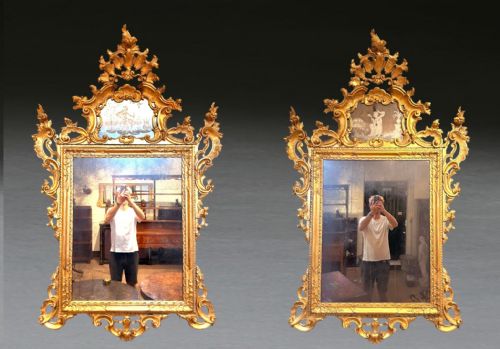
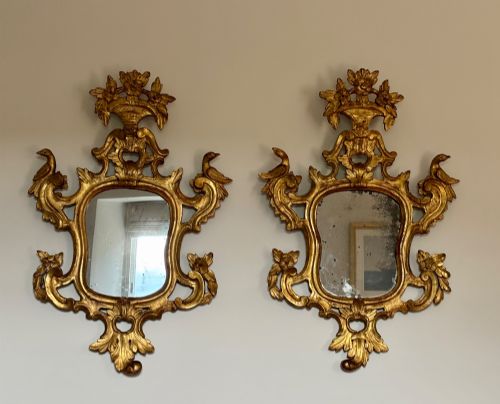
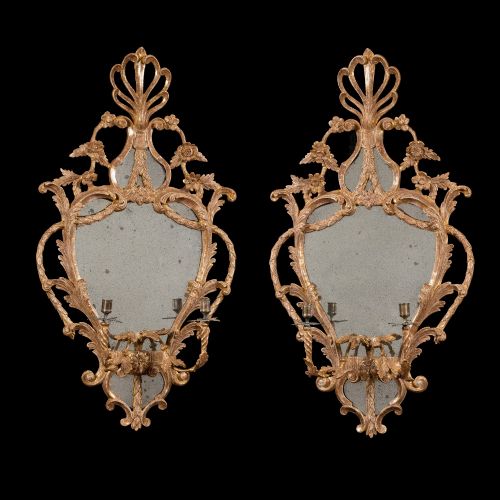
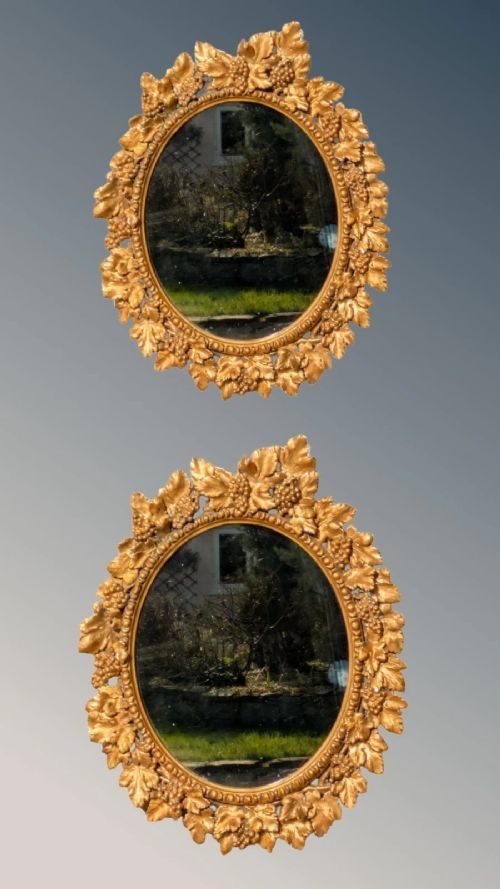




Rococo Giltwood Mirror Pair
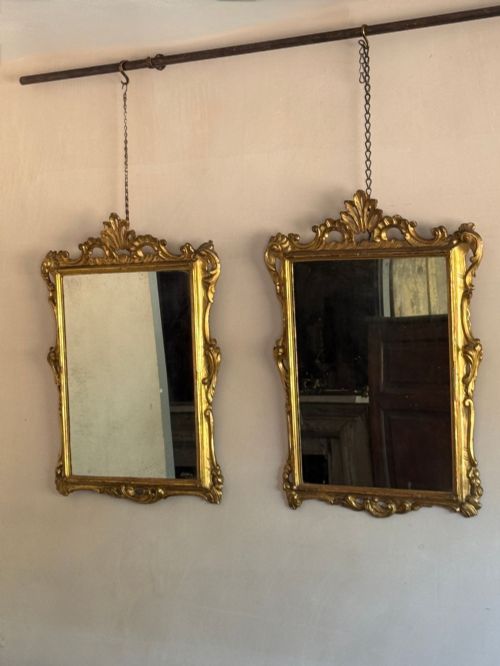
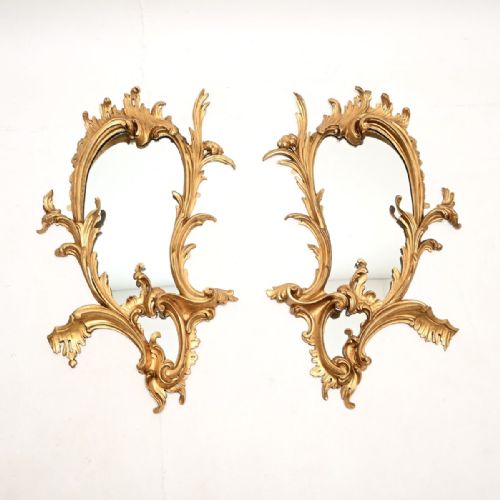
A rococo giltwood mirror pair brings matched reflective light and ornate carved frames into a room, spanning 18th century originals to later revival pieces.
Rococo Giltwood Mirror Pair
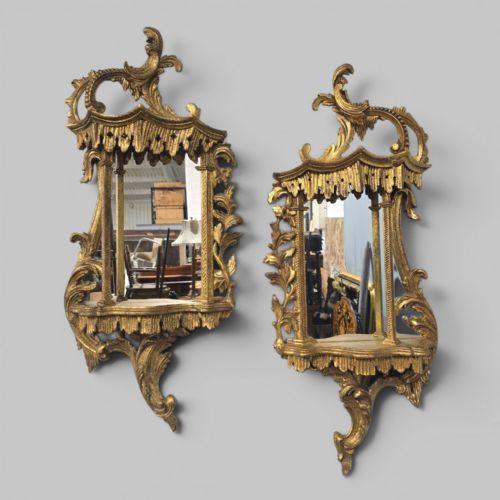
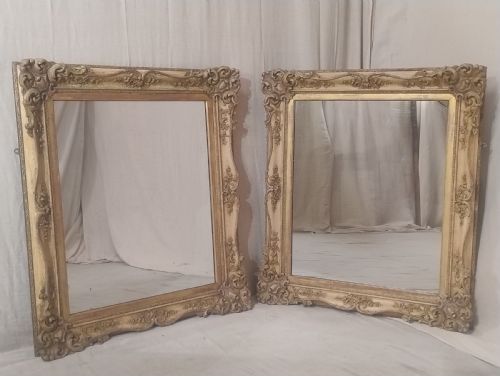
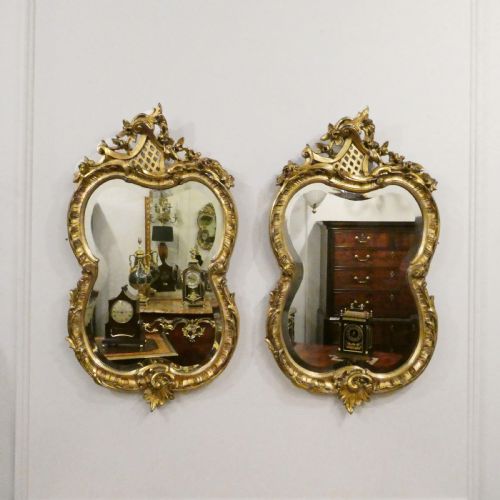
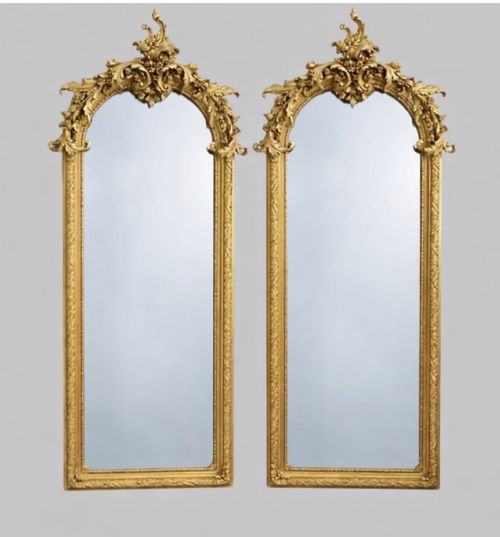
A rococo giltwood mirror pair consists of matched wall-hanging looking glasses designed to face each other or flank a fireplace, window, or piece of furniture. These matching pairs frequently appear as Italian, French, or Georgian works spanning the 18th century, the 19th century, and early 20th century revivals.
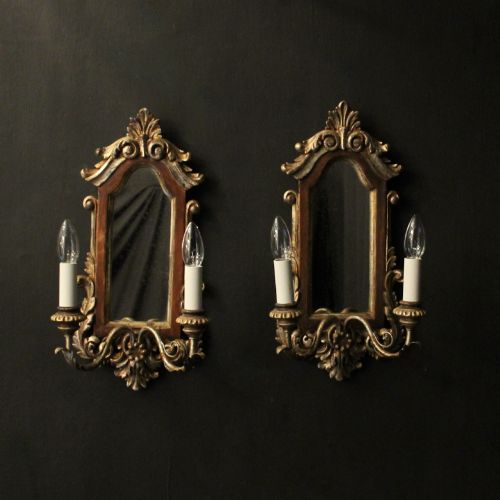
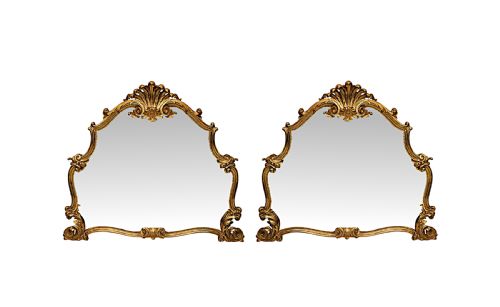
The forms on this page include wall mirrors, overmantel or pier mirrors, and girandoles fitted with candle arms. Regional styles range from Venetian and Florentine variations to Chinese Chippendale interpretations and Louis XV mannerisms.
Most examples rely on carved wooden frames finished with gold leaf or gesso, whilst occasional pieces incorporate polychrome highlights or parcel gilt details. Buyers encounter everything from oval frames to large rectangular compositions bearing vine leaf motifs and scrollwork.
Materials and construction
Carved wood forms the structural foundation of these frames, providing the deep relief and asymmetrical scrollwork characteristic of the style. Artisans then applied gesso as a smooth preparatory layer over the timber before laying down gold leaf.
Mirror glass is mounted within the carved and gilded rebates, occasionally accompanied by brass candle sconces on girandole models. Plaster also appears in decorative mouldings across various 19th and 20th century revival examples.
Current listings feature pieces spanning the 18th century, the Victorian era, and the 1920s, constructed from giltwood, gesso, and glass.
Judging quality in gilded mirrors
Quality rests upon the crispness of the wood carving and the depth of the gesso work beneath the gold leaf. Hand-carved 18th century originals display fluid, confident asymmetry that mechanical or later cast plaster reproductions cannot replicate.
The preservation of the original gilding and the character of the mirror glass itself determine the standing of a piece. Subtle wear to the gold leaf revealing the warm red bole underneath indicates genuine age and traditional water-gilding techniques.
The Rococo Giltwood Mirror Pair Glossary
- Giltwood
- Wood that has been coated with gold leaf or powder. This finish ages to a soft, warm lustre.
- Girandole
- A decorative wall mirror fitted with one or more arms for holding candles. These arms bounce additional light around the room.
- Gesso
- A plaster mixture applied to wood frames to create a smooth surface for gilding. It allows for intricate relief moulding.
- Pier Mirror
- A tall mirror designed specifically to hang on the wall space between windows. They often stand above matching console tables.
- Overmantel Mirror
- A wide mirror made to hang directly above a fireplace mantelpiece. These pieces frequently dictate the decorative scale of a drawing room.
Rococo Giltwood Mirror Pair: Frequently Asked Questions
Where should I hang a mirror pair?
Matched pairs look best positioned symmetrically on either side of a central architectural feature such as a fireplace, a doorway, or a large window. Placing them opposite one another across a room doubles the sense of light and space.
Ensure the hanging height allows the centre of the glass to align roughly with eye level. This positioning balances the visual weight of the carved frames against surrounding furniture.
What is a girandole mirror?
A girandole is a specialised wall mirror featuring integrated candle sconces attached directly to the frame or base. Historically, the candles lit the room while the mirrored glass amplified the flickering illumination.
Today, surviving examples retain their brass or carved wooden arms, functioning as dramatic decorative focal points even without candles.
How do I spot a later revival piece?
Revival pieces from the 19th and 20th centuries often adopt earlier French or Italian styles like Louis XV or Baroque. Examination of the timber types, fixing methods, and the composition of the gesso usually reveals the true period of manufacture.
Machine-cut backing boards and modern mirror plates indicate later assembly, whereas hand-beveled glass and old pine or chestnut frames point toward 18th century origins.