
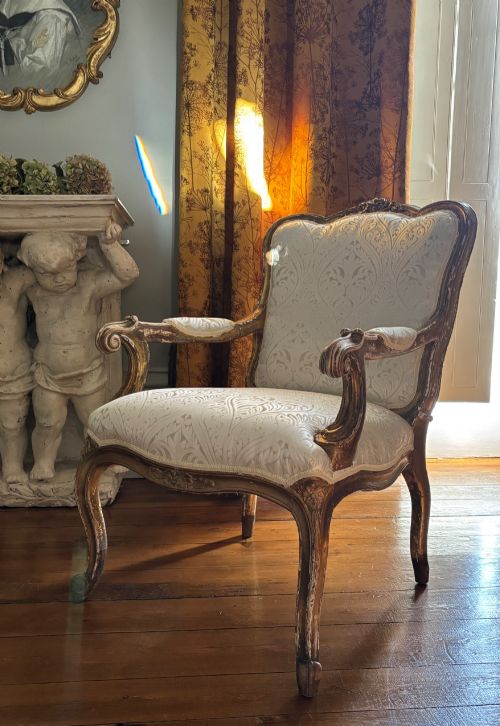
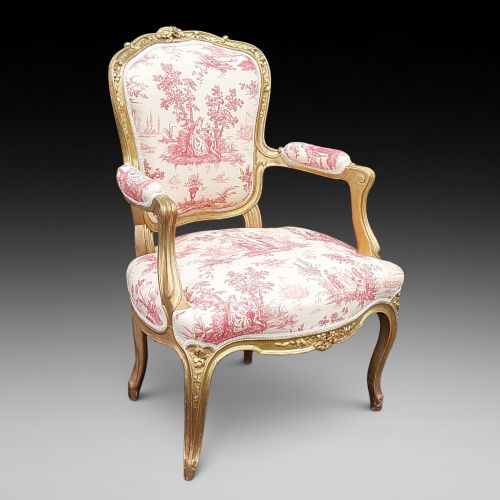
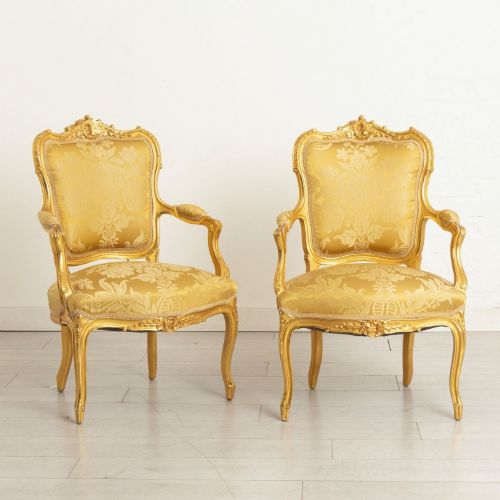


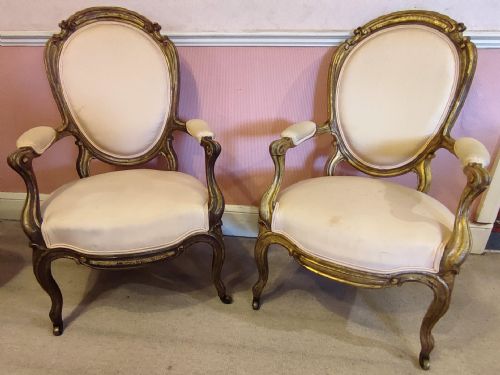

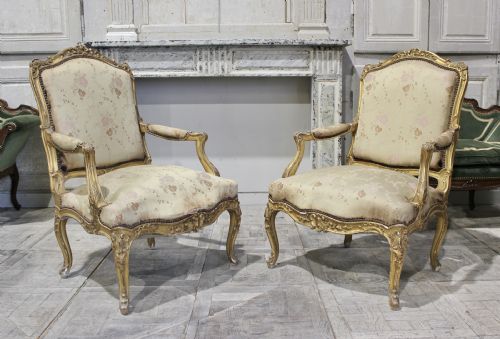
Rococo Giltwood Fauteuil
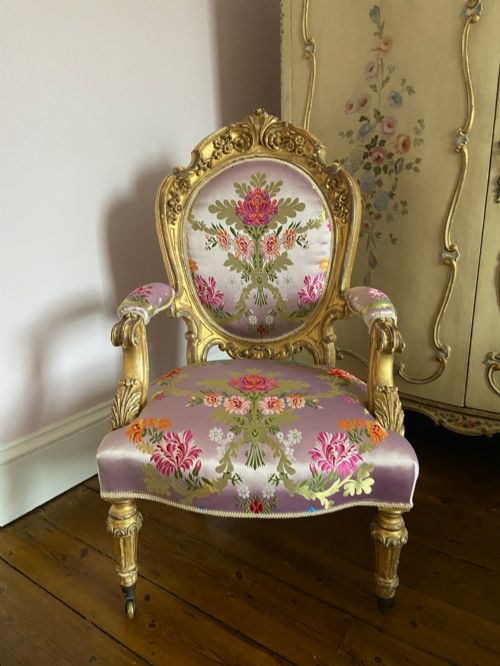
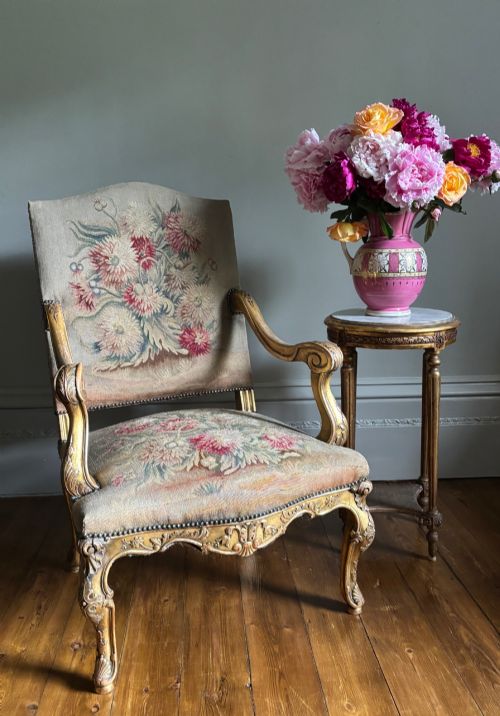
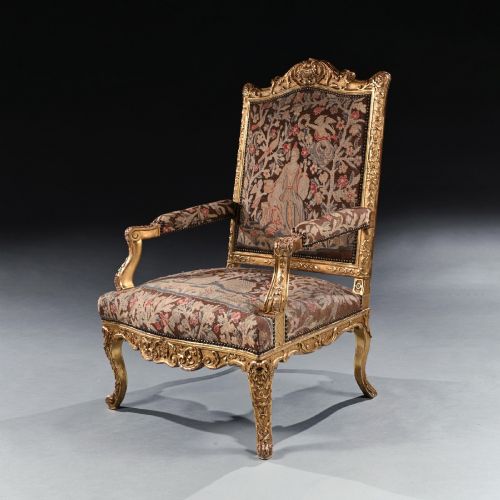
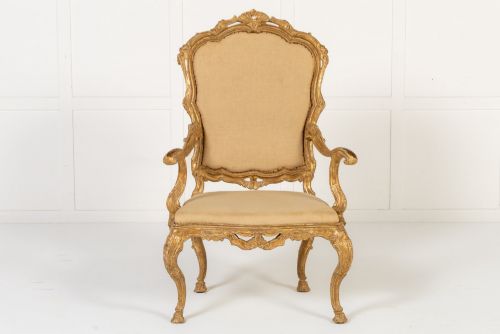
These rococo giltwood fauteuil armchairs bring sculptural French and Italian elegance into a room with curved lines and gilded surfaces.
Rococo Giltwood Fauteuil
When searching for a rococo giltwood fauteuil, collectors encounter open armchairs originating mainly from the eighteenth and nineteenth centuries, spanning French and Italian regional variations alongside later revival styles.
The selections here range from eighteenth-century examples to nineteenth-century interpretations, including Napoleon III pieces and salon suites, alongside dining chairs and individual open armchairs.
Makers and designers referenced in these pieces point towards traditional continental workshops, with particular styles echoing historical figures such as Blaise Maucuy.
Materials and construction methods
Makers formed the structural frames of these armchairs from timber bases including beech, beechwood, walnut, and general carved wood, which provided the necessary strength for ornate shaping.
Surface decoration relied upon applied gilding to create the characteristic giltwood finish, sometimes accompanied by silver gilt or painted highlights.
Upholstery treatments utilise traditional textiles such as silk damask, tapestry, and various woven fabrics to cover the seats and backs.
Listings feature pieces spanning the eighteenth century, the nineteenth century, and the Edwardian era, constructed from beech, walnut, and carved wood.
Distinctions in quality
The depth and fluidity of the carved wood ornamentation separate standard production from superior examples, as skilled carvers achieved naturalistic asymmetry and crisp botanical motifs.
The application and preservation of the giltwood surface layer determine the visual impact, where burnished gold leaf reflects light differently than flat or modern metallic paints.
The integrity of the original frame construction and the quality of the selected textiles, whether silk damask or traditional tapestry, mark the distinction between high-status salon seating and simpler utility chairs.
Blaise Maucuy
The Rococo Giltwood Fauteuil Glossary
- Fauteuil
- An open-armed upholstered armchair originating in France, traditionally designed for formal salon use with exposed wooden frames.
- Giltwood
- Timber that has been coated with a thin layer of gold leaf or powder over a prepared gesso and bole ground.
- Regence
- A transitional stylistic period bridging seventeenth-century baroque and eighteenth-century rococo, noted for lighter proportions and burgeoning curvework.
- Napoleon III
- A nineteenth-century French revival style drawing heavy inspiration from past royal courts, particularly Louis XIV, XV, and XVI aesthetics.
- Salon suite
- A matching set of seating furniture comprising armchairs and side chairs intended to furnish a formal reception room.
Rococo Giltwood Fauteuil: Frequently Asked Questions
What is a rococo giltwood fauteuil?
A rococo giltwood fauteuil is an open-armed wooden armchair featuring the curved, asymmetric carving typical of the eighteenth-century movement and finished with a gilded surface.
These chairs served as principal seats in formal rooms, combining carved decoration with upholstered comfort.
How do I date a giltwood armchair?
Dating relies upon examining the sharpness of the wood carving, the construction joints, and the characteristics of the gesso and gold leaf application.
Eighteenth-century examples display hand-carved nuances, while nineteenth-century revival pieces often replicate these forms with machine-assisted precision or different assembly methods.
Where should I place a fauteuil?
These armchairs suit reception rooms, drawing rooms, or bedrooms as decorative focal points that also offer functional seating.
Because the carved giltwood frames and upholstered textiles are sensitive to direct sunlight and heavy wear, placement away from windows and high-traffic corridors preserves the materials.
What is the difference between eighteenth-century and revival pieces?
Eighteenth-century pieces carry the authentic wear, timber ageing, and hand-tooled execution of the original period of design.
Revival versions, produced during the nineteenth century, emulate those earlier proportions and motifs using the manufacturing techniques of their own era.