
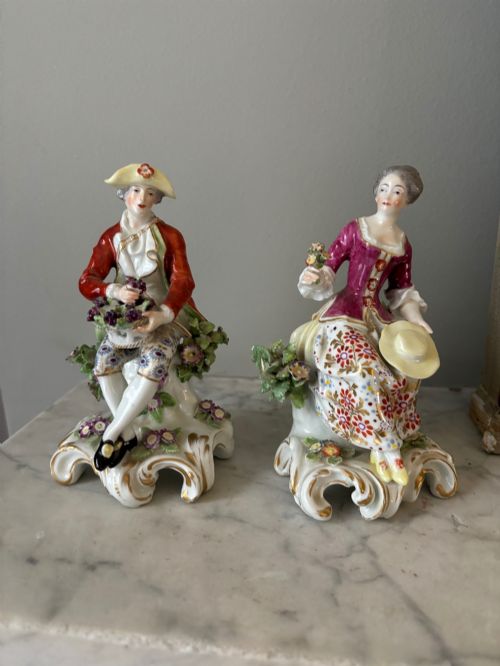


Rococo Ceramic Statuette
A rococo ceramic statuette brings the theatrical charm of the eighteenth century to a mantelpiece through modelled porcelain figures.
Rococo Ceramic Statuette
When you search for a rococo ceramic statuette, you are looking at small sculptural figures depicting human subjects, allegories, or pastoral characters modelled in clay and fired. The pieces on this page span the eighteenth century, including the Georgian period, alongside nineteenth-century revivals in Rococo and Victorian styles.
The subjects range from allegorical representations of the seasons and elements to musicians, gardeners, and street traders. You will encounter both single figures and grouped arrangements, often drawing inspiration from French and English models of the mid-eighteenth century.
What varies in quality
Early eighteenth-century pieces from factories like Meissen or Derby display confident potting and subtle enamel palettes, whereas later nineteenth-century revival pieces from continental potteries vary in the precision of their gilding and the vitality of their painted expressions.
Pastoral musicians charm collectors by playing hurdy-gurdies and bagpipes to an audience of attentive porcelain sheep.
Meissen·Derby·Bow·Longton Hall·Edme Samson·Volkstedt·Vion & Baury·Chantilly·Sitzendorf·Ludwigsburg·Fürstenberg
The Rococo Ceramic Statuette Glossary
- Hard-paste porcelain
- A dense, vitreous ceramic material composed of kaolin and petuntse fired at high temperatures. It resists scratching and provides a bright white body for enamel colours.
- Soft-paste porcelain
- An artificial porcelain composition fired at lower temperatures, popular in early English factories like Bow and Chelsea. It has a warmer, softer glaze that absorbs enamels pleasingly.
- Biscuit porcelain
- Unglazed fired porcelain that resembles white marble with a matte finish. It gained popularity in France for highlighting sculptural form.
- Gilding
- The application of gold leaf or powdered gold to highlights on garments and bases. It accentuates the decorative elements typical of the period.
- Enamel
- Coloured vitreous glass fused to the porcelain surface during a secondary kiln firing. It provides the permanent polychrome decoration on garments and faces.
Rococo Ceramic Statuette: Frequently Asked Questions
How do I clean a porcelain figure?
Dust the surface gently with a soft, dry artist's brush to prevent dirt accumulation in the crevices of the modelling. Avoid using water or liquid cleaners, which can damage old enamel colours and gilding.
Keep the pieces out of direct sunlight to protect the hand-painted enamels from fading over time. Handle them only by the sturdy parts of the base rather than delicate applied flowers or limbs.
Are eighteenth and nineteenth-century pieces marked?
Many factories used painted or impressed marks on the underside, such as crossed swords for Meissen or anchor motifs for Chelsea and Samson. However, early pieces were frequently unmarked or bore secondary workman symbols.
Absence of a mark does not preclude age or quality, as stylistic indicators and paste characteristics often provide clearer attribution.
Why are some figures unglazed?
Unglazed pieces are made of biscuit porcelain, which offers a matte, chalky surface resembling marble. This technique was favoured for highlighting fine sculptural details without the softening effect of a glossy glaze.
French factories utilised this method extensively during the late eighteenth and nineteenth centuries to achieve a classical, refined appearance.
How can I tell an eighteenth-century piece from a nineteenth-century copy?
Eighteenth-century figures typically show greater lightness in the paste, subtle variations in hand painting, and wear consistent with age. Nineteenth-century revival pieces often feature heavier porcelain bodies and brighter, more uniform enamel application.
Examining the underside and the sharpness of the mould lines helps reveal the period of manufacture and the working methods of the factory.