



Rococo Carved Wall Table
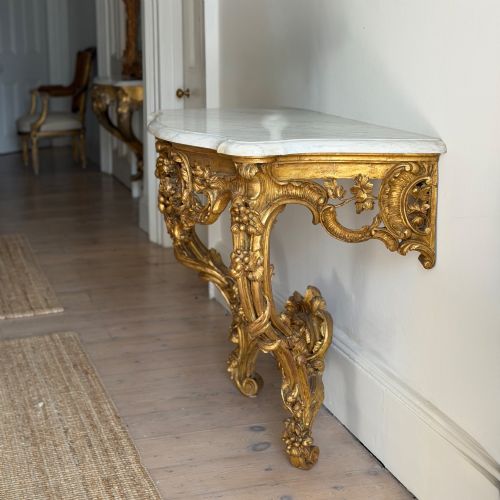
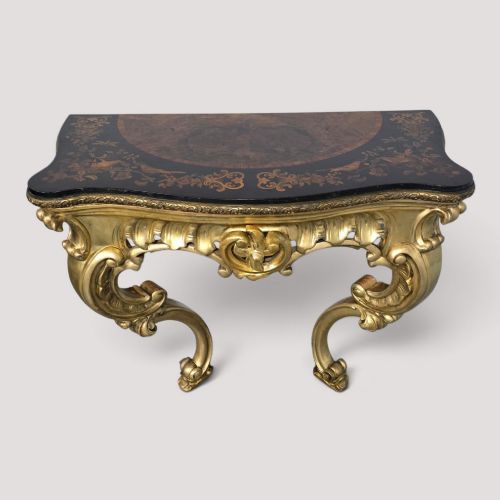
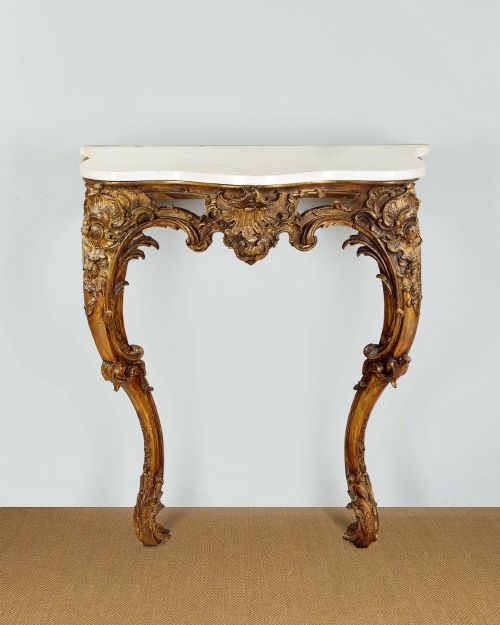
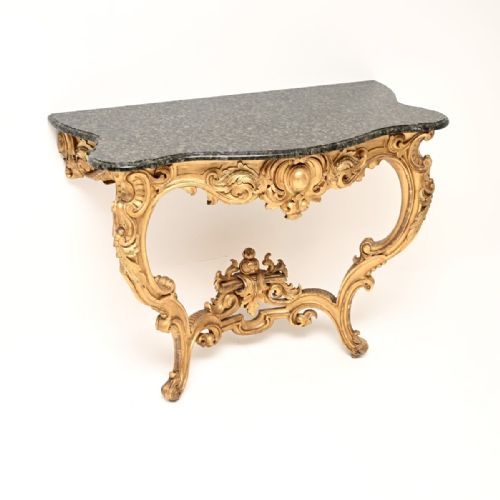
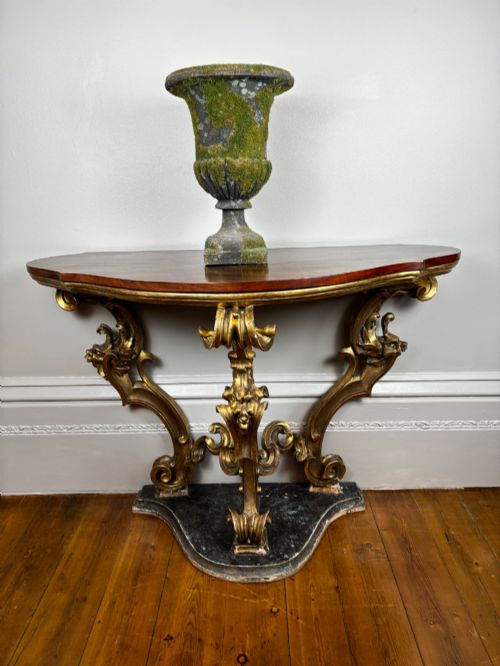
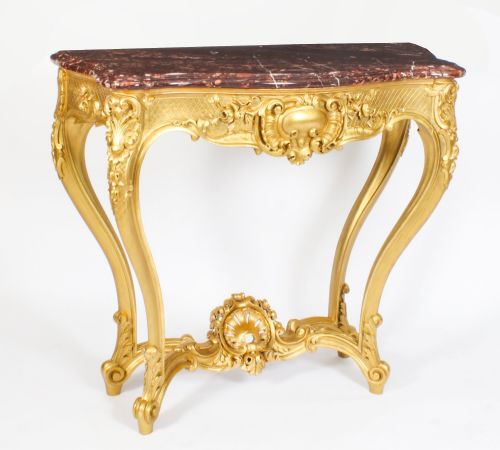
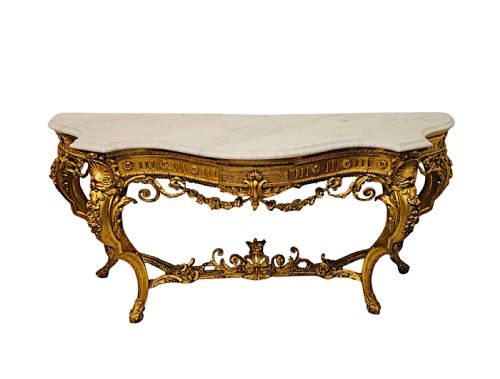
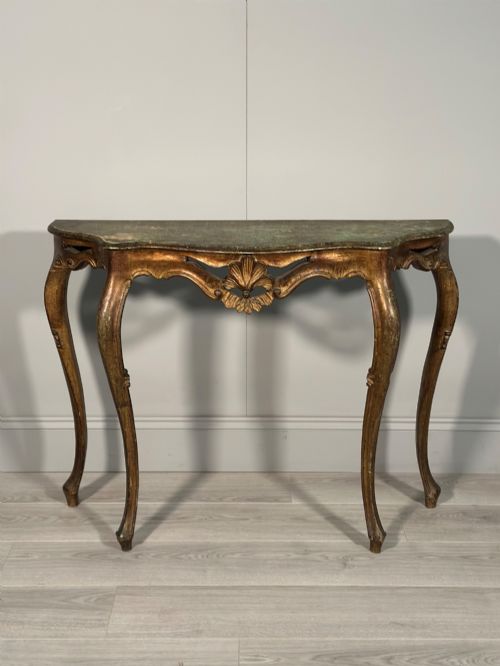
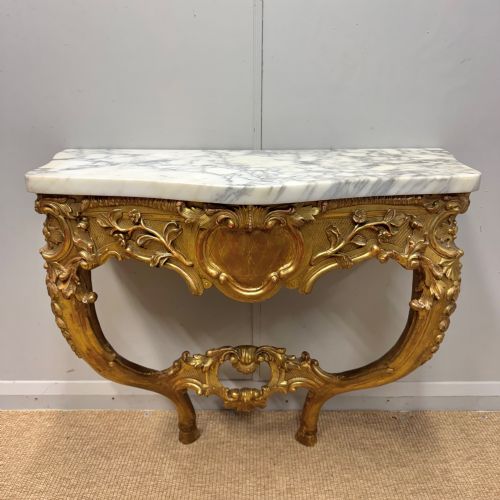
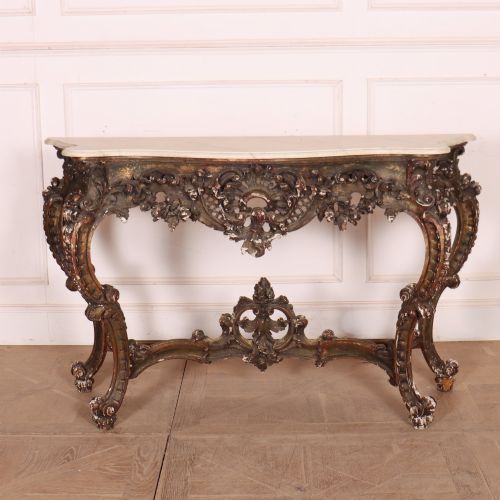
These rococo carved wall table examples bring dramatic French and Italian forms into a room, combining sculpted giltwood and marble.
Rococo Carved Wall Table
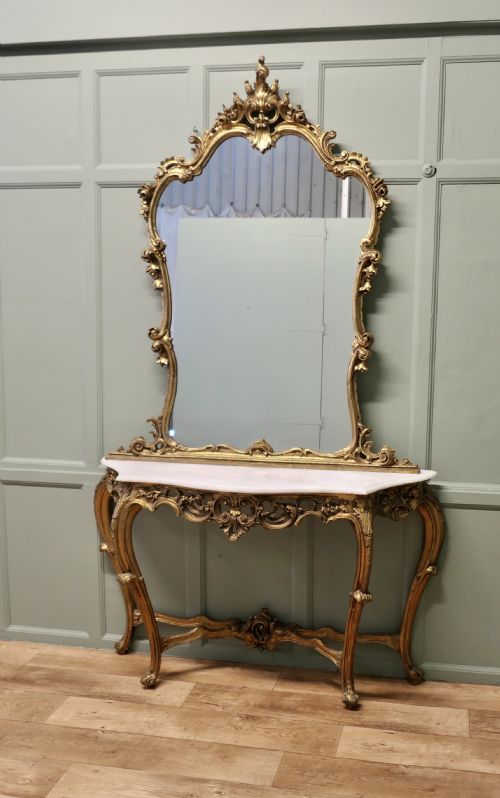
A rococo carved wall table is a console designed to fix against a wall, frequently paired with a matching overmantel or pier mirror. The form relies on asymmetrical scrolls, C-scrolls, and naturalistic shell motifs derived from mid-eighteenth-century design.
The pieces appearing most often on this page span the eighteenth, nineteenth, and early twentieth centuries, reflecting major revivals in France and Italy. Console tables and side tables dominate the selection, heavily weighted towards French Rococo and Italian Rococo expressions.
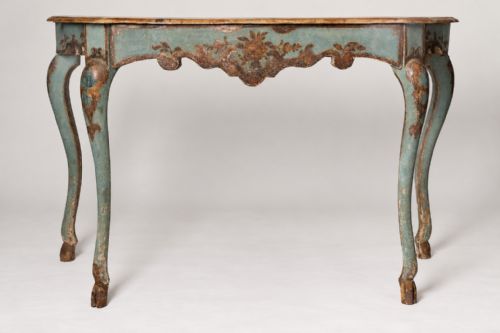
Buyers encounter substantial examples featuring shaped marble tops alongside more modest painted or gilded versions. Many pieces demonstrate the enduring popularity of Louis XV revival aesthetics across various decades of the nineteenth and twentieth centuries.
Materials and construction
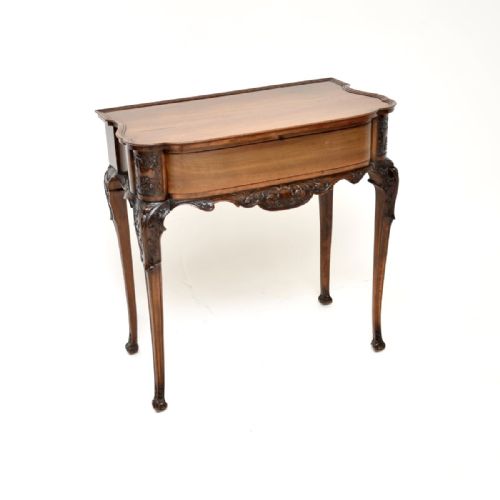
Carved wood forms the structural core of these tables, frequently layered with gesso before receiving an application of gold leaf or silver gilt. Walnut, mahogany, and general softwood serve as the underlying timbers beneath the decorative surface finishes.
Marble tops, including white Carrara and figured varieties like breche d'alep, rest upon the carved wooden frames to provide a heavy, durable surface. Paint finishes appear alongside traditional gilding, particularly on later French and Italian interpretations.
Rococo Carved Wall Table Retail Price Guide 2026
Typical asking prices for rococo carved wall table among the pieces listed under this phrase on Sellingantiques today, from the lower quarter to the upper quarter. They describe what is for sale here now, not the wider market.
The listings span from the eighteenth century through the 1930s, featuring walnut, mahogany, and painted finishes alongside traditional giltwood.
Assessing quality
Depth and crispness of the wood carving distinguish superior examples from simpler production. Hand-carved flourishes show vitality in the asymmetry and undercut foliage, whereas lesser pieces display flat, mechanical repetition.
The integration between the stone top and the wooden frieze indicates overall craftsmanship. High-grade items feature heavy, correctly profiled marble slabs that fit the shaped rails precisely without gaps.
Maple and Co
The Rococo Carved Wall Table Glossary
- Console table
- A table designed to be fixed against a wall, frequently supported by front legs while relying on wall attachment for stability. These pieces often feature elaborate aprons shaped to match the room's decorative scheme.
- Giltwood
- Timber coated with gold leaf over a prepared gesso and bole ground. This finish creates a luminous metallic surface that defines much of the rococo aesthetic.
- Gesso
- A plaster-like mixture applied to wood surfaces as a smooth base for gilding or painting. It allows craftsmen to crisp up fine decorative details before applying metal leaf.
- Serpentine
- A curved line that swells outward and then recesses inward, creating a wavy contour along the front edge of a table. This shaping is common in advanced rococo case furniture.
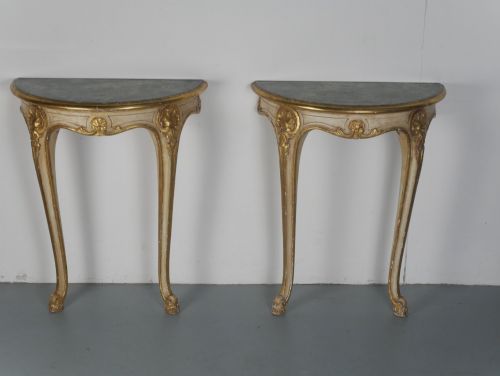
- Demi lune
- A half-moon or semicircular shape used for the footprint and top of specific console tables. The design suits flat placement against narrow hallway walls.
Rococo Carved Wall Table: Frequently Asked Questions
Where should a wall console go?
These tables suit hallways, drawing rooms, and dining areas where floor space is limited. They function effectively beneath large mirrors or paintings to create a focal point.
Because they attach directly to the wall for stability, positioning requires a solid anchor point. The narrow depth allows passage in tighter corridors without obstruction.
How do I spot a revival piece?
Nineteenth-century revival pieces often utilise machine-sawn timbers and denser gesso applications compared to their eighteenth-century predecessors. Tool marks and construction hardware help establish the true age of the timber.
Stylistic proportions also shift slightly across periods, with nineteenth-century makers sometimes exaggerating the asymmetry of original Louis XV designs.
Are marble tops original to the tables?
Many console tables retain their heavy marble slabs, shaped to match the serpentine contours of the wooden frieze below. Replacement marble is common due to the weight and fragility of the stone.
Examining the underside of the top reveals mounting evidence and whether the stone rests securely on original block supports.
How do I care for giltwood?
Giltwood surfaces require gentle dusting with a dry, soft cloth to avoid damaging the delicate gold leaf layer. Moisture and abrasive cleaners strip the historic finish entirely.
Keeping these tables away from direct sunlight and heat sources preserves the underlying gesso and prevents wood movement.