

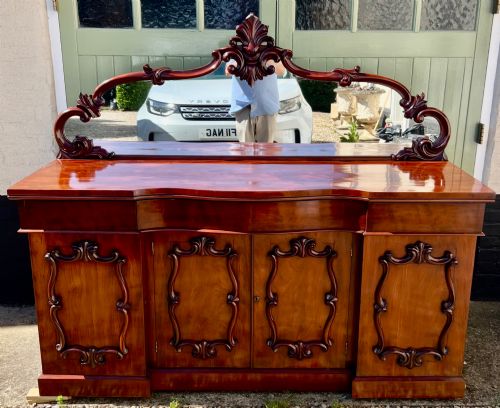


Rococo Carved Mahogany Cabinet
A rococo carved mahogany cabinet brings asymmetric scrollwork and rich timber to a room, offering both display space and concealed storage.
Rococo Carved Mahogany Cabinet
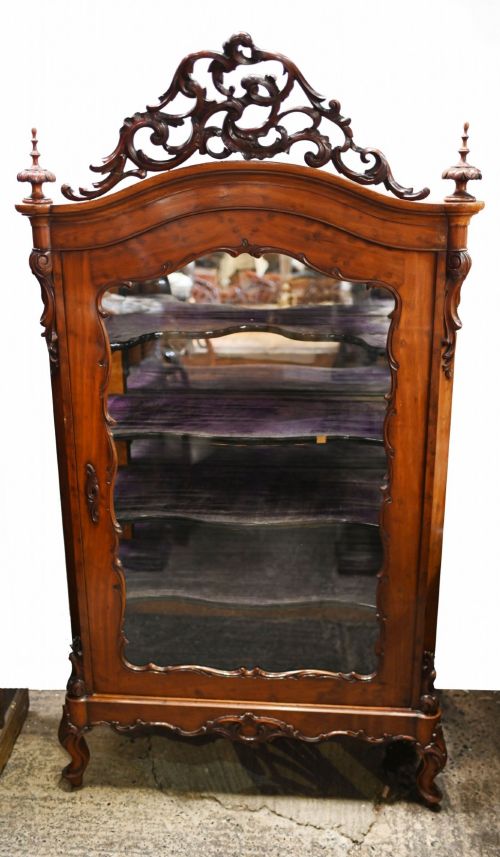
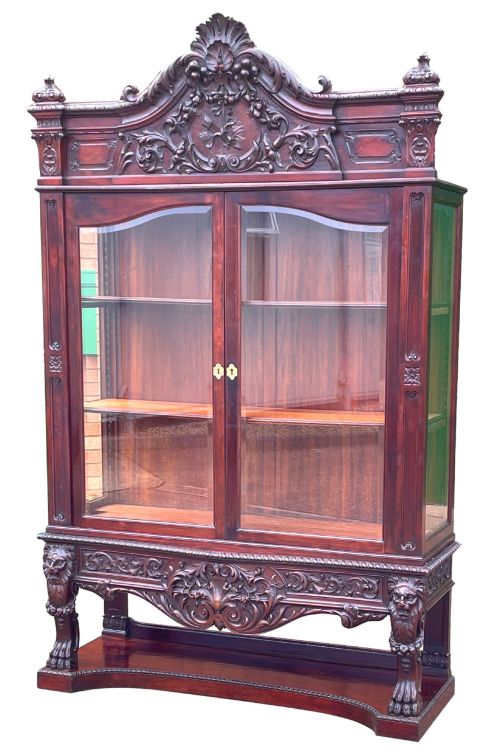
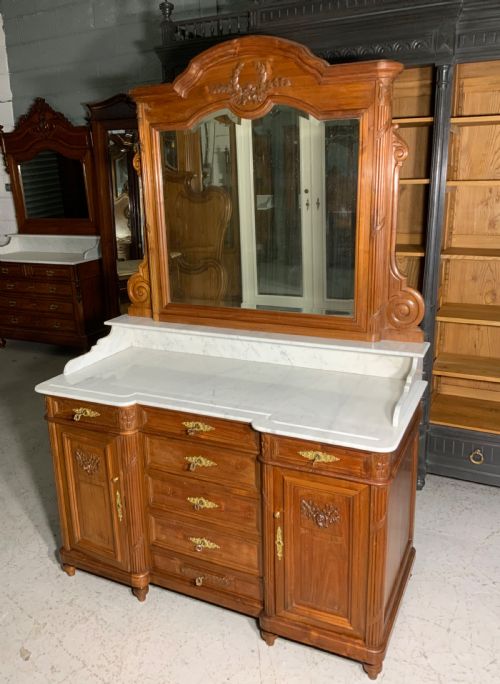
A rococo carved mahogany cabinet combines organic, flowing scrolls with the dense grain of mahogany timber, emerging in forms such as display cabinets, corner units, and sideboards. These pieces span the eighteenth century through the Victorian era, drawing on Chippendale, French Rococo Revival, and Louis XV styles. The selection includes side cabinets, bookcases, washstands, and mirrored whatnots alongside traditional display vitrines.
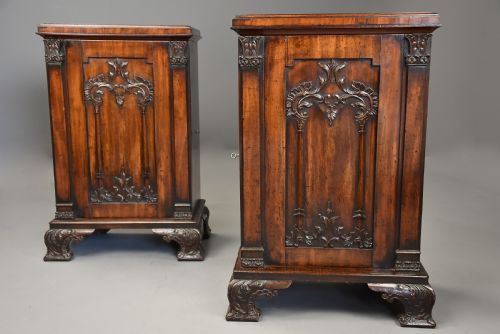
Buyers will encounter variations ranging from mid eighteenth century Chippendale pedestal cabinets to nineteenth century French display cabinets and Victorian sideboards. The forms encompass two-door side cabinets, corner units in rustic mahogany, and secretaire bookcase cabinets dating from around eighteen fifty. Smaller iterations include pedestal cabinets and French washstands from nineteen ten.
The aesthetic leans heavily on French Chateau and Louis XV Revival influences, characterised by exuberant carved detail and curved silhouettes. While some examples remain utilitarian like the coal depot, others focus entirely on presentation with glass doors and mirrored backs. Every piece shares a reliance on mahogany, whether solid timber or flame mahogany veneer.
Construction and materials
Makers utilised solid mahogany and flame mahogany veneer over structural timbers, applying glass for vitrine doors and marble where functional surfaces were required. Brass hardware and fabric linings appear on display pieces, while mirrors feature in the backplates of whatnots and sideboards. The timber is worked to highlight natural figure and deep reddish-brown tones.
Carving defines the style, executing asymmetric C-scrolls, acanthus leaves, and naturalistic shell motifs directly into the solid wood. Cabinetmakers constructed these forms using traditional joinery, housing glass panels within slender wooden frames and mounting doors on brass hinges. Flame mahogany veneer is book-matched across larger surfaces like sideboard doors to create symmetrical patterns in the grain.
Rococo Carved Mahogany Cabinet Retail Price Guide 2026
Typical asking prices for rococo carved mahogany cabinet among the pieces listed under this phrase on Sellingantiques today, from the lower quarter to the upper quarter. They describe what is for sale here now, not the wider market.
Listings feature mahogany, glass, brass, marble, and fabric across periods spanning the eighteenth, nineteenth, and twentieth centuries.
Distinctions in quality
Quality rests upon the depth and precision of the hand carving, where crisp undercut scrollwork distinguishes finer workshops from mechanical or shallow execution. The selection of timber also dictates standing, with figured flame mahogany veneer showing superior grain movement compared to plain stock. Proportion and the integration of decorative elements determine whether the piece holds visual balance.
Hardware and secondary materials signal grade, with substantial brass mounts and heavy cast glass panels outperforming lighter modern replacements. Construction integrity within the carcass, drawer linings, and backboards separates robust everyday furniture from lighter decorative items. Surviving original glass and uncompromised surface finish elevate a piece within its period.
The Rococo Carved Mahogany Cabinet Glossary
- Flame mahogany
- A veneer figure produced by cutting across the branch junction of the tree, creating swirling, flame-like patterns in the timber grain. This highly decorative cut appears on prominent surfaces of revival and Georgian furniture.
- Vitrine
- A glass-fronted display cabinet designed for the exhibition of porcelain, curiosities, or books. These pieces often feature glazed sides and mirrored interiors to maximise light reflection.
- Whatnot
- An open set of tiered shelves used for displaying small decorative objects, frequently fitted with a mirror or a small enclosed cabinet base. The form gained popularity during the Victorian period.
- Pedestal cabinet
- A freestanding single-door cupboard designed to stand alone or flank a larger piece of furniture. Eighteenth century examples often display refined Chippendale proportions and dense mahogany construction.
- Louis XV Revival
- A nineteenth century design movement mimicking the curved lines, asymmetrical rocaille ornament, and organic motifs of mid eighteenth century French court furniture. It heavily influences the French style cabinets and vitrines of the period.
Rococo Carved Mahogany Cabinet: Frequently Asked Questions
What rooms suit a rococo carved mahogany cabinet?
These cabinets work well in dining rooms as sideboards or display units, and in living spaces where corner cabinets or whatnots add vertical interest. The rich timber tones anchor traditional interiors while providing practical storage or display.
Smaller forms like pedestal cabinets or washstands function effectively as bedside tables or accent pieces in hallways. Their decorative carved fronts allow them to serve as focal points against neutral walls.
How do I care for mahogany furniture?
Maintain mahogany surfaces by dusting regularly with a soft, dry cloth and avoiding silicone-based polishes that build up over time. Keep timber away from direct heat sources and strong sunlight to prevent the wood from drying out or fading.
Wax can be applied sparingly to nourish the grain and preserve the sheen of older finishes. Glass panels require standard window cleaner applied to a cloth rather than sprayed directly near the wooden frame.
How do I distinguish eighteenth century from Victorian pieces?
Eighteenth century cabinets, particularly those in the Chippendale style, typically exhibit restrained proportions, precise hand carving, and older construction methods within the drawer linings and carcase. The timber patination tends to show deeper, softer oxidation from age.
Victorian revival pieces often feature heavier construction, machine assistance in the mouldings, and brighter reddish tones in the mahogany. They frequently adopt bolder French Rococo Revival or Louis XV Revival motifs with more exaggerated curves.
What is the difference between a vitrine and a display cabinet?
A vitrine specifically denotes a glass-fronted cabinet designed for exhibition, often featuring glass on the sides and back mirror panels to illuminate objects from multiple angles. The term leans towards French-influenced furniture.
General display cabinets may include wooden side panels, lower enclosed storage cupboards, or simpler shelving arrangements. Both forms share the primary purpose of housing decorative collections safely behind glass.