


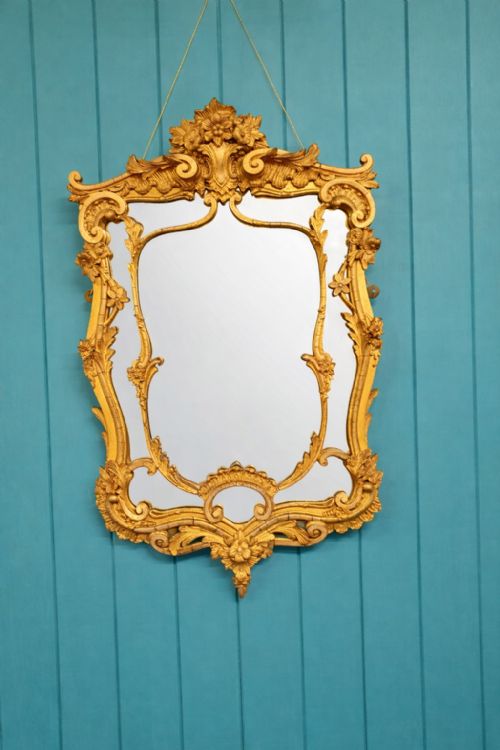
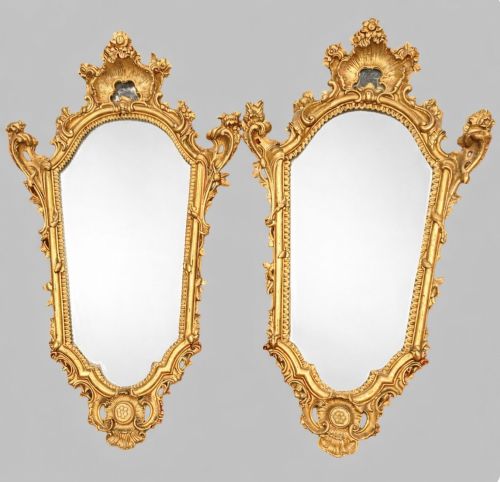


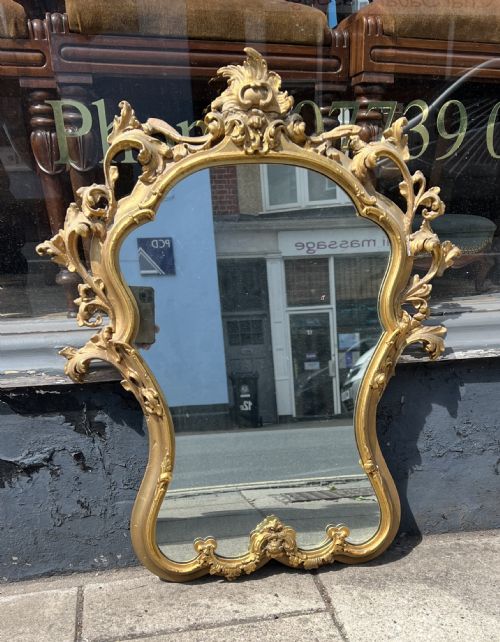


Rocaille Carved Gilt Mirror
These rocaille carved gilt mirror pieces deliver the ornate flourish and reflective depth that collectors prize.
Rocaille Carved Gilt Mirror
When you search for a rocaille carved gilt mirror, you are looking at decorative wall pieces defined by asymmetric C-scrolls, shell motifs, and naturalistic foliage. The examples meeting you on this page span several periods, from authentic eighteenth-century craftsmanship to later nineteenth-century revivals and early twentieth-century interpretations.
The primary forms take shape as wall mirrors and large shaped-top mirrors, often drawing on French Rococo, Italian Rococo, and Louis XV styles. Buyers encounter both single statement pieces and matched pairs executed in grand proportions or intimate cartouche forms.
Origin plays a direct role in the character of these items, with French and Italian workshops dominating the aesthetic heritage. Whether referencing a French chateau or a Victorian interpretation of Rococo revival, each piece serves as a focal point for an interior.
How they were made
Makers shaped these frames from carved wood and gesso, building up deep relief ornamentation before applying the metallic finish. Artisans then gilded the surfaces using gold leaf or silver leaf to catch the light within a room.
Mirror glass and mirrored glass complete the construction, fitted securely behind ornate wooden rebates. The interplay between the carved giltwood frame and the reflective plate defines the technical achievement of the work.
Materials recorded across the inventory include giltwood, carved wood, gesso, and both gold and silver leaf.
What varies in quality
The distinction between tiers rests upon the depth and crispness of the carving within the rocaille motifs. Finer examples display undercut foliage and sharply defined scrolls executed by hand, whereas simpler iterations rely on heavier gesso buildup with softer contours.
The integrity and application of the metallic leaf also divide the standard of execution. High-grade surfaces demonstrate subtle burnishing and organic patination over gold leaf, whereas lesser pieces show uniform, flat gilding lacking tonal variation.
The Rocaille Carved Gilt Mirror Glossary
- Rocaille
- An ornamental style based on asymmetrical shell and rockwork motifs. It forms the core decorative vocabulary for mid-eighteenth-century decorative arts.
- Giltwood
- Timber that has been coated with gold leaf or metal leaf. This surface treatment provides the characteristic golden glow of antique frames.
- Gesso
- A plaster-like mixture applied to wood surfaces as a base for carving and gilding. It allows artisans to shape intricate relief details before applying gold leaf.
- Cartouche
- An ornamental frame resembling a scroll or paper sheet with rolled edges. It frequently outlines the perimeter of eighteenth-century mirrors.
- Louis XV Manner
- A design style characterised by flowing asymmetry and organic curves. Pieces in this manner emulate the French court aesthetic of the mid-eighteenth century.
Rocaille Carved Gilt Mirror: Frequently Asked Questions
How do I clean an antique mirror glass?
Apply a mild, non-ammonia cleaner sparingly to a soft microfibre cloth rather than spraying the glass directly. This prevents moisture from seeping behind the silvered plate or damaging the gesso edges.
Gentle wiping preserves the historic silvering and prevents chemical degradation of the surrounding gilded surface.
How do I tell an 18th-century mirror from a revival piece?
Eighteenth-century examples show hand-carved wooden depth beneath the gesso and authentic signs of age within the silvering of the glass. Revival pieces often display machine-tooled consistency or heavier plaster composition typical of nineteenth-century production.
Examining the reverse timber construction and fastener types also clarifies the true age of the frame.
Where should I place a rocaille mirror in my home?
Position these mirrors above principal furniture pieces such as mantelpieces, console tables, or commodes to balance the vertical scale of the room. Placing them opposite windows maximises natural light reflection across the interior.
Their ornate silhouettes make them natural focal points in reception rooms, hallways, and formal bedrooms.