


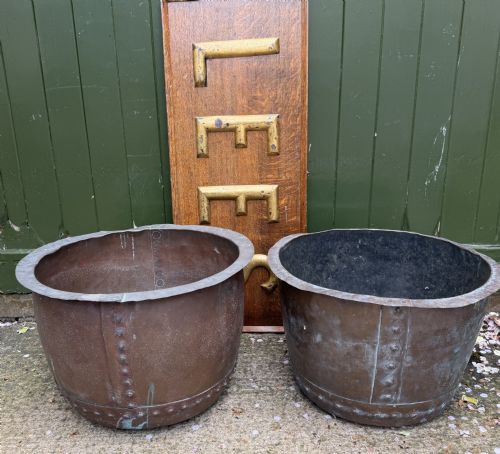


Riveted Copper Basin
These riveted copper basin pieces are heavy utilitarian vessels built to last, offering buyers genuine industrial character and rich patination.
Riveted Copper Basin
A riveted copper basin or related vessel brings functional nineteenth century craftsmanship into contemporary domestic spaces. Buyers searching for a riveted copper basin encounter domestic utilitarian objects adapted for decorative display or practical storage.
The selection here draws primarily from nineteenth century sources, spanning the 1850s to the 1890s. Forms range from heavy grain measures and cooking pots to jardinieres, boilers, and log tubs.
Stylistic descriptors cluster around rustic farmhouse, Victorian, and French country traditions. Pieces frequently double as planters or log buckets within modern interiors.
Materials and construction methods
Construction relies heavily on sheet copper joined with visible metal rivets. Iron and brass components occasionally supplement the primary copper body on handles, rims, or fixings.
Surfaces exhibit natural weathering, verdigris, and patination acquired through decades of active use. Embossed detailing appears on select Victorian decorative cooking pots.
Riveted Copper Basin Retail Price Guide 2026
Typical asking prices for riveted copper basin among the pieces listed under this phrase on Sellingantiques today, from the lower quarter to the upper quarter. They describe what is for sale here now, not the wider market.
Listings feature items exclusively from the nineteenth century, with specific dates spanning the 1850s, 1860s, and 1890s.
Assessing quality in metalwork
Quality rests upon the weight of the metal and the integrity of the riveted construction. Heavy gauge copper provides structural solidity that lighter vessels lack.
Surface character distinguishes standard examples from superior items. Natural verdigris and undisturbed patination elevate the visual appeal of older pieces.
The Riveted Copper Basin Glossary
- Patina
- The surface oxidation and colour accumulated through age and handling. This desirable quality shows genuine historic use.
- Verdigris
- The green crust or patina formed on copper by atmospheric oxidation. It develops naturally over long periods outdoors or in damp conditions.
- Jardiniere
- An ornamental pot or stand for plants or flowers. These items often utilise large nineteenth century metal vessels.
- Ferrat
- A traditional French agricultural vessel or measure. Such pieces form part of the wider range of utilitarian copper containers.
Riveted Copper Basin: Frequently Asked Questions
How do I clean verdigris off copper?
Most collectors prefer to leave the natural verdigris undisturbed because it proves the age and authenticity of the metal. Aggressive cleaning strips away the historic surface that gives these pieces their character.
Gentle dusting with a dry cloth is usually sufficient for maintenance. Avoid chemical polishes that remove the desirable patinated finish entirely.
How do I date nineteenth century copper?
Dating relies on manufacturing techniques, such as the transition from hand beaten sheets to machine rolled metal. Rivet styles and maker marks also help narrow down the period of production.
Comparing the weight, handle attachments, and rim construction against dated examples gives a reliable timeframe. Most items on this page sit firmly within the Victorian era.
Can I use these pots outdoors?
Heavy copper and brass containers withstand sheltered outdoor environments well when used as garden planters. The metal naturally reacts to the elements, deepening the surface patination over time.
Extreme frost can damage damp vessels if water becomes trapped against the seams. Bringing sensitive pieces indoors during freezing winter weather protects the historic metalwork.