



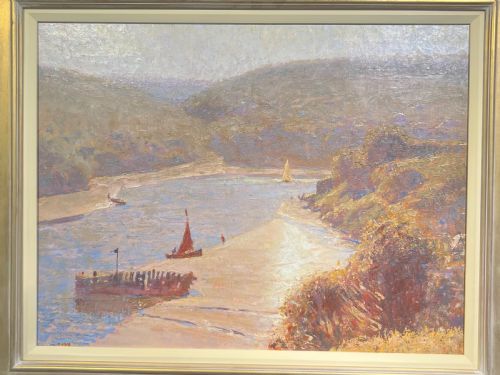
River Landscape Wall Art
River landscape wall art captures moving water, quiet banks and distant bridges across centuries of oil, watercolour and panel painting.

River Landscape Wall Art
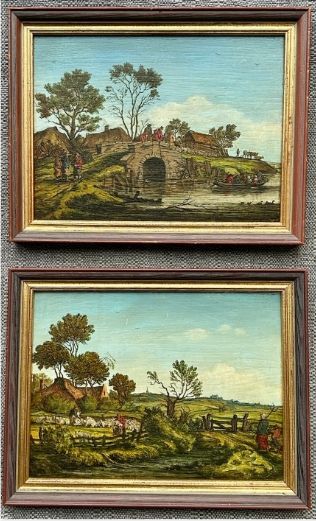
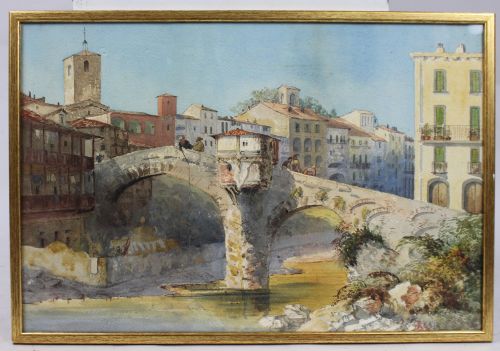
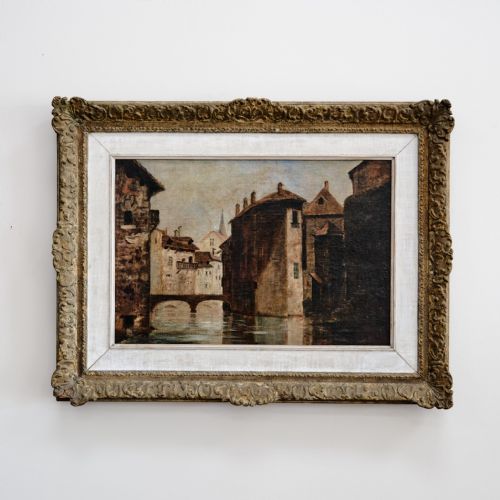
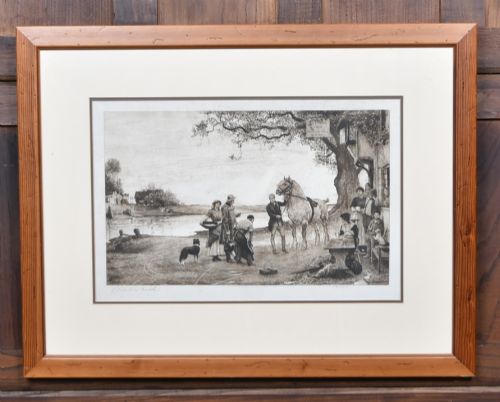
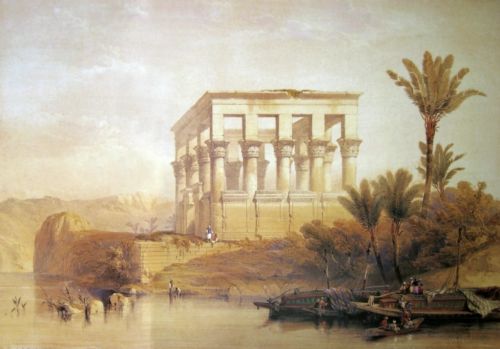
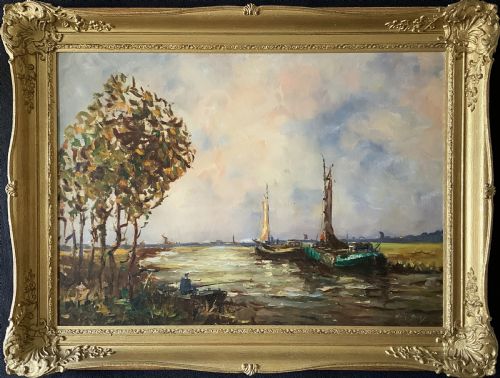
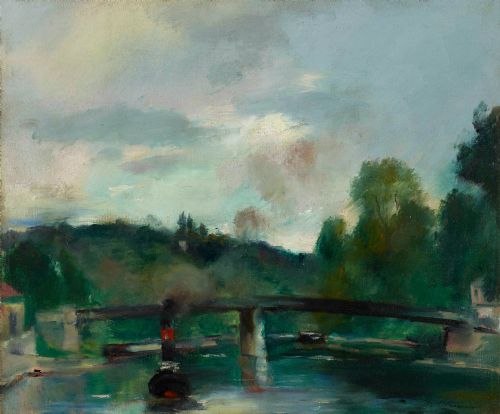
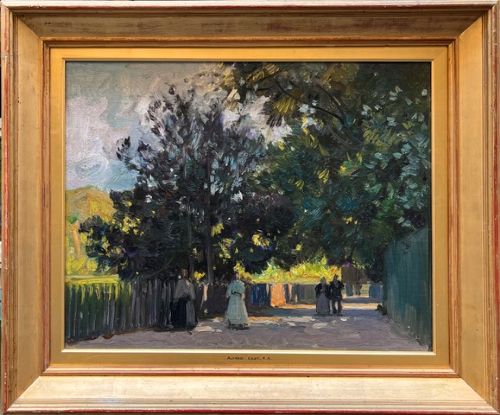
When you search for river landscape wall art, you encounter a diverse collection of framed paintings, watercolours, etchings and lithographs depicting waterways, canals and rural streams. The works span multiple eras, including Victorian scenes, nineteenth-century studies and mid-century interpretations.
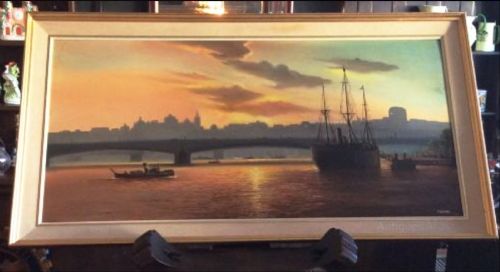
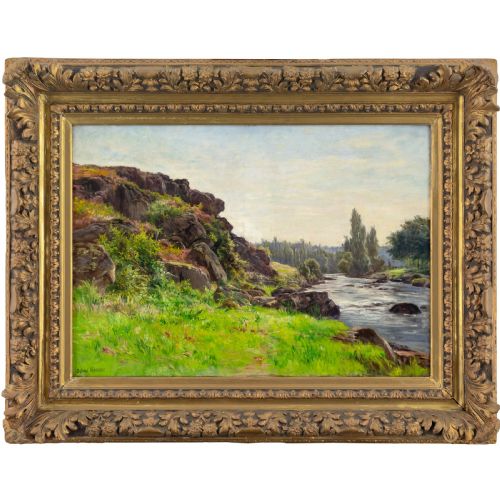
The selection ranges from British maritime views of the Thames and the Tyne to French pastoral riverbanks and Dutch canalscapes. You will find both intimate watercolour sketches on paper and substantial oil paintings executed on canvas, board or wood panels.
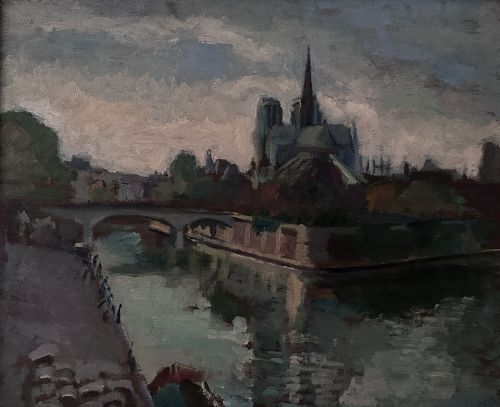
Many pieces present topographical views featuring recognisable bridges and cathedrals, while others capture anonymous figures fishing or walking beside rural streams. These works reflect the enduring appeal of water and light as subjects for painters across generations.
How they were made
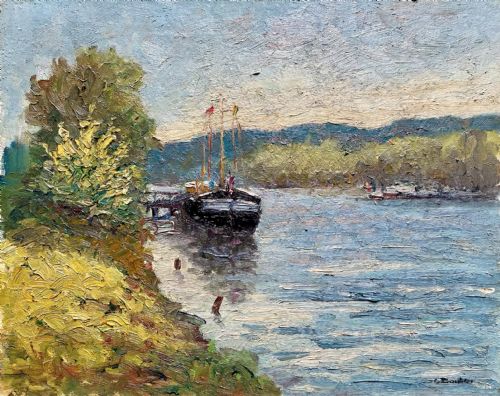
Artists built these compositions primarily using oil paint on canvas, wood panels or board, applying pigment with brushes or palette knives to create texture in the water and sky. Watercolour paintings utilise fluid washes on paper to capture the translucent quality of light upon rivers.
Supporting these works, wooden frames often incorporate gesso mouldings to secure and complement the canvas or paper surface. Etchings and lithographs on paper rely on engraved plates and inked impressions to render fine details of architecture and foliage along the banks.
Materials represented across the collection include oil on canvas, wood panels, paper, gesso and glass frames.
What varies in quality
The distinction between standard works and exceptional examples lies in the artist's handling of atmospheric light and fluid movement. Superior pieces convey depth and convincing reflections on the water, whereas lesser works treat the surface with flat or formulaic brushwork.
Materials also influence the character of each piece, as finely woven canvases and stable wood panels preserve pigment better over time than brittle paper or distressed boards. Furthermore, the sureness of line in a watercolour wash or the deliberate application of oil paint reveals the technical competence of the hand behind the work.
David Roberts·Albert Bierstadt·John Ferneley Senior·Sir Alfred East
The River Landscape Wall Art Glossary
- Oil on Canvas
- A painting technique where pigment suspended in drying oil is applied to a stretched cloth support. This medium allows for rich colour blending and textured brushwork.
- Watercolour Painting
- An artwork created using water-soluble pigments on paper. The translucent washes permit the white of the paper to shine through, creating luminosity.
- Wood Panel
- A rigid flat wooden support used as an alternative to canvas for painting. Painters often prepared these panels with gesso before applying oil colours.
- Etchings
- Printmaking works created by using acid to cut into unprotected parts of a metal surface to hold the ink. This process yields fine, detailed lines suited for landscape views.
- Gesso
- A paint mixture consisting of a neutral binder mixed with chalk, gypsum or pigment. It prepares rigid surfaces like wood panels to receive paint layers.
River Landscape Wall Art: Frequently Asked Questions
What is river landscape wall art?
River landscape wall art encompasses paintings, watercolours and prints depicting rivers, canals and marine scenes.
These works range from nineteenth-century British school oils to mid-century European post-impressionist canvases.
How do I date an oil painting?
Dating relies on stylistic clues, the type of canvas or wood panel, and signature details recorded by the artist.
Victorian and nineteenth-century pieces often display specific framing methods and pigment signatures distinct from mid-century works.
How should I hang watercolour paintings?
Watercolour paintings require protection from direct sunlight to prevent the pigments and paper from fading over time.
Mounting them behind glass with conservation-grade framing helps maintain their stability in domestic interiors.
What distinguishes oil from watercolour?
Oil paint utilises a slow-drying medium on canvas or panel that permits thick textures and rich colour layering.
Watercolour employs water-soluble pigment on paper, emphasising delicate washes and luminous, translucent effects.